What Is Beekeeping? History, Significance and Why Start Now
Beekeeping combines millennia-old tradition with responsibility for bee health and the environment. Learn how honey bees and other pollinators contribute and what a sound start involves.
Beekeeping is the deliberate keeping and care of honey bees -- but it is so much more than just honey. Anyone who keeps bees takes responsibility for tens of thousands of living creatures. Managed honey bees contribute to pollination alongside wild bees and other pollinators; responsible beekeeping must also account for bee health and the forage resources available locally.
In this first lesson, we look at where beekeeping comes from, why bees are indispensable for our ecosystem -- and why right now is an excellent time to start this fascinating hobby.
A Millennia-Old Tradition
The relationship between humans and bees goes back a very long way. In the Cueva de la Araña (Spider Cave) near Valencia, a cave painting was discovered showing a honey hunter climbing a rock face -- it is estimated to be about 8,000 to 12,000 years old. Humans were collecting honey long before the invention of agriculture.
From Forest Beekeeping to Modern Apiculture
- 1
Honey Hunting (Stone Age)
The earliest humans collected honey from wild nests in rock crevices and tree hollows. A dangerous affair -- but the energy-rich reward was apparently worth it.
- 2
Forest Beekeeping (Middle Ages)
In the Middle Ages, forest beekeeping ("Zeidlerei") emerged: bee trees (log hives) were marked and managed in forests. Forest beekeepers were highly respected craftsmen with their own guild rights. Beeswax was so valuable that monasteries maintained their own apiaries -- candles for church services required enormous amounts of it.
- 3
Skep Beekeeping (16th--19th Century)
Straw skeps replaced tree hollows. The problem: to harvest honey, colonies often had to be killed with sulphur -- a serious drawback.
- 4
Movable Frame Revolution (from 1851)
The American Lorenzo Langstroth discovered the bee space of 6--9 mm and invented the first hive with removable frames. For the first time, beekeepers could harvest honey without destroying the colony -- a milestone.
- 5
Modern Beekeeping (Today)
Today we work with standardised hive systems, know more about bee health than ever before, and can use digital tools like hive management apps to care for our colonies optimally. However, the basic principles have remained the same since Langstroth.
The German word Imker derives from Low German Imme (bee) and Kar (basket, vessel). An Imker is literally a "bee-basketer." The English word apiculture comes from Latin apis (bee) and cultura (cultivation).
Why Bees Are So Important
Bees are far more than honey producers. They are among the most important pollinating insects in the world and are indispensable for the functioning of our ecosystems and food production.
Pollination Services
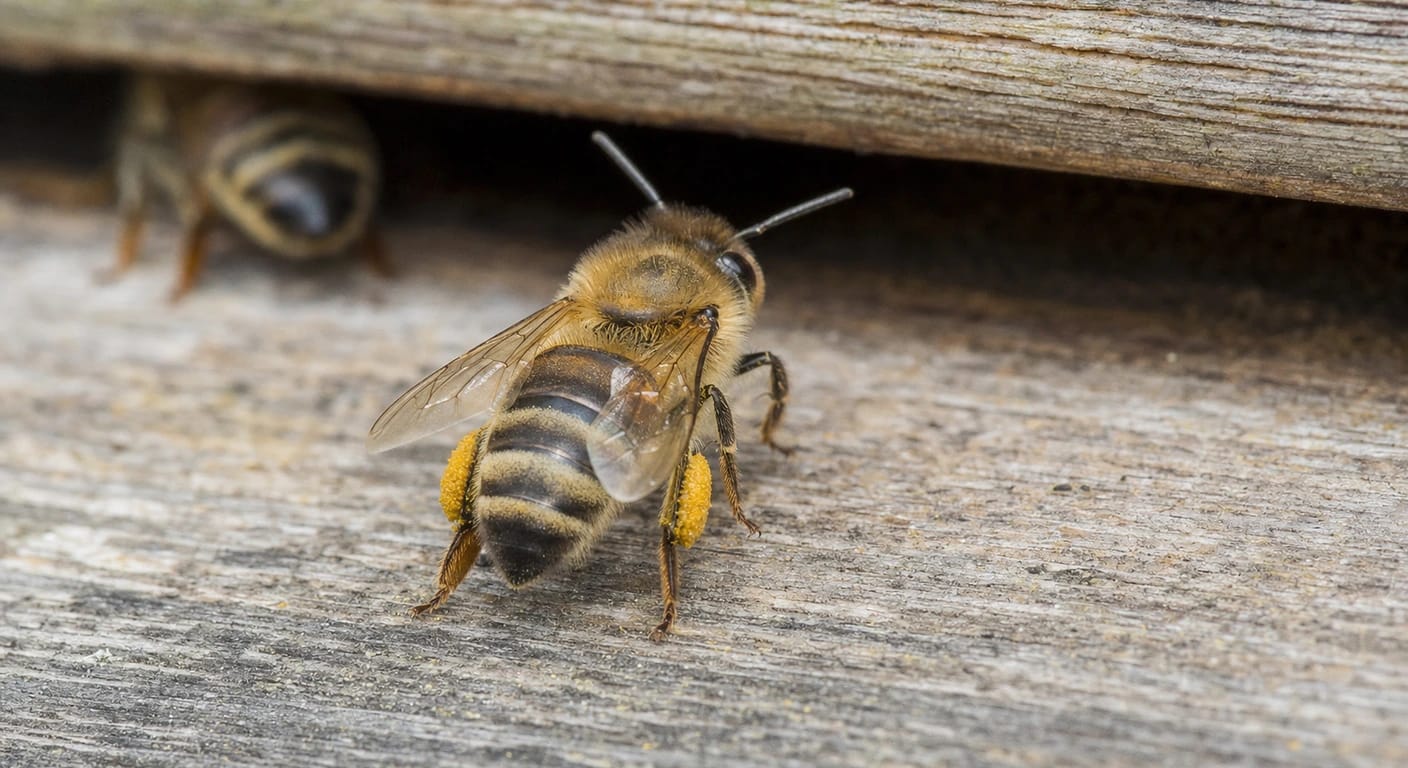
Around 80 % of all wild and crop plants in temperate regions depend on insect pollination -- and honey bees are the most industrious helpers. A single bee colony can visit several million flowers in a single day.
What this means in concrete terms:
- Fruit growing: Without bee pollination, there would be up to 90 % fewer apples, cherries, and pears
- Agriculture: Rapeseed, sunflowers, clover, and many vegetables require insect pollination
- Wild plants: Hundreds of native wildflowers, shrubs, and trees depend on bees
- Food chain: Birds and other animals feed on fruits and seeds that only exist thanks to pollination
Ecological Significance
Bees are indicator species: their well-being tells us a lot about the state of our environment. Healthy bee colonies signal an intact landscape with diverse floral resources and low pesticide exposure.
Since the 1990s, researchers worldwide have observed increased winter losses in honey bees. The causes are manifold: the Varroa mite (present in Germany since 1977, now found worldwide), pesticides (especially neonicotinoids), monocultures, and the loss of flowering areas. This makes responsible beekeeping all the more important!
What Does a Beekeeper Actually Do?
Many people imagine beekeeping as a leisurely Sunday hobby: checking on the bees now and then and extracting honey in summer. Reality is somewhat different -- and much more exciting.
The Beekeeper's Year
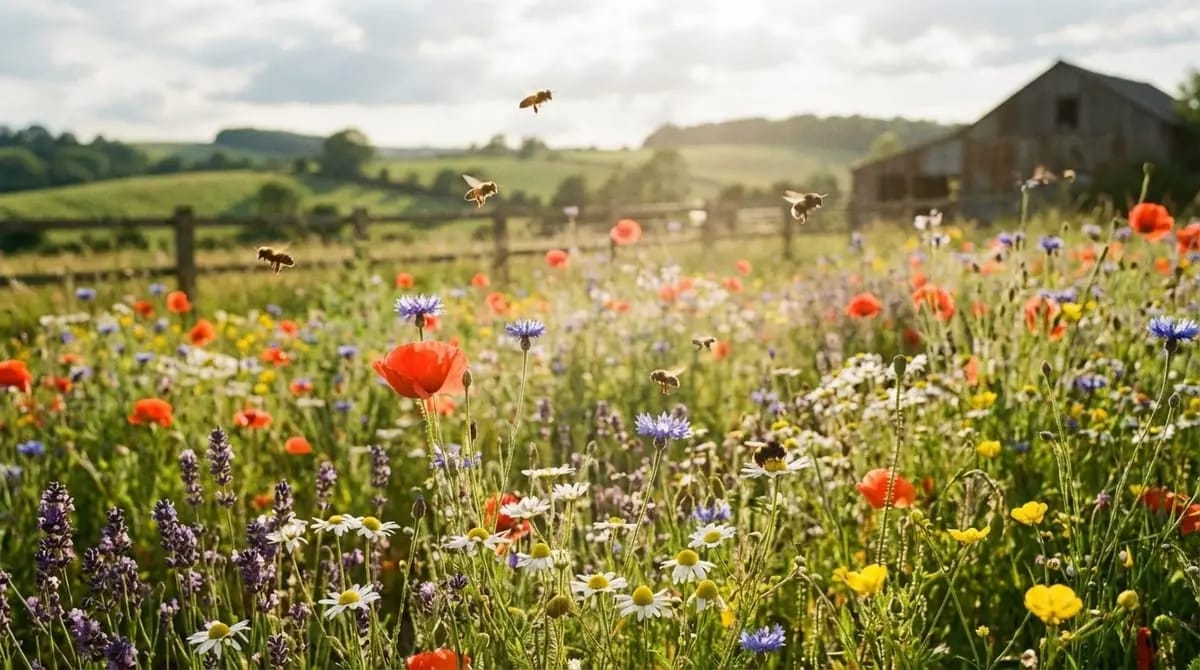
The bee year follows the rhythm of nature. Here is a brief overview so you know what to expect:
| Season | Main Tasks | Time Required |
|---|---|---|
| Spring (March--May) | Spring inspection, monitoring colonies, adding space, starting swarm checks | High |
| Summer (June--August) | Swarm control, honey harvest, extracting, bottling, making splits | Very high |
| Autumn (Sept.--Nov.) | Varroa treatment, winter feeding, reducing colony space | Medium |
| Winter (Dec.--Feb.) | Winter treatment (oxalic acid), equipment maintenance, planning, education | Low |
The most labour-intensive period is between April and July: during swarming season you must check your colonies every 7 days to prevent swarming. That is the biggest regular time commitment.
Why NOW Is a Good Time
You may be wondering: Why should I start beekeeping right now? There are several good reasons:
1. Bees Need Dedicated Beekeepers
The good news: the number of beekeepers in Germany is rising again -- after a low point in the 2000s. But more well-trained beekeepers also means healthier colonies and better Varroa management across the board. Every well-tended colony counts.
2. Better Support Than Ever Before
Never before has getting started been so well supported:
- Beekeeping associations offer beginner courses nationwide (approx. €50--150)
- Bee mentors accompany you through your first year with advice and hands-on help
- Digital tools like hive management apps help you keep track of everything
- Online communities provide quick help with questions
- Funding programmes in some regions subsidise new beekeepers' equipment
Support structures vary by country and region. In Germany, local beekeeping associations (Imkervereine) are the primary entry point. In other countries, national beekeeping associations, agricultural extension services, or online communities may serve a similar role. Check what is available in your area.
3. Observe Nature and Improve Habitats
Beekeeping is not automatically nature conservation: honey bees are managed livestock, while many wild pollinators primarily need suitable nesting sites and diverse, continuous forage. Beekeeping can, however, sharpen your awareness of flowering periods and habitats. You make a genuine ecological contribution by planting native flowers, avoiding pesticides, retaining nesting structures, and matching colony density to local forage.
4. A Hobby That Gives Back
Besides close observation of nature, there are tangible rewards:
- Your own honey -- fresher and more aromatic than anything you can buy
- Beeswax for candles, cosmetics, or beeswax wraps
- Propolis -- the resinous sealant of bees with interesting properties
- Deep connection with nature and a meditative, calming hobby
Anyone who starts beekeeping gets a new pair of eyes for nature. You suddenly see things you used to walk past without noticing.
The Reality Check: Time and Costs
Before you get started full of enthusiasm, let us take an honest look at the actual effort involved. Beekeeping is not effortless -- but with realistic expectations it is all the more enjoyable.
Time Commitment
In the first year, budget about 30--45 minutes per colony per week during the main season (April--August). In winter it is only a few hours per month overall. Start with 2--3 colonies -- that is enough to learn from, but still manageable.
Specifically, for 2--3 colonies:
- Spring/Summer: 2--4 hours per week
- Autumn: 1--2 hours per week
- Winter: 2--3 hours per month (equipment maintenance, education)
- Honey harvest: 1--2 full days per extraction (2--3 times per year)
Costs in the First Year
| Item | Cost (approx.) |
|---|---|
| Beginner course at a beekeeping association | €50–150 |
| Hives, frames, foundation (2--3 colonies) | €200–350 |
| Protective clothing (veil, gloves) | €60–120 |
| Tools (smoker, hive tool, bee brush) | €50–80 |
| Bee colonies (2--3 nucleus colonies) | €150–400 |
| Varroa treatment & feed | €30–60 |
| Association membership + insurance | €40–80 |
| Total in the first year | €500–1,200 |
Many beekeeping associations lend equipment such as honey extractors, organise group orders, or arrange affordable second-hand equipment. A bee mentor often has surplus material too. Ask around before buying everything new!
What Else You Should Know
Your Next Steps
Are you curious? Perfect! Here are the recommended next steps:
Your Getting-Started Checklist
Knowledge Check
Test what you have learned in this lesson:
In the next lesson, we dive into the fascinating world of bee biology: How is a bee colony structured? What roles do the queen, workers, and drones play? And how do bees communicate with each other?