Hive Types Compared: Zander, Dadant, Langstroth
Which beehive suits you? Compare Zander, Dadant, and Langstroth hives with pros and cons for beginners.
Hive Types Compared
Choosing the right beehive is one of the most important decisions you make as a beginning beekeeper. It determines which frame size you work with, which accessories you buy, and what your daily routine at the apiary looks like. In this lesson, you will learn about the most common hive systems and discover which one best suits your situation.
NEVER mix different frame sizes within a single colony! Changing hive systems later is laborious and expensive. Take your time with this decision and talk to your local beekeeping group.
What Is a Beehive?
A beehive (or hive box) is the housing we provide for our bees. Modern hives consist of stackable boxes, each containing several frames. The bees build their combs in these frames, which makes the beekeeper's work much easier.
Each hive system defines a particular frame size -- the dimensions of the frames in which the bees build their combs. This size determines all accessories: boxes, queen excluders, entrance reducers, and much more.
The Four Main Hive Systems
1. Zander Hive
The Zander hive is named after the Bavarian bee researcher Enoch Zander (1873--1957) and is one of the most popular systems in Germany, particularly in southern and central regions.
Features:
- Frame size: 420 x 220 mm
- Material: usually wood (white pine, spruce)
- Modular design with identically sized boxes
- Brood chamber: 1--2 boxes, honey super: 1--2 boxes (same size)
- Cold-way or warm-way placement possible
Advantages:
- Widely used, especially in Bavaria and central Germany
- Large selection of accessories
- Good compromise between comb area and weight
- Brood and honey frames are identical (flexible)
- Many beekeeping associations use Zander
Disadvantages:
- A single box with honey can weigh 25--30 kg
- A single brood box can be tight in spring
- Double brood chamber is large and harder to oversee
2. Dadant (Modified)
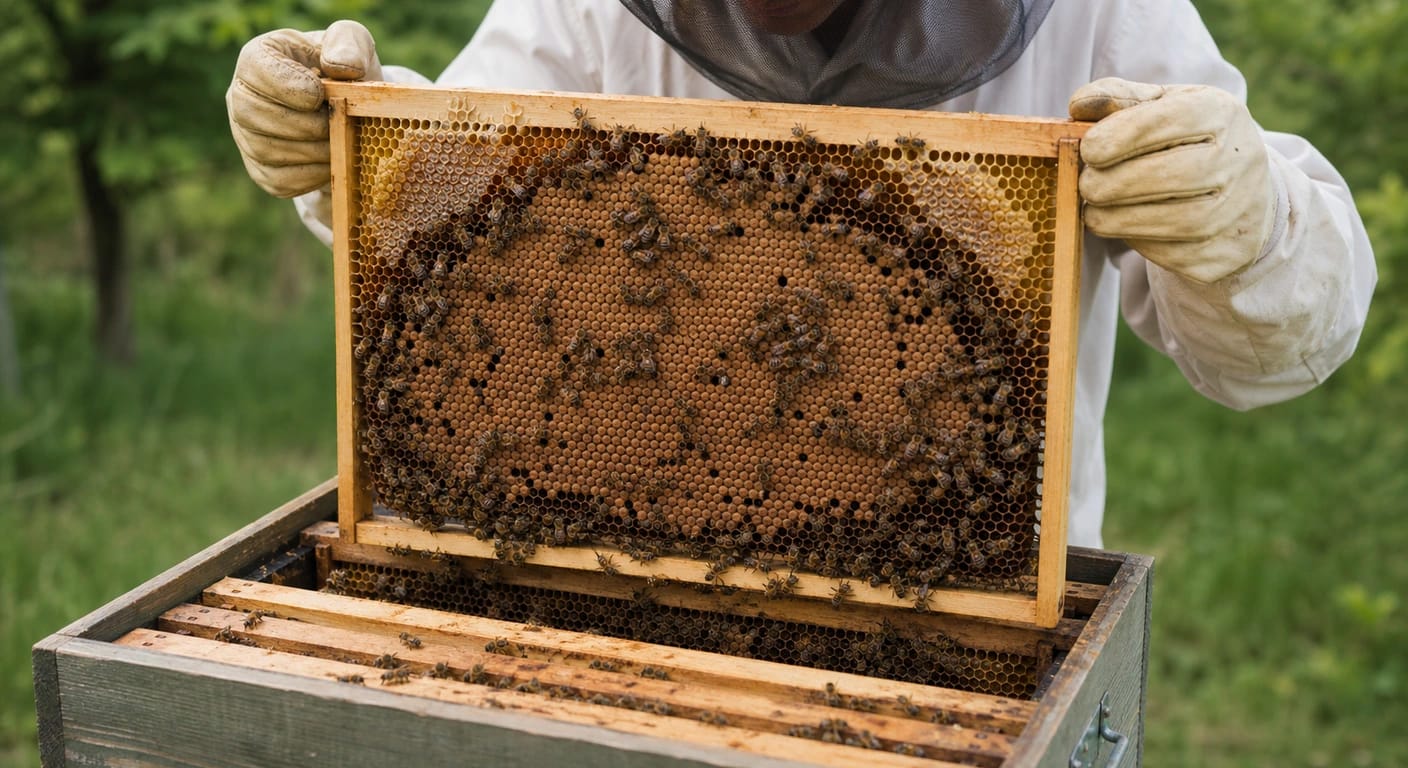
The Dadant hive goes back to the French-American beekeeper Charles Dadant (1817--1902). The "Dadant Modified" variant has become established in Germany and is gaining popularity across Europe.
Features:
- Brood frame size: 435 x 300 mm (large!)
- Honey super frame size: 435 x 159 mm (half-depth)
- Strict separation: large brood box, small honey super
- Material: wood or polystyrene
Advantages:
- Large brood area in a single box -- the queen has plenty of space
- Simple colony management: no second brood box needed
- Light honey supers (half-depth, approx. 15--18 kg when full)
- Clear overview during inspections
- Internationally widespread, extensive literature available
Disadvantages:
- Brood box is large and heavy (individual brood comb up to 2.5 kg)
- Two different frame sizes needed (brood and honey super)
- Less common than Zander in some regions
- Slightly higher purchase price
3. Langstroth Hive
The Langstroth hive, developed by Lorenzo Langstroth in 1851, is the international standard and dominant in North America, Australia, and many other countries.
Features:
- Frame size: 448 x 232 mm (deep) or 448 x 137 mm (medium/shallow)
- Material: wood or polystyrene
- Extremely standardised worldwide
- Brood chamber: 1--2 deep boxes, honey super: medium or shallow boxes
Advantages:
- Global standard -- accessories available everywhere
- Enormous amount of literature and online resources
- Standardised dimensions simplify equipment sharing
- Medium supers offer a lighter alternative to deep boxes
Disadvantages:
- Deep boxes when full are quite heavy (approx. 30+ kg)
- Single deep box may not suffice for brood in strong colonies
- Less common in parts of continental Europe (where Zander/Dadant dominate)
4. Segeberger Hive (Polystyrene) -- a Brief Overview
The Big Comparison
| Feature | Zander | Dadant Modified | Langstroth (Deep) | Segeberger (DN) |
|---|---|---|---|---|
| Brood frame size | 420 x 220 mm | 435 x 300 mm | 448 x 232 mm | 370 x 223 mm |
| Honey super frame size | 420 x 220 mm | 435 x 159 mm | 448 x 137 mm (medium) | 370 x 223 mm |
| Material | Wood | Wood / Polystyrene | Wood / Polystyrene | Polystyrene |
| Empty box weight | approx. 4--5 kg | approx. 5--6 kg (brood) | approx. 4--5 kg | approx. 1.5 kg |
| Full honey super weight | approx. 25--30 kg | approx. 15--18 kg | approx. 18--22 kg (medium) | approx. 20--25 kg |
| Price per hive (complete) | €120--180 | €140--200 | €100--180 | €80--120 |
| Prevalence | Southern/Central Germany | Increasingly Europe-wide | Global standard | Northern Germany |
| Beginner-friendly | Very good | Good | Very good | Good |
Which Hive for Beginners?
Choose the hive system that your local beekeeping group and your mentor use! This way you can exchange frames, borrow accessories, and get direct help with problems. That outweighs any theoretical advantage of another system.
If you have a free choice, Zander, Dadant Modified, and Langstroth are all excellent options for beginners:
-
Zander offers maximum flexibility through uniform frames and is almost standard in southern Germany. If you keep bees in Bavaria, Baden-Wuerttemberg, or Hesse, Zander is often the natural choice.
-
Dadant Modified impresses with its clear separation of brood and honey areas. You work with one brood box and light honey half-supers. This makes colony management clear and saves your back.
-
Langstroth is the global standard. If you are outside Germany or want access to the widest possible range of equipment and literature, Langstroth is hard to beat.
Beginners should choose the hive system that is standard in their local group. Only that way can you benefit from others' experience and exchange frames when needed.
Accessories: What Belongs to the Hive?
Regardless of which system you choose, a complete hive consists of:
Components of a Modern Hive
Build or Buy?
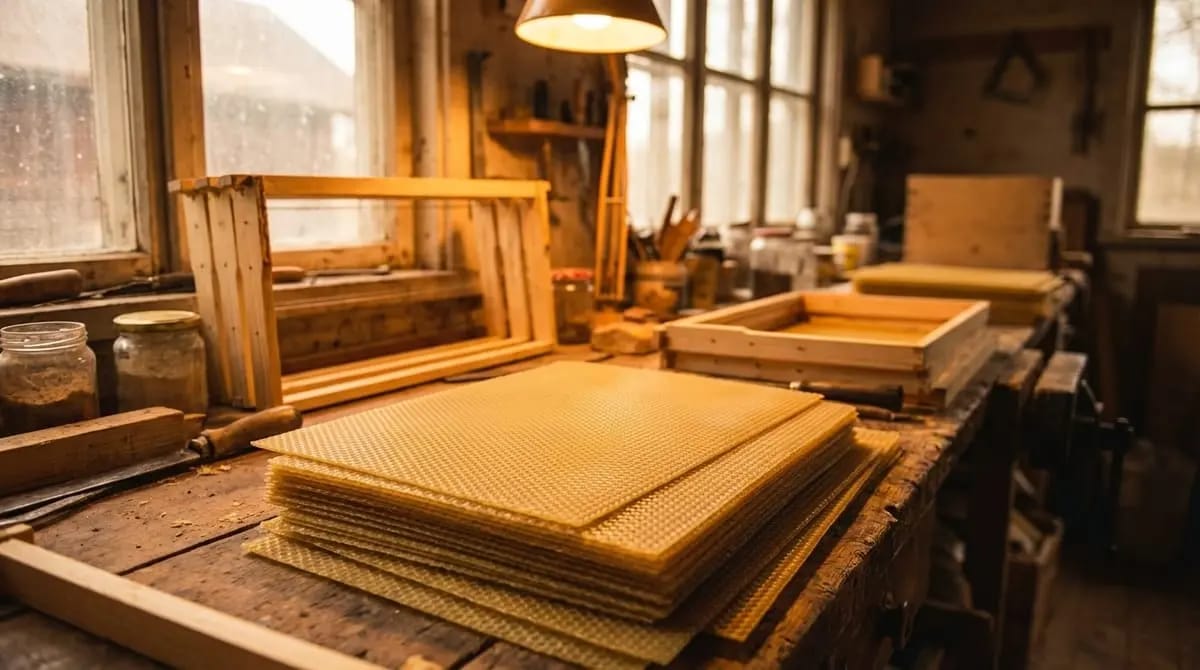
As a beginner, we clearly recommend: buy ready-made hives. Building your own only pays off once you know exactly what you need and have a workshop available. Factory-made hives are precisely manufactured and fit perfectly -- this matters because bees will seal any gap larger than 8 mm (bee space) with propolis and fill any gap smaller than 6 mm with wax.
Knowledge Check
In the next lesson, you will learn how to find the perfect location for your bees -- a decisive factor for healthy and productive colonies.