Finding the Perfect Location
Where should you place your bees? Learn everything about site selection, legal basics, and the checklist for the ideal apiary location.
A good location significantly determines the health and productivity of your bee colonies. Bees are adaptable, but the right spot makes life much easier for you and your colonies. In this lesson, you will learn what matters in site selection -- from the legal basics to practical assessment.
Legal Basics
Before setting up your apiary, you should know the legal framework.
The following information is primarily based on German law. In other countries, registration requirements, setback distances, and neighbourhood regulations may differ significantly. Always check with your local veterinary authority or beekeeping association for the rules in your area.
Registration Requirement
In Germany, every beekeeper must register their colonies with the veterinary office. This is free and serves disease control (particularly American Foulbrood). You receive a registration number and are notified in case of a disease outbreak in your region. Many other countries have similar registration requirements.
Neighbourhood Law and Setback Distances
Exact minimum distances to neighbouring properties vary by jurisdiction. In most places, there are no fixed metre requirements; instead, general neighbourhood law applies: bees must not constitute an unreasonable nuisance. Check the rules specific to your area.
General guidelines:
- Flight path: The main flight line should NOT cross your neighbour's terrace or the pavement
- Hedge or fence: A barrier at least 2 metres high in front of the entrance forces bees upward -- so they fly above head height
- Distance to paths: At least 3--5 metres from public paths
- Schools/kindergartens: Greater distance recommended (varies by municipality)
- Swimming pools: Bees need water and will visit pools -- at least 10 metres distance, or set up your own water source
Beekeeping in Residential Areas
Beekeeping in residential areas is generally permitted in Germany and has been classified as customary animal husbandry in many court rulings. However, a 2025 ruling by the Cologne Regional Court (ref. 13 S 202/23) found that beekeeping in densely built urban residential areas may not be considered customary. A reasonable number of colonies (typically 2--6) in a suitable location with adequate distance is generally permissible -- but clarify the situation with your neighbours in advance and check local regulations.
Ideal Site Conditions
Orientation and Sun Protection
- Entrance facing south-east: Morning sun wakes the bees early and promotes foraging
- Afternoon shade: Full midday sun in high summer is stressful for the colony (cooling costs energy)
- Ideal solution: Light tree shade or partial shade in the afternoon
- Ground clearance: Hives on stands or supports (30--40 cm high) protect against ground moisture and ease your work
Wind Protection
Bees dislike strong wind, especially in winter. Natural wind protection from hedges, walls, or buildings is ideal. The entrance should face away from prevailing winds.
Water Source
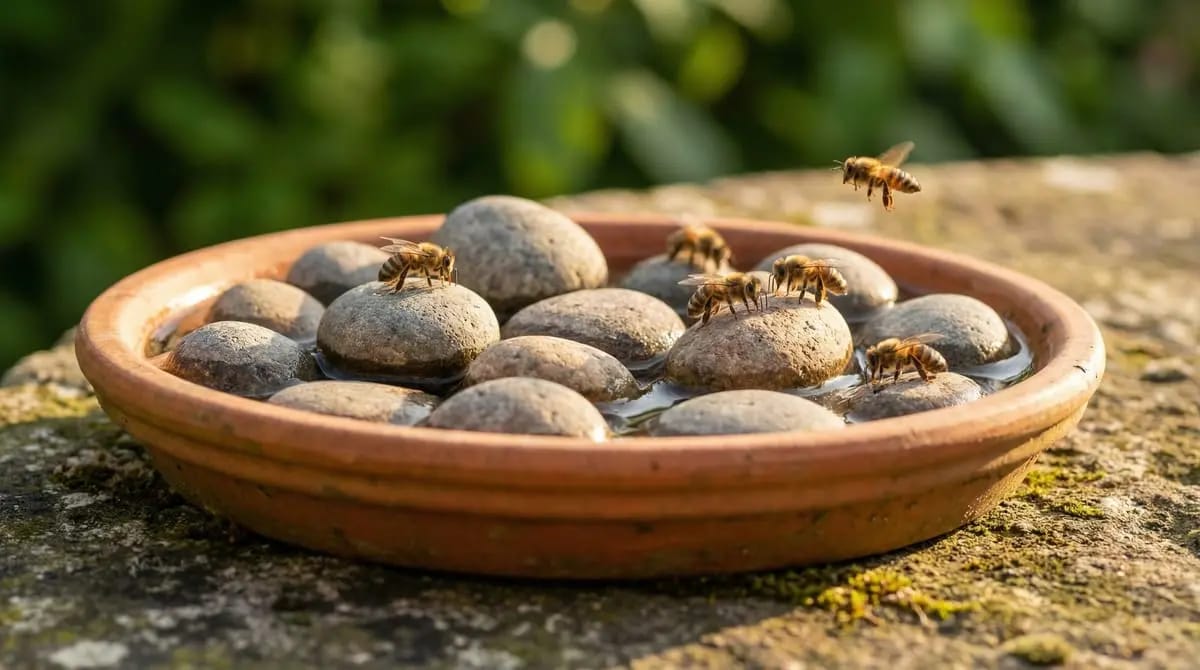
Bees need year-round access to water. If there is no stream, pond, or well nearby, you should set up a bee waterer. Important: place it BEFORE the bees move in -- bees imprint on their water source and then reliably fly there (and not to the neighbour's pool).
A shallow dish with pebbles or corks as landing pads and fresh water is perfectly sufficient. Change the water regularly. Moss or a few drops of anise oil make the waterer more attractive to bees.
Forage Availability
The food supply within a 3 km radius is crucial. Bees can fly up to 5 km, but the closer the forage, the more efficiently they collect and the more honey remains.
Good forage sources include:
- Fruit trees (apple, cherry, pear)
- Rapeseed, sunflowers, phacelia (agricultural crops)
- Lime, maple, black locust (forest trees)
- Wildflower meadows and nature-friendly gardens
- City parks and avenues (surprisingly productive!)
Location Types Compared
Garden
Advantages: Short distances, quick checks, electricity and water nearby, low effort Disadvantages: Neighbours must be informed, limited colony count (2--6), flight path must be planned Tip: Put up a hedge or screen in front of the entrance -- then bees fly upward immediately
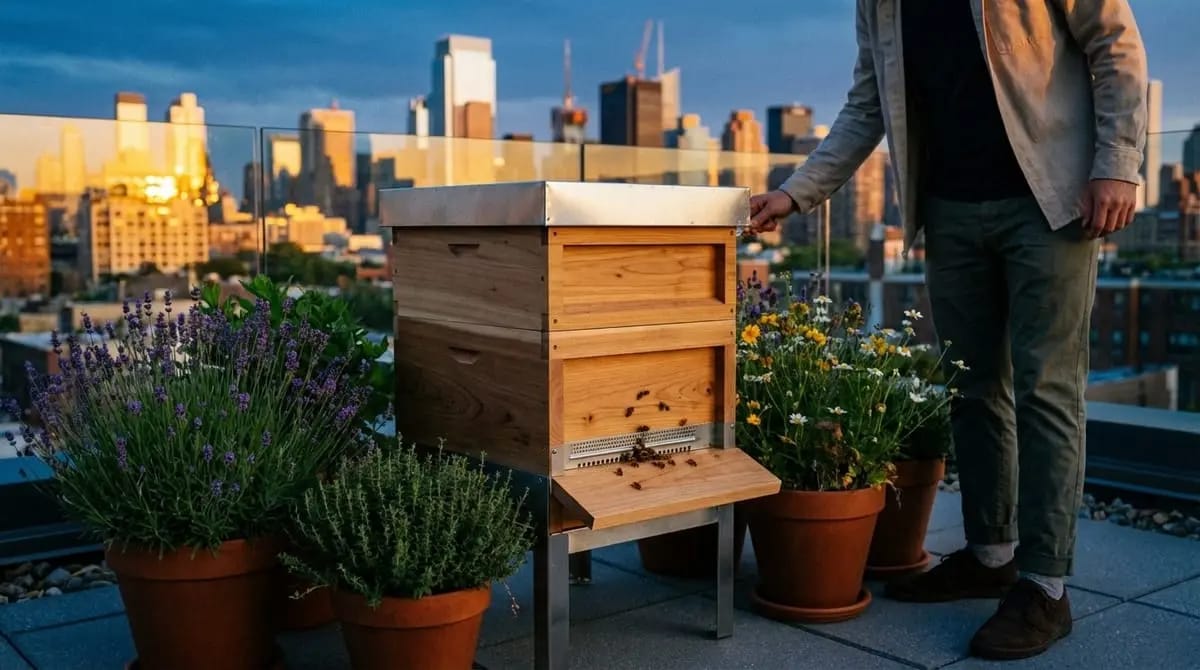
Flat Roof / Roof Terrace
Advantages: Hardly any conflicts with passers-by, bees fly upward immediately, suitable for urban beekeeping Disadvantages: Wind-exposed, transport is difficult (stairs!), check structural load capacity, heat in summer Tip: Only for more experienced beekeepers or when access is convenient
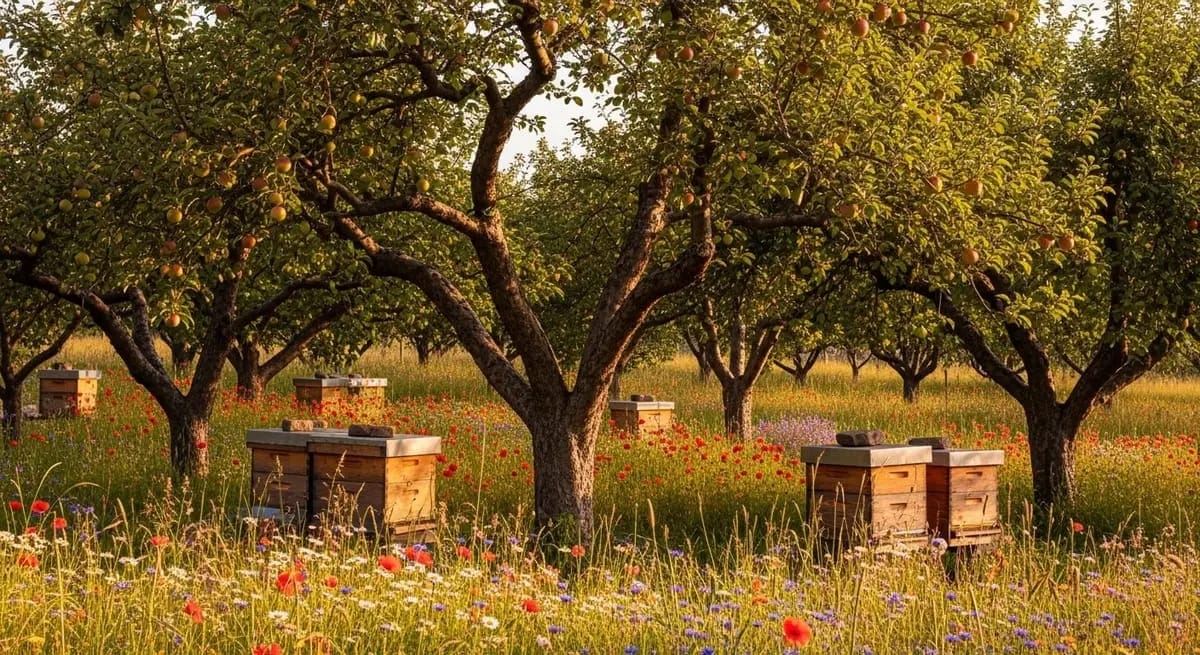
Field / Meadow
Advantages: Plenty of space, no neighbour conflicts, potentially good forage Disadvantages: Landowner permission needed, theft/vandalism risk, longer travel Tip: Get a written agreement with the landowner
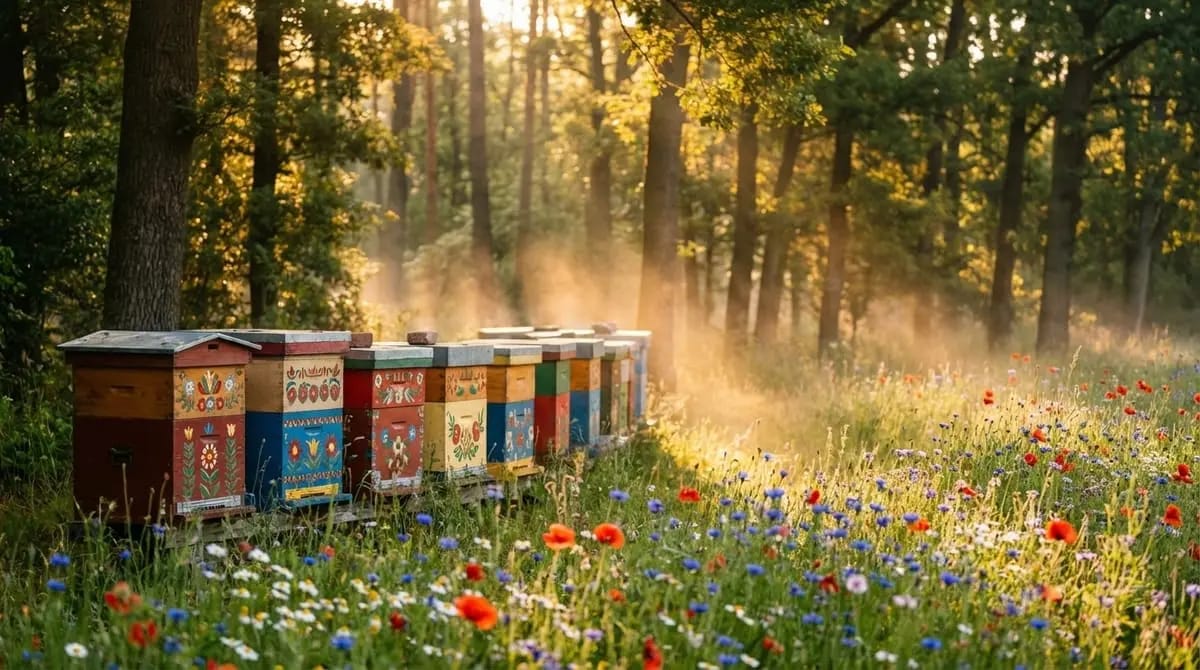
Forest Edge
Advantages: Natural wind and sun protection, forest forage (honeydew!), quiet location Disadvantages: Permission from forestry office or woodland owner needed, longer travel, possible moisture problems Tip: The south-east edge of a wood is ideal -- morning sun and wind protection
Urban vs. Rural
Studies show that urban bees are often healthier and produce more honey than rural bees! The reason: cities offer a more diverse and longer-lasting floral supply through parks, gardens, and balconies. In rural areas, there can be a "nectar gap" after the rapeseed bloom ends.
Advantages of urban beekeeping:
- Diverse forage supply from March to October
- Less pesticide exposure than on intensively farmed fields
- Warmer microclimate (heat island effect)
- Short distances to the apiary
Advantages of rural beekeeping:
- More room for larger colony numbers
- Fewer neighbour conflicts
- Speciality honeys possible (rapeseed, lime, forest)
- Opportunity to migrate to different forage sources
The city is not a bad habitat for bees. On the contrary: the variety of flowering plants in gardens, parks, and on balconies often provides better sustenance than intensively farmed agricultural landscapes.
Site Assessment Checklist
Use this checklist to systematically evaluate potential locations:
Site Assessment -- Check All Points
Informing Your Neighbours -- How to Do It Right
Most neighbourhood conflicts arise not from the bees themselves but from a lack of communication. Talk to your neighbours before setting up and follow these tips:
- 1
Inform Early
Speak to your immediate neighbours in person before the hives are set up. Explain your plans and show understanding for any concerns.
- 2
Share Knowledge
Most fears are based on ignorance. Explain that honey bees are peaceful and only sting when they feel threatened. Wasps are the aggressive insects at the picnic table -- not honey bees.
- 3
Ask About Allergies
Politely ask if anyone in the neighbourhood has a bee venom allergy. If so, you should plan especially carefully or look for an alternative site.
- 4
Give Honey as a Gift
The best argument for your bees: a jar of honey from the neighbourhood. Most neighbours become enthusiastic supporters once they have tasted the honey.
If a direct neighbour has a diagnosed bee venom allergy (anaphylaxis risk), you should look for an alternative site or at least ensure a large distance and a tall hedge. Consideration protects both the neighbour and your hobby from legal problems.
Knowledge Check
In the next lesson, you will learn where to get your first bee colony, how to transport a nucleus colony, and how to install it properly -- the most exciting moment for every new beekeeper!