Autumn: Varroa Treatment and Winter Feeding
Varroa treatment with formic acid and proper autumn feeding secure the survival of your bees through winter.
Autumn is the most important season for your bees -- and for you as a beekeeper. What you do right or wrong now determines whether your colony survives the winter. Two tasks take centre stage: fighting the Varroa mite and providing sufficient winter food.
Why Autumn Work Is So Crucial
From August onward, the so-called winter bees emerge. Unlike the short-lived summer bees (approx. 6 weeks), these bees live 5--6 months and carry the colony through winter into spring. For healthy winter bees to be raised, the colony must meet two conditions:
- Low Varroa load -- mites weaken brood and transmit viruses
- Sufficient food reserves -- the colony needs energy for the winter cluster
If you miss the treatment, the mite load by October can be so high that winter bees emerge already damaged. The colony then collapses in December or January -- often when you least expect it.
Varroa destructor -- a Brief Explanation
The Varroa mite is a parasite about 1.5 mm in size that reproduces in capped brood and feeds on the fat body of bees. It originally comes from the Asian honey bee (Apis cerana), which has developed natural defence mechanisms. Our Western honey bee (Apis mellifera) is largely defenceless against it.
The mite itself weakens the bee, but the real problem is the viruses it transmits. The Deformed Wing Virus (DWV) causes crippled wings in newly emerged bees. Heavily infested colonies lose their ability to survive.
Infestation Check Before Treatment
Before treating, you should know the infestation level. There are two proven methods:
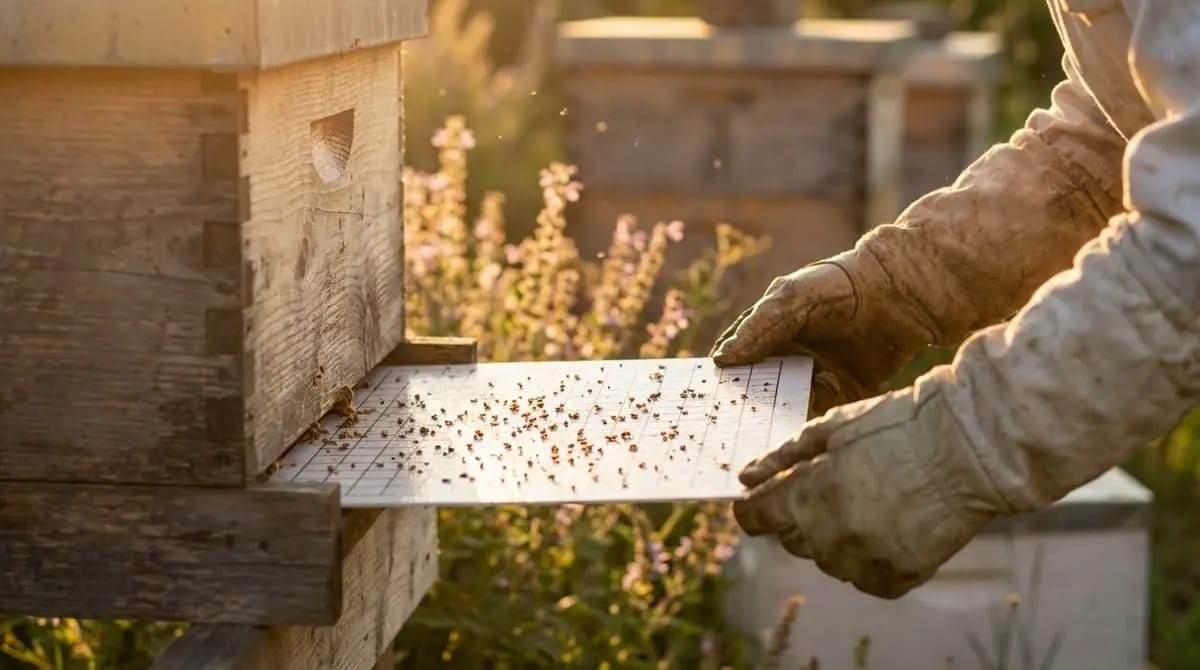
- Sticky board (insert tray): Slide a white insert under the screened bottom board and count the fallen mites after 3 days. More than 5 mites per day in July means: treat immediately.
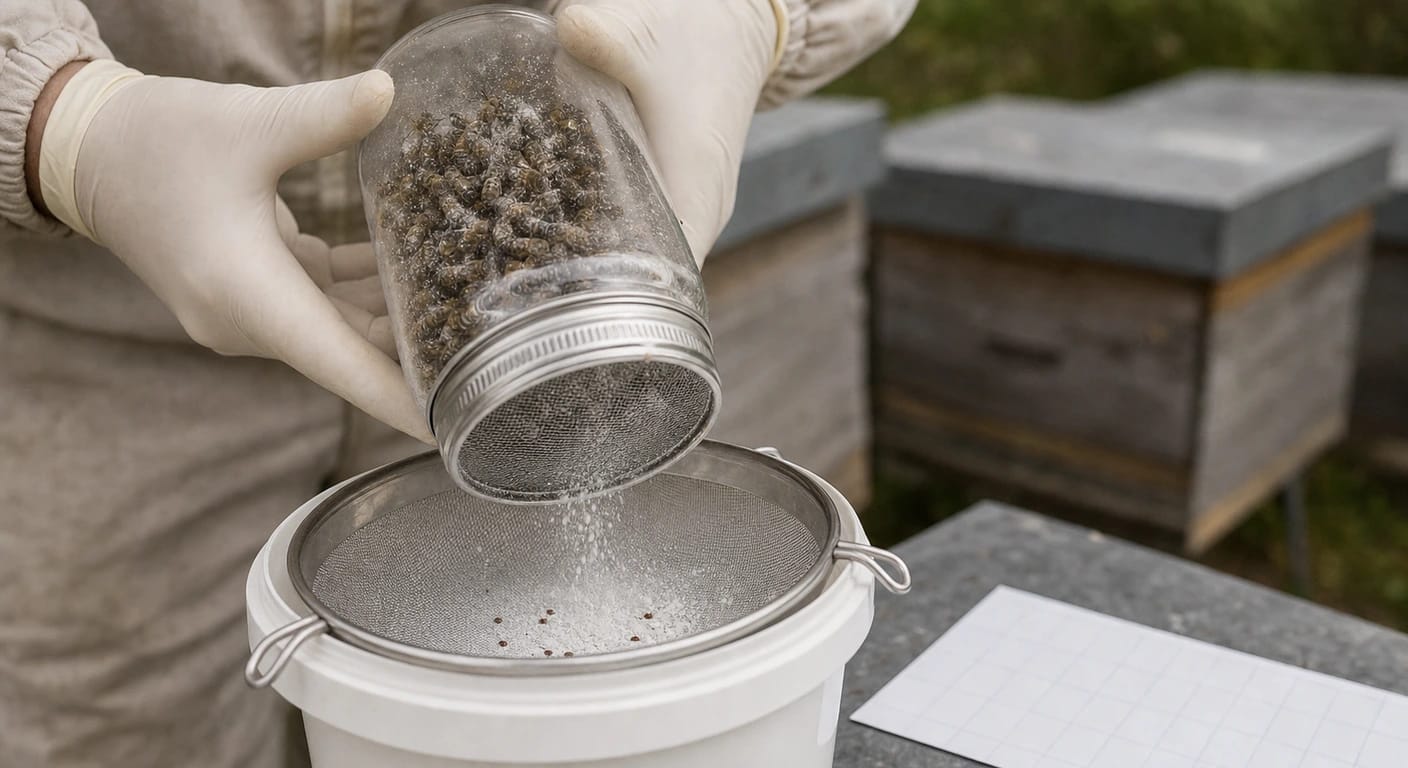
- Powdered sugar method: In dry weather, collect a defined sample of about 50 g of bees without the queen, use 35 g of dry powdered sugar and follow the coating and shaking times exactly. The method is intended for colonies with brood from July to October; interpret the result using current seasonal thresholds and repeat implausible samples.
Varroa Treatment with Formic Acid
Treatment with formic acid is the standard method in Germany after the last honey harvest. The advantage: it also penetrates capped brood and reaches mites reproducing there.
Formic acid is corrosive and harmful to health. ALWAYS wear acid-resistant gloves and safety goggles. Work outdoors or with good ventilation. Keep water for rinsing nearby. In an emergency, rinse immediately with plenty of water!
Treatment methods and approved products vary by country. In Germany, formic acid is the standard late-summer treatment. In the UK, products like MAQS (formic acid strips) or Apiguard (thymol) are common. In the US, several organic acids and thymol-based products are approved. Always follow your country's veterinary guidelines and use only approved products.
Time Window and Temperatures
- Treatment period: Late July to mid-September (after the last honey harvest)
- Optimal temperature: 15--25 degrees C daytime temperature
- Do not treat above 30 degrees C! The acid evaporates too quickly and can damage brood and queen
- Not below 12 degrees C: Evaporation is too low for effective concentration
Treatment Methods
Long-term treatment (recommended for beginners):
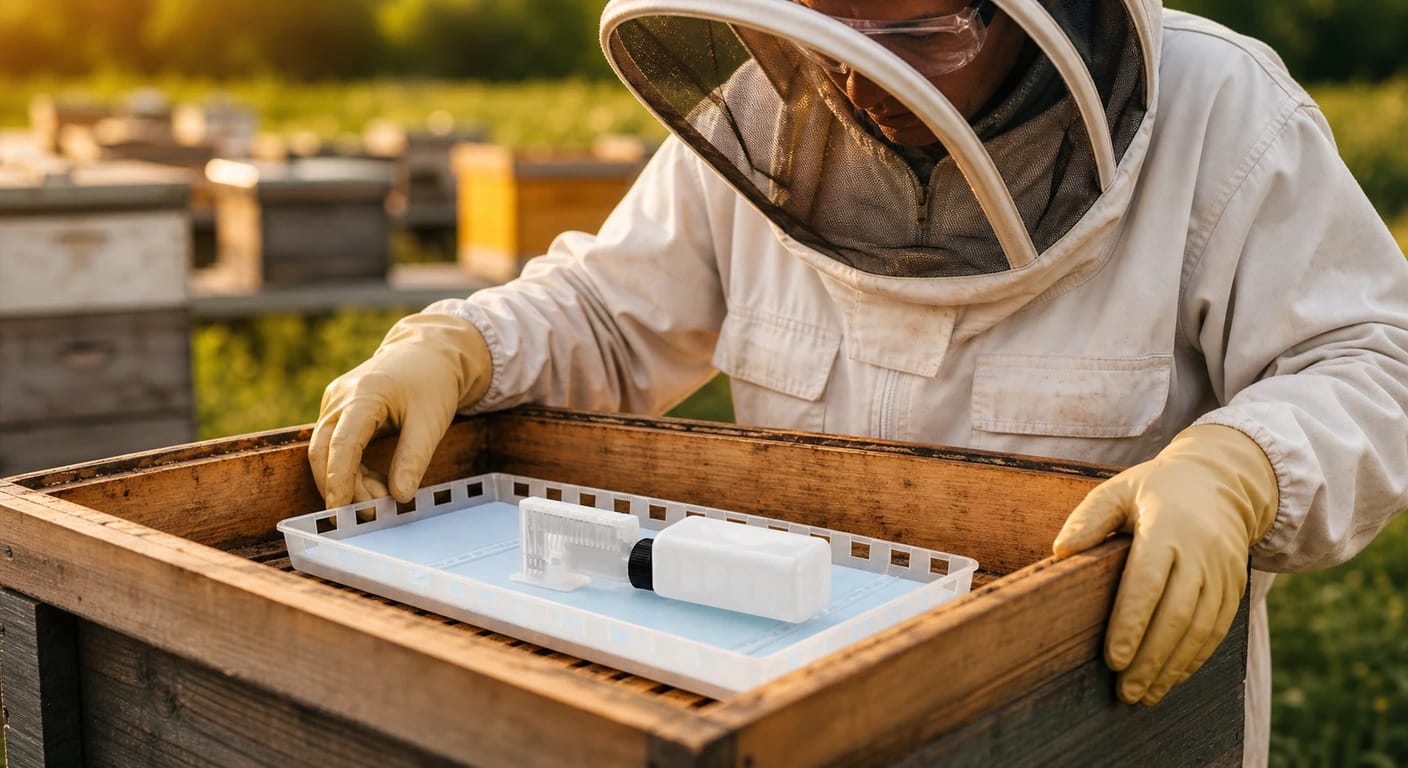
- Evaporator (e.g. Nassenheider Professional) with 200 ml formic acid 60 %
- Duration: 10--14 days
- Even, gentle evaporation
Short-term treatment:
- Sponge cloth or dispenser with formic acid 60 %
- Duration: 3--5 days, repeat if necessary
- Higher dosage but shorter exposure time
Winter Feeding: Replenishing Stores
After you have harvested the honey, the colony's winter stores are depleted. You must replace them with sugar feed. Feeding begins directly after the last harvest and should be completed by mid-September at the latest -- in cooler regions even earlier.
What and How Much?
| Feed | Mixture | Advantage |
|---|---|---|
| Sugar syrup | 3 parts sugar : 2 parts water | Affordable, well accepted |
| Ready-made feed (Invertbee, Ambrosia) | Ready to use | No mixing needed, hygienic |
| Fondant | Ready-made product | For emergency feeding, slow uptake |
The amount depends on the hive type:
- Standard frames (Zander/DN/Langstroth): 15--20 kg total food
- Dadant: 18--22 kg (larger brood box)
- Minus any existing food frames in the brood box
A fully fed colony on standard frames weighs about 30--35 kg in October including hive, bees, and food. Lift the back of the hive slightly -- with practice you can feel whether enough food is present.
Feeding Step by Step
- 1
Prepare the Feed
Dissolve 3 kg sugar in 2 litres of warm water (3:2 solution). Stir until the sugar is completely dissolved. Alternatively, use ready-made liquid feed.
- 2
Set Up the Feeder
Place a feeder or bucket feeder on the brood box. Make sure the bees can reach the feed safely without drowning. Add floating aids (straws, corks) if needed.
- 3
Add Feed
Give 3--5 litres per feeding round. In warm weather (above 15 degrees C), the colony will take up several litres in 2--3 days. Feed in larger portions rather than many small ones -- this reduces disturbance and robbing risk.
- 4
Top Up
Repeat feeding every 3--5 days until the target food quantity is reached. A colony typically needs 3--5 feeding rounds.
- 5
Check Weight
Lift the back of the hive at the end (heft test). It should feel distinctly heavy. Ideal: 30--35 kg total weight for standard-frame hives. Note the weight in your hive record.
Further Autumn Tasks
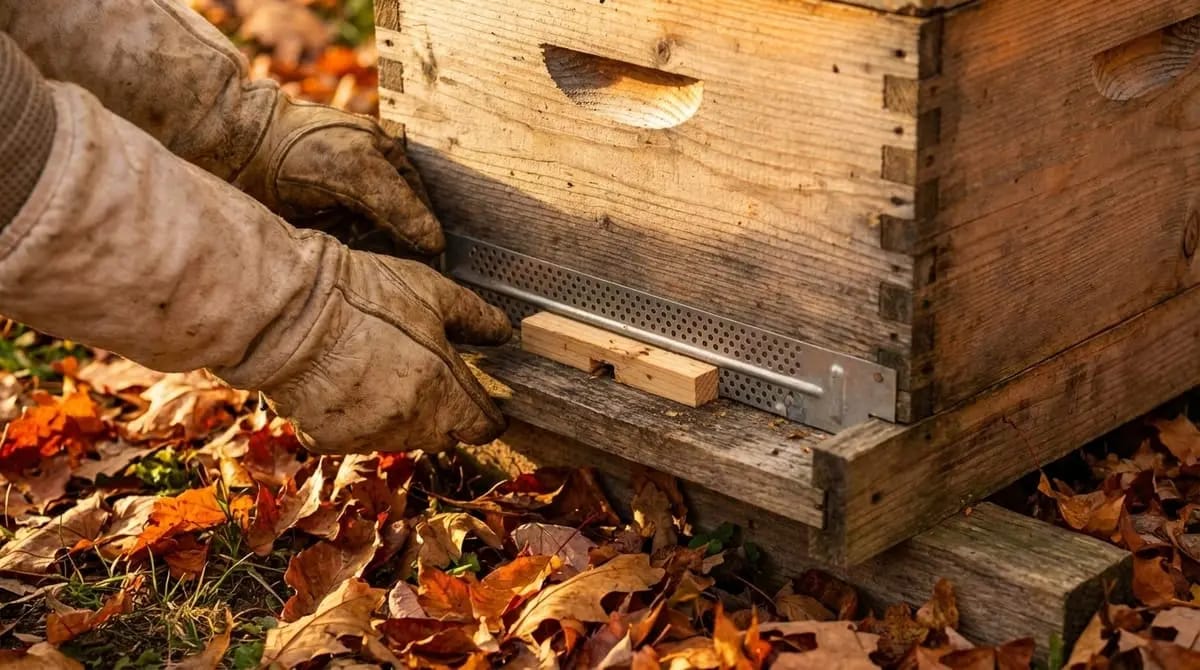
Besides Varroa and feeding, there are a few more items on your autumn checklist:
Autumn Checklist for Beginners
What Comes After Autumn Work
If you have done everything right, you can now sit back. Your colony has enough food, the Varroa load is low, and the winter bees are being raised healthy. In December, the winter treatment with oxalic acid awaits -- more on that in the next lesson.
Many beginners treat too late or feed too little. Remember: better a week too early than a day too late! The first treatment should be running by early August, not September.
Knowledge Check
In the next lesson, you will learn what happens at the apiary in winter -- and why you should leave your colonies in peace now.