Harvest & Labels: QR Codes for Transparency
Document honey harvests in Hivekraft, manage batches, and create QR code labels -- for full transparency from the hive to the jar.
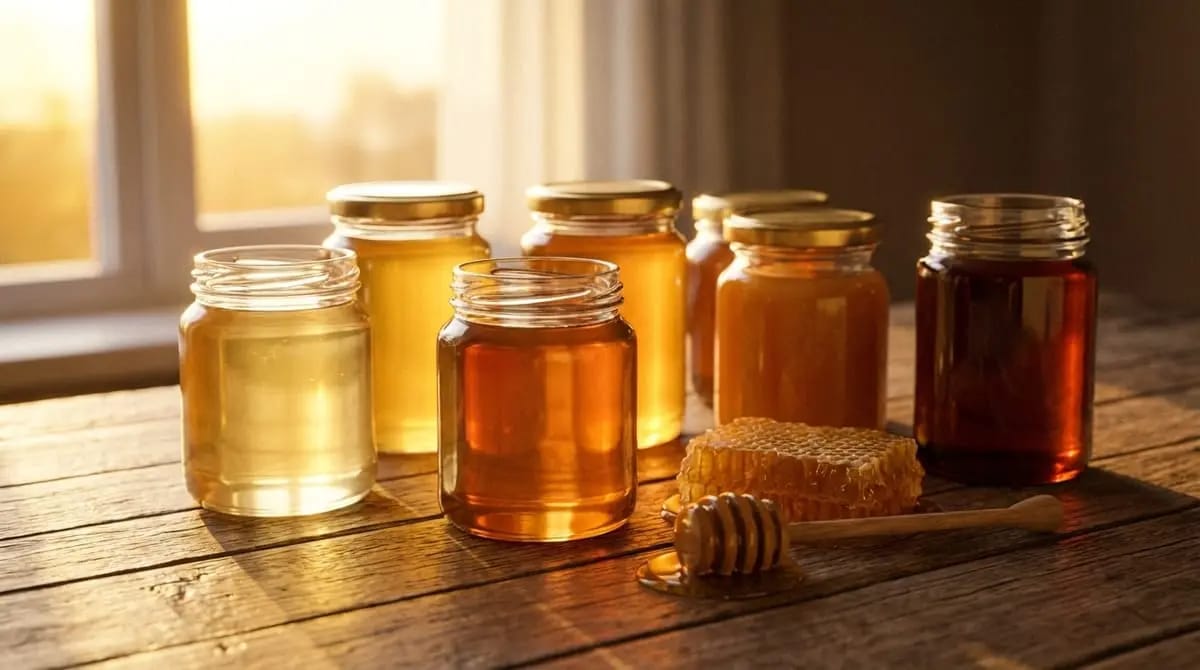
The moment you extract your first honey is something special for every beekeeper. But after the harvest comes the question: How do I track which honey came from which apiary and which colony? How do I create correct labels? And how can I show my customers where their honey comes from? Hivekraft accompanies you from the extraction room to the finished label.
Documenting the Harvest
Every honey harvest starts with the question: How much did you harvest, when, and from where? This data forms the foundation for everything that follows -- from batch management to labeling.
What Gets Recorded?
- Date: When was the honey extracted?
- Apiary and colonies: Which apiary and which colonies did the honey come from?
- Quantity: How much honey in kilograms
- Variety: Which nectar flow dominates (blossom, forest, linden, rapeseed, summer blossom, etc.)
- Moisture content: Refractometer reading in percent -- important for quality and compliance with honey regulations
- Quality notes: Color, consistency, taste, special characteristics
- 1
Create a new harvest
Navigate to the Harvests section in the sidebar and click New Harvest. Select the apiary and colonies you harvested from. You can select multiple colonies if you extracted them together.
- 2
Enter harvest quantity and variety
Enter the weighed honey quantity. Choose the honey variety. For mixed nectar flows, select the dominant variety or "Summer Blossom" / "Blossom Honey" as a general designation.
- 3
Record moisture content
Measure the moisture content with your refractometer and enter the value. The value must be below 20% (German Honey Ordinance), and below 18% for the German Beekeepers' Association (DIB). Hivekraft warns you if the value is too high.
- 4
Save
Save the harvest. It appears in your harvest list and is ready for bottling and labeling.
A kitchen scale is sufficient for small quantities. For larger harvests, use a platform scale or weigh the buckets. Accurate weight data is the foundation for correct labels and clean batch management.
Bottling and Batch Management
After extraction, the honey is stirred, set to cream, or bottled directly. Hivekraft manages bottling through a batch system: each bottling run gets a unique batch number.
Why Batches?
The lot number (batch) is legally required on honey labels. It serves traceability: if a customer has a complaint, you can trace the batch number to determine exactly when the honey was harvested, extracted, and bottled, and from which colonies it came.
Recording Bottling
- 1
Create a batch
From a harvest, you can create one or more batches. A batch is created when you bottle honey. Hivekraft automatically generates a unique batch number. You can also use your own system.
- 2
Jar size and quantity
Specify which jars you're bottling into (e.g., 500g, 250g, 50g) and how many jars you filled. Hivekraft calculates the total bottled quantity from this and checks whether it matches the harvest quantity.
- 3
Bottling date
The bottling date is automatically set to today. If you don't bottle on the same day, you can adjust it. The bottling date will appear on the label later.
Label Design: Compliant with One Click
Honey labeling is regulated by national food safety laws and EU regulations. Hivekraft creates labels that meet these requirements.
Mandatory Information on Honey Labels
The following information must appear on every honey label:
- Trade description: "Honey" or the specific variety (e.g., "Blossom Honey", "Forest Honey")
- Net fill quantity: In grams (e.g., 500 g)
- Name and address of the beekeeper (person placing the product on the market)
- Best before date (BBD): Typically 2 years after bottling
- Lot number: The batch number for traceability
- Country of origin: e.g., "German Honey" or "Honey from Germany"
- Nutritional declaration: Honey, as a single-ingredient product, is exempt from mandatory nutritional labeling in the EU, but voluntary disclosure is recommended
If you use the jar of the German Beekeepers' Association (DIB jar), additional DIB guidelines apply (max. 18% moisture content, invertase activity, etc.). Hivekraft supports both variants: DIB-compliant labels and free-form labels for neutral jars.
Designing Labels in Hivekraft
Hivekraft offers a label designer that automatically pulls mandatory information from your harvest and batch data:
- Variety and quantity are taken from the harvest
- Lot number comes from batch management
- Your name and address from your profile
- BBD is calculated automatically (2 years from bottling, adjustable)
You just need to choose the design and optionally upload your own logo. Then you can download the labels as a PDF and print them on suitable label sheets.
QR Code on the Label
What makes Hivekraft labels special: every label can include a QR code. And this QR code turns your jar of honey into a transparent product.
What Does the QR Code Show?
When a customer scans the QR code with their smartphone, a webpage opens with information about that specific jar of honey:
- Origin: Which apiary did the honey come from? The map shows the approximate location of the bee yard
- Harvest date: When was the honey extracted?
- Variety: Which nectar plants dominate in the region
- Beekeeper info: Who produced this honey? A brief profile
- Quality data: Moisture content and other quality characteristics
The QR code page is publicly accessible but only contains the information you choose to share. Your exact location is not revealed -- only the approximate area. You decide how much transparency you offer.
Why QR Codes?
In an era when consumers increasingly want to know where their food comes from, transparency is a real differentiator:
- Trust: Your customer sees that there's a real beekeeper behind the jar
- Conversation starter: The QR code sparks curiosity and opens a conversation about bees and beekeeping
- Recognition: Customers who have visited your honey page remember you
- Professionalism: A QR code signals a modern, transparent operation
Customer Transparency as a Competitive Advantage
Transparency isn't just a nice extra -- it's a tangible competitive advantage in the local honey market.
Regional Honey Faces More Competition Than You'd Think
The honey market is fiercely competitive. In many countries, the majority of consumed honey is imported. Regional honey must compete against cheap imports. The strongest argument: trust and proximity.
A customer who scans the QR code on your jar and sees that the honey came from a bee yard 5 km away, extracted three weeks ago, by a beekeeper who carefully tends their colonies -- that customer is willing to pay a fair price. And they'll come back.
Transparency in Practice
Here's how to use Hivekraft's transparency features in everyday life:
- At the market stand: "Scan the QR code and see where your honey comes from." This sparks interest and trust
- In your farm shop: The QR code page works as a digital showcase when you're not personally present
- As gifts: Honey with a QR code makes a thoughtful gift -- the recipient can discover the story behind it
- At your beekeeping club: Show other beekeepers how modern marketing works
Tips for Professional Labels
Less Is More
A good label is clean and uncluttered. The mandatory information must be there, but don't overload the design. A clear layout with readable fonts looks more professional than an overcrowded label.
Consistent Design
Use the same base design for all varieties and only vary the variety name and possibly the color. Recognition comes through consistency.
Print Quality
Invest in good label sheets (weather- and moisture-resistant in case the honey is stored in the fridge) and print with a decent printer. A smudged label makes a poor impression, no matter how good the honey is.
Honey itself is not an allergen under EU food labeling regulations. But if you sell honey with additions (e.g., honey with nuts, honey with cinnamon), you must label the allergens. For pure honey, no allergen labeling is required.
Knowledge Check
Which plants provide the nectar for your summer blossom honey? In the course Nectar Plants for Beekeepers (Lesson 3: Summer Nectar Flow), you'll learn all about linden, black locust, phacelia, and honeydew -- and why the variety on the label depends on the available nectar sources.
You've now learned the five most important Hivekraft workflows: from setup through the hive record and inspections to varroa management and harvesting with QR code labels. In the next lessons, we'll dive into advanced features: AI daily briefing, voice input at the bee yard, and IoT sensors.