Treating Bee Stings: First Aid and Prevention
Bee sting -- what to do? First aid, home remedies, recognizing allergic reactions, and when to see a doctor. All prevention tips.
A bee sting hurts -- no question. But in the vast majority of cases, it's harmless and can be treated well with simple measures. Still, it's important to know the right response: when are home remedies enough, when should you see a doctor, and when is it an emergency? In this article, you'll learn everything about first aid for bee stings, proven home remedies, and how to prevent stings in the first place.
Why Do Bees Sting at All?
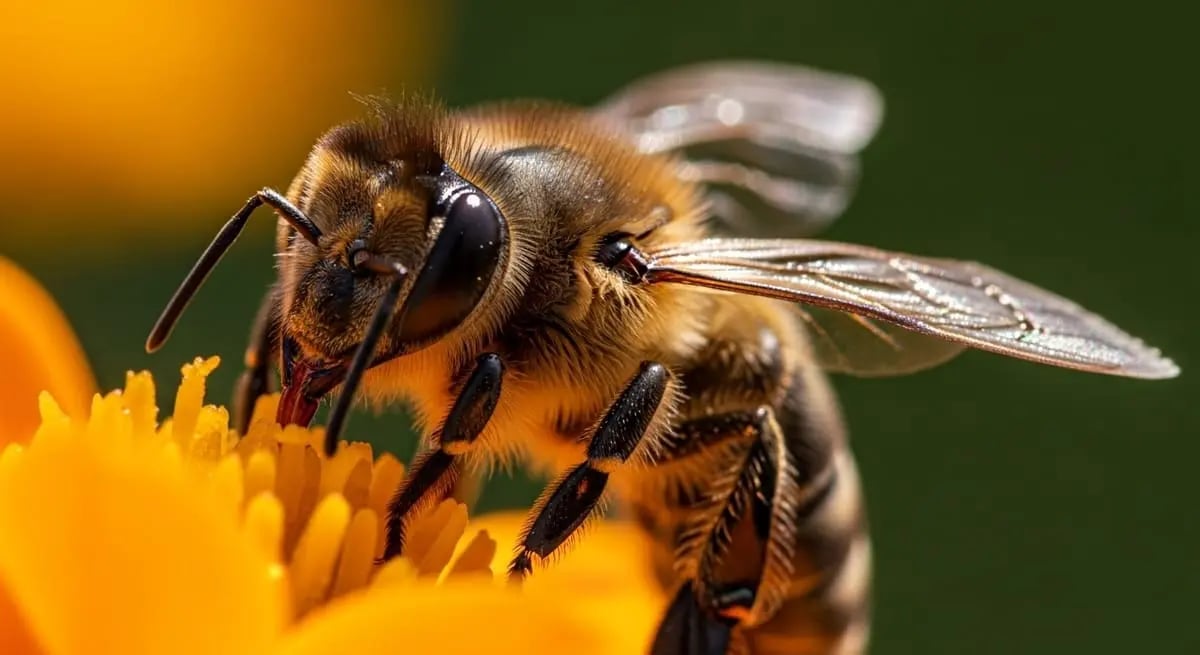
Bees sting exclusively in self-defense -- unlike wasps, which are also interested in your food. A honeybee only stings when it feels threatened or its colony is threatened. Important to know: A bee dies after stinging because the stinger with the venom sac remains embedded in the skin. That's why bees really only sting as a last resort.
Is there a stinger in the skin? Then it was a bee. Wasps retract their stinger and can sting multiple times. This distinction is important for first aid -- with bee stings, the stinger must be removed quickly.
Typical situations where bees sting:
- You step barefoot on a bee in the clover
- Rapid movements in front of the beehive
- Dark clothing -- bees react defensively to dark colors
- Perfume or hairspray -- certain fragrances provoke bees
- Crushing a bee that got caught in clothing or hair
First Aid for Bee Stings: Step by Step
Quick and correct action relieves pain and prevents more severe swelling.
- 1
Remove the Stinger Immediately
The venom sac pumps venom into the skin for up to 60 seconds. The faster you remove the stinger, the less venom enters the body. Scrape the stinger out sideways with your fingernail, a credit card, or a blunt knife. Avoid gripping the stinger with thumb and index finger -- this would squeeze the remaining venom into the skin.
- 2
Cool the Sting Site
Cold constricts blood vessels and slows the spread of venom. Use a cool pack, ice cubes in a cloth, or a cold spoon. Apply the cooling agent for 10 to 15 minutes to the sting site. Never place ice directly on the skin -- risk of frostbite.
- 3
Heat Against Itching (Optional)
An electronic sting healer (e.g., bite away) heats the sting site to about 51°C and relieves itching and swelling through concentrated heat. The effect is likely due to local inhibition of histamine release. Especially effective when applied within the first 2 minutes after the sting. Alternatively, briefly press a hot spoon onto the sting.
- 4
Antihistamine and Ointment
Apply an antihistamine-containing ointment or a cooling gel to the sting site. For more severe swelling, a tablet containing cetirizine or loratadine can help. If in doubt, ask at the pharmacy.
- 5
Observe
Keep an eye on the sting site for the next 30 to 60 minutes. Swelling of 5 to 10 cm around the sting is normal. If the swelling spreads further or symptoms appear at other body parts, please see a doctor.
What Happens in the Body During a Bee Sting?
Bee venom (Apitoxin) contains over 60 different substances. The most important are:
| Substance | Proportion | Effect |
|---|---|---|
| Melittin | ~50% | Causes pain, destroys cell membranes |
| Phospholipase A2 | ~12% | Main allergen, pro-inflammatory |
| Hyaluronidase | ~2% | Spreads venom through tissue |
| Histamine | ~1% | Redness, swelling, itching |
| Apamin | ~2% | Acts on the nervous system |
This amount is enough to trigger a local reaction -- the typical redness, swelling, and pain that everyone knows. For a healthy adult, only several hundred to over a thousand stings simultaneously are life-threatening (the LD50 is 2.8 mg/kg body weight). The danger lies not in the amount of venom but in the allergic reaction.
Normal vs. Allergic Reaction: How to Tell the Difference
Most bee stings cause a local reaction that, while unpleasant, resolves on its own within a few days. An allergic reaction is something entirely different -- and can be life-threatening.
Normal Reaction
- Immediate, sharp pain
- Redness and swelling around the sting (up to 10 cm diameter)
- Itching after a few hours
- Subsides within 1 to 5 days
- With repeated stings, the reaction may be stronger or weaker
Elevated Local Reaction
- Swelling larger than 10 cm in diameter
- Swelling spreads across an entire limb
- Lasts longer than 24 hours
- Can be uncomfortable but is generally not dangerous
- Doctor visit recommended for evaluation
Anaphylactic Reaction (Emergency!)
In an anaphylactic reaction, the immune system overreacts to the bee venom. This reaction can become life-threatening within minutes. Call emergency services (112 in Europe, 911 in the US) immediately!
Symptoms of anaphylaxis (can occur individually or together):
- Skin: Hives (wheals) all over the body, severe redness, itching far from the sting
- Airways: Difficulty breathing, tightness in the throat, hoarseness, wheezing
- Circulation: Dizziness, rapid heartbeat, blood pressure drop, fainting
- Gastrointestinal: Nausea, vomiting, diarrhea, abdominal cramps
- Time window: Symptoms usually begin 5 to 30 minutes after the sting
Emergency Measures for Anaphylaxis
If someone shows signs of a severe allergic reaction after a bee sting, every minute counts.
Emergency Checklist for Bee Sting Anaphylaxis
Important: Known allergy sufferers should always carry an emergency kit with epinephrine auto-injector, antihistamine, and cortisone -- especially in summer and near beehives.
Bee Stings at Special Body Locations
Not every sting is the same. The body location makes a big difference:
Sting in the Mouth or Throat Area
This is a medical emergency regardless of allergy. The mucous membranes swell and can block the airways. Call emergency services immediately and until they arrive, suck on ice cubes or apply cold compresses around the neck.
Sting Near the Eye
The eyelid can swell severely and remain swollen shut for days. A doctor visit is advisable to examine the eye itself for damage. Cooling is especially important here.
Sting on Fingers or Toes
Remove rings immediately before the swelling sets in! With severe swelling, rings can cut off blood flow and must be cut off at the hospital.
Sting on Children
Children react more strongly to bee venom due to their lower body weight. Watch children particularly carefully after a sting and don't hesitate to contact a pediatrician or emergency services if unusual reactions occur.
Home Remedies for Bee Stings: What Really Works?
Many home remedies circulate around bee stings -- some actually help, others are myths.
| Home Remedy | Effect | Assessment |
|---|---|---|
| Cooling (ice, cool pack) | Constricts vessels, reduces swelling | Very effective |
| Onion half placed on sting | Slightly cooling, antibacterial | Moderately effective |
| Vinegar compress | Cools and disinfects | Moderately effective |
| Plantain leaves | Anti-inflammatory when crushed | Good as immediate measure |
| Quark/curd compress | Long-lasting cooling | Good for large swelling |
| Saliva on the sting site | No proven effect | Ineffective |
| Toothpaste | Can additionally irritate skin | Not recommended |
| Sting healer (heat ~51°C) | Denatures venom proteins | Very effective |
Plantain grows almost everywhere along roadsides. Rub a few leaves between your fingers until juice emerges and place them on the sting. The anti-inflammatory compounds (aucubin and iridoids) can relieve swelling and itching -- a good immediate measure when you don't have a cool pack handy.
Preventing Bee Stings: 10 Practical Tips
Prevention is better than treatment. With these tips, you minimize the risk of getting stung:
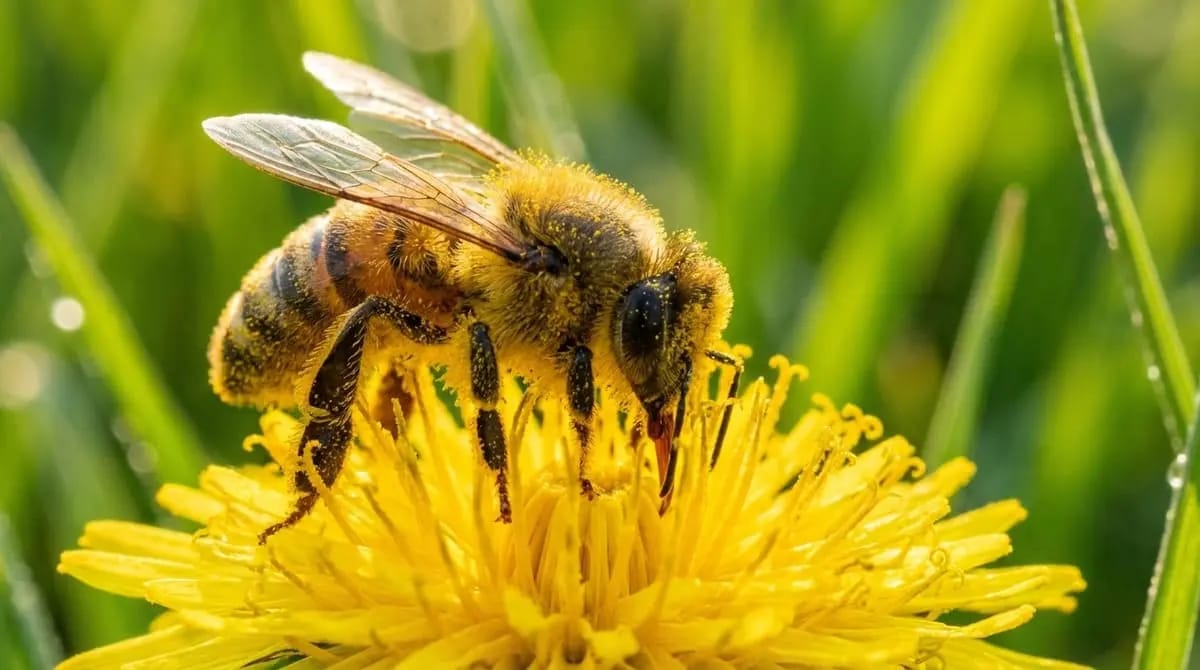
- Wear light clothing: Bees react defensively to dark colors (their natural enemy, the bear, has dark fur)
- No perfume or fragrances: Floral scents can attract bees, sweet scents make them aggressive
- Don't walk barefoot in clover: Bees love clover. In summer, better wear shoes
- Stay calm: Hectic movements and swatting provoke bees. Slowly back away instead of flailing
- Cover drinks outdoors: Especially protect sweet drinks with a lid, look into the glass before drinking
- Keep distance from beehives: Best not to cross the bees' flight path
- Don't stand in the flight path: Bees fly in a straight line to the hive. If you're in the way, you feel like an obstacle to them
- Avoid loose clothing: Bees can get trapped in baggy fabric and sting out of panic
- Pick up fallen fruit: Windfall attracts bees and wasps, pick it up or avoid it
- Wear a beekeeper's veil: Anyone working with bees should at least wear a veil -- stings to the face are particularly unpleasant
Desensitization: Long-Term Protection for Allergies
Those allergic to bee venom can be protected through specific immunotherapy (hyposensitization). Over a period of 3 to 5 years, a gradually increasing dose of bee venom is injected until the body builds tolerance.
The therapy is highly effective and covered by health insurance. It is especially recommended for:
- Beekeepers and their family members with proven allergy
- People who are frequently outdoors for professional reasons
- Persons who have already had a severe reaction
The first step is an allergy test with an allergist -- either as a prick test (skin test) or blood test (specific IgE against bee venom).
Special Situation: Bee Stings for Beekeepers

Beekeepers get stung regularly -- it comes with the craft. Interestingly, many beekeepers develop a natural tolerance over the years: the stings swell less and hurt for a shorter time. This is due to repeated exposure to small amounts of bee venom.
At the same time, an allergy can also develop even after many years. Beekeepers should therefore:
- Have their allergy status checked regularly (every 2-3 years)
- Always have an emergency kit at the apiary
- Inform other people at the apiary about possible emergency measures
- Wear good protective equipment, even if they think they are "toughened up"
The natural tolerance building through regular stings is not a controlled immunotherapy. It is entirely possible for a beekeeper to suddenly develop a severe allergy after years without a strong reaction. When in doubt: allergy test at the doctor.
Bee Stings on Pets
Dogs and cats occasionally get stung by bees -- usually on the snout or paws because they curiously sniff around.
Signs: Sudden whining, paw licking, swollen snout, scratching at the sting site.
First aid for pets:
- Remove stinger
- Cool the sting site
- Observe whether swelling recedes
- For swelling in the mouth area or breathing problems: Go to the vet immediately!
- Small dogs and cats react more sensitively due to their low body weight
Conclusion: Bee Stings Are Usually Harmless
In the vast majority of cases, a bee sting is painful but harmless. Quick stinger removal, cooling, and if needed an antihistamine ointment are completely sufficient as treatment. Those who know the warning signs of an allergic reaction and know how to respond correctly in an emergency are on the safe side.
Bees are peaceful, fascinating creatures that only sting when they feel threatened. With a few simple behavioral rules, most stings can be avoided -- and anyone who does get stung now knows exactly what to do.
Beekeeping for Beginners - Your Introduction to Keeping Bees Gifts for Beekeepers: The 25 Best Ideas for Every Occasion Explaining Bees to Children: Tips and Activities for Parents- Beekeeping for Beginners -- Lesson 3: Basic equipment including protective clothing
- Bee Health Complete Course -- Recognizing signs of a healthy colony
Less paperwork. More time with your bees.
Hivekraft is free for up to 10 hives. Register in 30 seconds.