Recognizing Signs of a Healthy Colony
Learn the key characteristics of a healthy honey bee colony: flight behavior, brood pattern, colony strength, food reserves, and debris analysis assessed systematically.
The ability to reliably assess the health status of a bee colony is one of the most important skills in beekeeping. Those who recognize early that something is wrong can act in time -- often long before visible disease symptoms appear.
In this lesson, you will learn systematically which parameters to observe during every inspection and how to get a reliable picture of the colony's condition. The good news: Much can already be assessed before opening the hive.
Diagnosis Begins at the Entrance
Before you lift the lid and fire up the smoker, take two to three minutes at the hive entrance. Flight behavior reveals a surprising amount about the colony's condition.
Recognizing Normal Flight Behavior
A healthy colony shows lively, orderly activity at the entrance:
- Orientation flights: In the early afternoon (1:00-3:00 PM), young bees hover in small clouds in front of the entrance, facing the hive. This "play flight" indicates active brood rearing.
- Foragers with pollen: Returning bees with visible pollen baskets are a strong indicator of open brood. No pollen collection in good weather may indicate queenlessness.
- Guard bees: Bees positioned at the entrance checking arrivals show an intact defense system and colony strength.
- Steady flight traffic: Purposeful, consistent departures and arrivals in good weather.
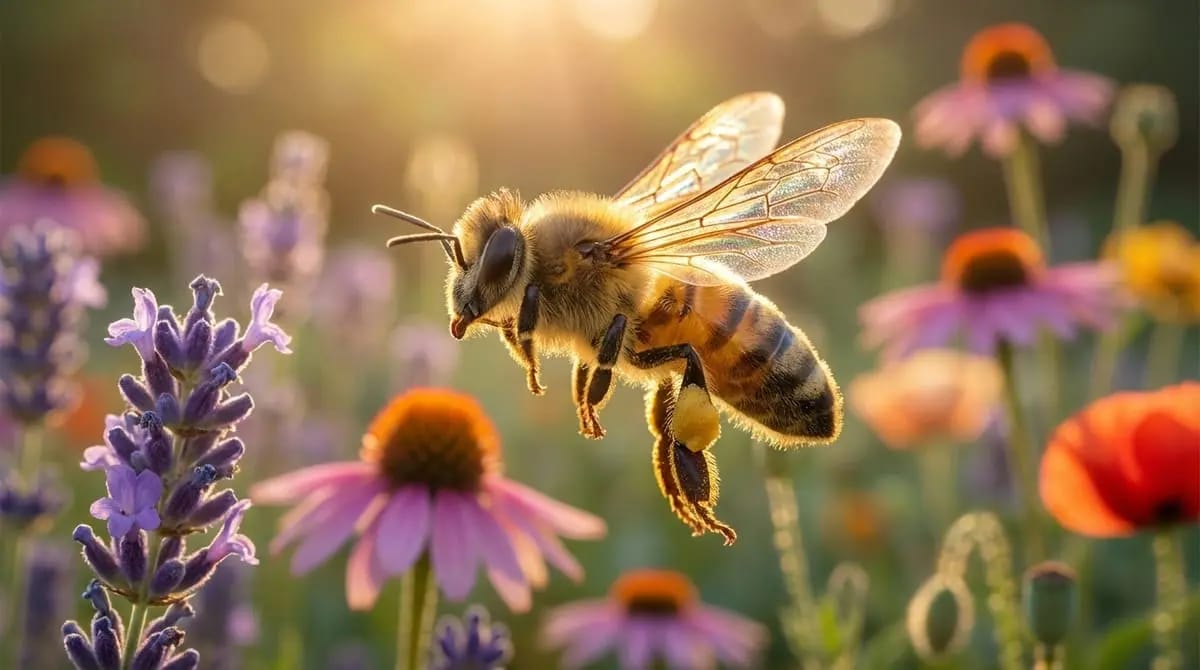
Make it a habit to spend at least 3 minutes in front of each hive during every apiary visit. Observe the flight activity, listen to the humming, pay attention to the smell. Over time, you will develop an unerring sense for when something is different than usual.
Warning Signs at the Entrance
| Observation | Possible Cause | Urgency |
|---|---|---|
| No flight activity in sunshine | Queenless, swarmed, colony dead | Check immediately |
| Crawling bees with deformed wings | Varroa/DWV infestation | Treat immediately |
| Fecal spots on the hive | Nosema, dysentery from poor feed | Check at next inspection |
| Mass die-off (>100/day) | Poisoning, varroa damage | Investigate immediately |
| Wasps entering unopposed | Colony too weak to defend | Reduce entrance |
| Trembling, black, hairless bees | CBPV (Chronic Bee Paralysis Virus) | Monitor colony, isolate if needed |
Assessing the Brood Pattern
The brood pattern is the most important health indicator during inspection. No other parameter provides such reliable information about the queen's condition and the presence of brood diseases.
The Perfect Brood Pattern
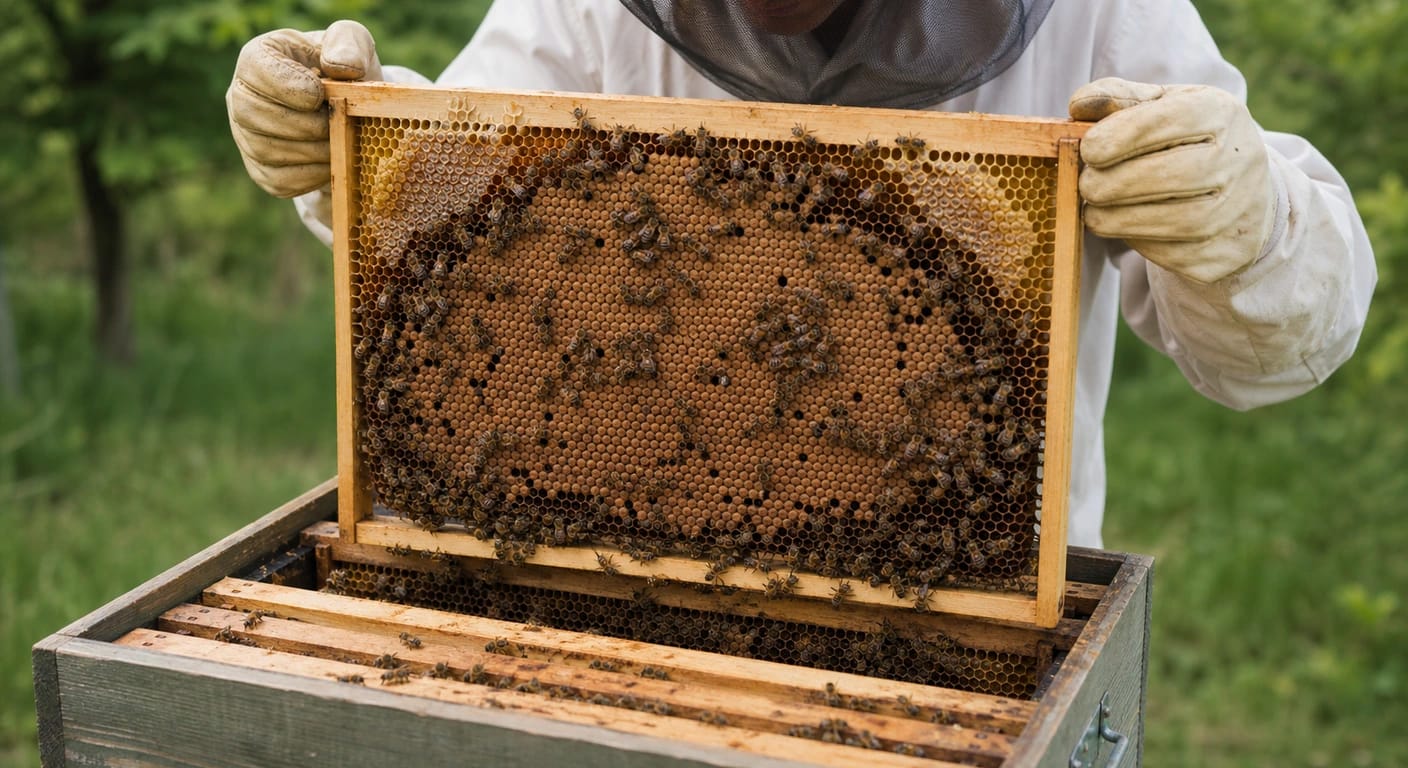
- Solid brood area: Fewer than 10% empty cells within the brood area
- Concentric arrangement: Oldest brood in the center, younger outside, food stores above
- Uniform capping: Slightly convex, light to medium brown, no punctures or spots
- Egg pattern: One egg per cell, upright in the cell center -- confirms a laying queen
Warning Signs in the Brood Pattern
- 1
Spotty brood pattern (> 20% gaps)
Possible causes: Inbred queen, old queen with declining laying performance, brood disease, or varroa infestation (hygienic behavior removes infested cells).
- 2
Bullet brood (drone brood in worker cells)
Highly domed cell cappings on worker cells indicate drone brood in worker cells -- a sign of an unmated queen or laying workers.
- 3
Sunken, perforated cell caps
An alarm signal for brood diseases, especially American Foulbrood (AFB). The bees try to remove sick larvae but cannot manage it.
- 4
Multiple eggs per cell
Multiple eggs, placed haphazardly on cell walls, indicate laying workers. Exception: Very young queens may initially lay this way -- it normalizes within a few days.
Any sudden deterioration of the brood pattern is a warning sign. If a colony previously had a solid pattern and suddenly becomes spotty: document the finding and check specifically at the next visit.
Estimating Colony Strength
The most common method is counting the occupied seams -- the space between two frames, viewed from above.
| Occupied Seams | Rating | Approximate Bee Count |
|---|---|---|
| 1-3 | Very weak | 2,000-6,000 |
| 4-6 | Weak to medium | 8,000-15,000 |
| 7-9 | Medium strong | 15,000-25,000 |
| 10-12 | Strong | 25,000-40,000 |
| 12+ | Very strong (swarm risk!) | 40,000-60,000 |
Count the seams at moderate temperatures (15-20 degrees Celsius) in the morning. In heat, bees cluster outside the hive (bearding), while in cold they cluster tightly -- both distort the count.
Checking Food Reserves
Adequate food supply is essential. Starvation is the second most common cause of colony losses after varroa.
Heft test: Lift the hive slightly from the back. A full standard brood box weighs approximately 15-18 kg, an empty one about 3-4 kg. With practice, your feel becomes remarkably reliable.
Food crown inspection: Capped honey is winter reserves, open glistening nectar is fresh intake. Pollen next to the brood indicates protein supply.
| Time | Minimum Reserves | Recommendation |
|---|---|---|
| Wintering (September) | 15-18 kg | Aim for 20 kg |
| December/January | 10-12 kg | Heft test every 4 weeks |
| February/March | 5-8 kg | Most critical time! Keep emergency feed ready |
| Nectar flow (May-July) | 3-5 kg in brood box | Feed immediately during dearth |
The colony starts brood rearing, food consumption increases sharply -- but there is no nectar available outside yet. Many colonies starve just weeks before the first nectar flow. Regularly check the weight and keep fondant as emergency rations ready.
Smell as a Diagnostic Tool
A healthy bee colony smells pleasantly of wax, honey, and propolis. Unusual odors are diagnostically valuable:
- Foul smell: Urgent warning sign for American Foulbrood (AFB). Contact the veterinary authority immediately!
- Sour, vinegar-like smell: Fermenting feed or European Foulbrood (EFB)
- Chemical smell: Normal after treatments, otherwise unusual
Reporting obligations and the specific authorities to contact (e.g., veterinary office) vary by country. The procedures described here apply primarily to Germany. Check with your local beekeeping association for the rules in your region.
The nose is the beekeeper's oldest diagnostic tool. Many experienced beekeepers smell foulbrood before they see the first symptom. Train your sense of smell -- it can save lives.
Dead Bees and Debris Analysis
Normal Mortality
- Summer: 500-1,000 dead bees per day (in a colony of 40,000-60,000). Most die outside.
- Winter: 20-50 dead bees per day, carried out during cleansing flights.
Debris Analysis
- 1
Insert debris board
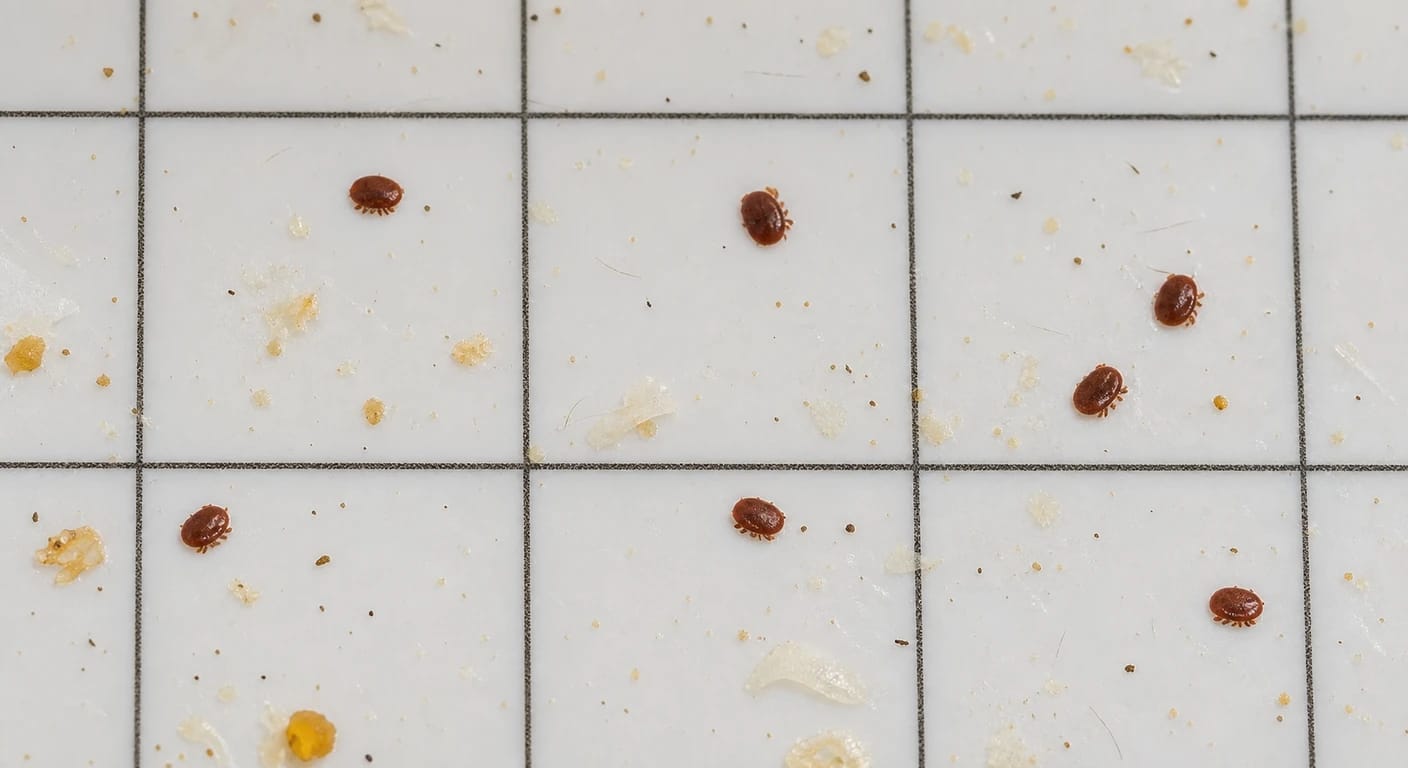
Slide a clean, light-colored board under the screened bottom board. Leave it for at least 3, ideally 7 days.
- 2
Count mites
Count varroa mites (reddish-brown, oval, approx. 1.5 mm), divide by the number of days = natural mite drop per day. Guidelines: up to 5/day in July is tolerable, over 10/day requires treatment, over 30/day is acutely critical.
- 3
Analyze other components
Look for: chalkbrood mummies (white/black hard lumps), wax moth frass (black crumb rows), pollen grains (colorful), unusual cell cap remnants.
- 4
Document findings
Record observations in your hive record. The trend over time is at least as important as any single finding.
Checking for Queenrightness
You do not necessarily need to spot the queen. The following indicators are sufficient:
- Eggs: Most reliable proof -- the queen was active within the last 3 days
- Youngest open brood: Small larvae in royal jelly also confirm an active queen
- Calm behavior: A queenright colony works calmly and in an orderly manner
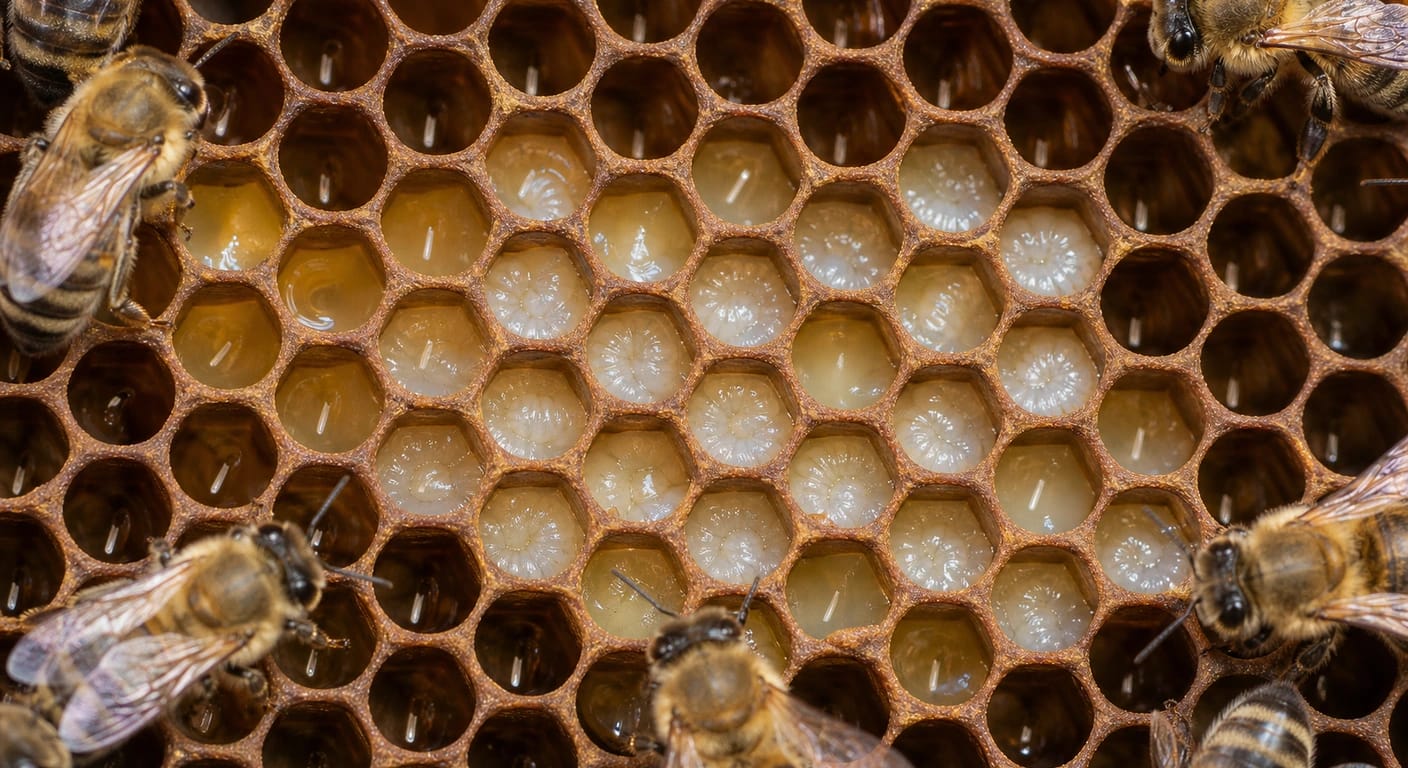
Signs of queenlessness:
- Restless behavior, plaintive "roaring"
- No eggs or young brood, only capped brood remaining
- Emergency queen cells on the comb surface
- In the final stage: Multiple eggs per cell (laying workers)
If you find no eggs: The queen may be taking a laying break or be on a mating flight. Wait 7-10 days and check again before intervening.
The Systematic Health Check
Health Checklist During Inspection
- Hive record card or app
- Pen
- Smartphone for photos
- Date and weather noted
- Flight behavior briefly described
- Colony strength in occupied seams
- Brood pattern assessed (solid/spotty/no brood)
- Queenrightness noted (eggs seen?)
- Food reserves estimated
- Anomalies and actions taken documented
- If suspicious: photos taken
Digital hive records make documentation much easier: assign photos directly, see trends graphically, get reminders for inspections. Documentation is also the first step toward a proper colony record book (mandatory under EU Regulation 2019/6).
Photograph at least one brood frame during every inspection. In the moment, you think you will remember -- but after 20 colonies and a 3-week gap, you will not know whether colony 7 had a spotty brood pattern. Photos are impartial and enable comparison over time: Was the brood pattern already spotty last month, or is it new? This trend is often more telling than any single finding.
When to Seek Professional Help
- Suspected AFB: Reportable disease! Immediately contact the veterinary authority.
- Unclear brood disease symptoms: Send a food crown sample to the bee research institute (often free of charge).
- Massive die-off: Secure samples, contact the veterinary authority and relevant research institute.
- Repeatedly weak colonies: Involve a bee health advisor or bee inspector.
The specific reporting requirements, authorities, and free diagnostic services vary by country. In Germany, suspected AFB must be reported to the local Veterinäramt, and the Julius Kühn-Institut (JKI) handles poisoning cases. Check with your national beekeeping organization for the equivalent bodies in your country.
A good beekeeper is not one who never has problems -- but one who recognizes problems early and acts decisively. Never hesitate to seek help.
Knowledge Check
In the next lesson, we will look at brood diseases: American and European Foulbrood, chalkbrood, and sacbrood.