Recognizing Poisoning and Pesticide Damage
Recognize symptoms of bee poisoning, properly secure samples, know reporting channels, and perform damage documentation for compensation claims.
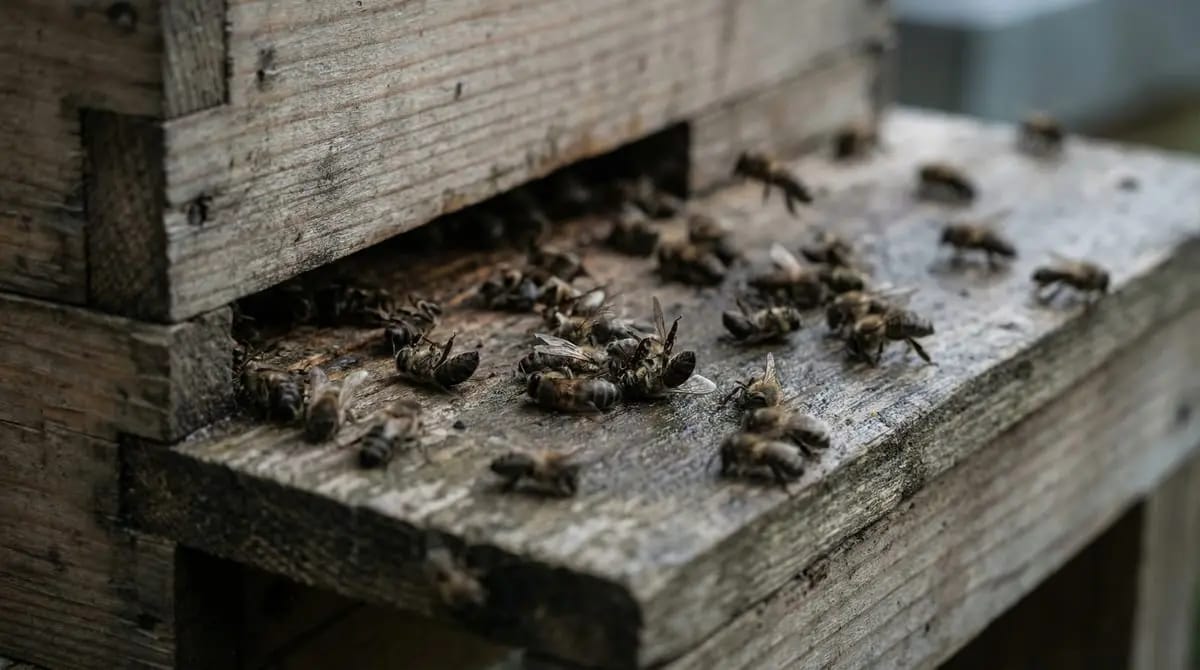
Poisoning from pesticides is a serious issue in beekeeping. Although bee protection regulations prohibit the use of bee-toxic pesticides during bloom in many countries, damage cases repeatedly occur through misapplication, spray drift, or tank mixtures.
In this lesson, you will learn to reliably identify poisoning damage, initiate the correct emergency measures, and document your case in a legally sound manner.
The specific regulations, reporting bodies, and investigation procedures described here apply primarily to Germany (Bienenschutzverordnung, JKI). Other countries have equivalent frameworks -- check with your national beekeeping association for local procedures.
Acute vs. Chronic Poisoning
| Feature | Acute Poisoning | Chronic Poisoning |
|---|---|---|
| Onset | Hours to 1-2 days | Weeks to months |
| Die-off | Massive (thousands) | Gradual, barely visible |
| Convulsions/trembling | Yes, typical | No or mild |
| Diagnosis | Relatively straightforward | Very difficult |
| Common causes | Pyrethroids, organophosphates | Neonicotinoids, fungicides |
| Recovery | Possible with mild damage | Often gradual decline |
Acute Poisoning
Occurs when bees are exposed to a high dose in a short time -- through contact with freshly sprayed plants or contaminated nectar.
Key symptoms:
- Mass die-off: Hundreds to thousands of dead bees on the landing board. In severe poisoning 10,000-30,000 bees within a single day
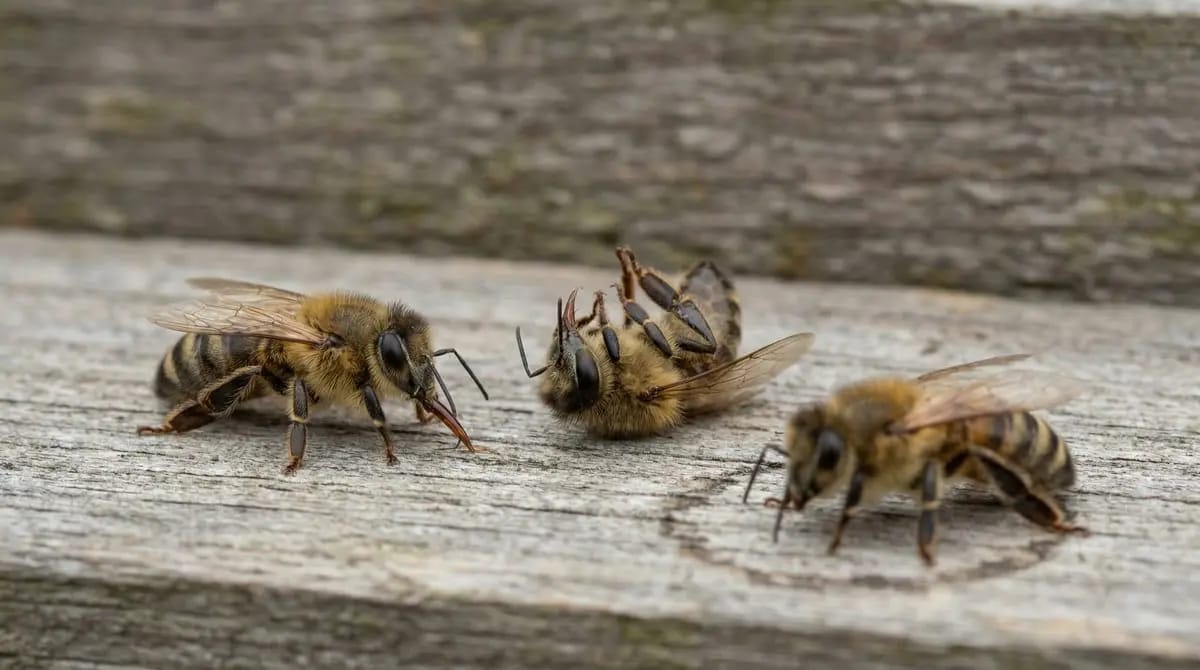
- Convulsing bees: Uncontrolled twitching, extended proboscis (tongue), spinning in circles
- Disorientation: Foragers cannot find the entrance, stagger, cannot land
- Wing paralysis: Bees with splayed wings, unable to fly (difference from DWV: sudden onset)
- Aggression: Particularly with pyrethroid poisoning
(1) Secure samples (see below), (2) Inform the veterinary authority and bee inspector, (3) If a legal violation is suspected: contact police, (4) Take photos and videos. Do not change anything until sample collection is complete!
Chronic Poisoning
Bees ingest low doses over weeks. The individual dose is not lethal, but the cumulative effect weakens the colony persistently:
- Silent decline: Colony shrinks, foragers do not return
- Navigation problems: Sublethal neonicotinoid doses disrupt orientation
- Weakened immune system: Increased susceptibility to Nosema and viruses
- Reduced honey yield without any other identifiable cause
Common Causes
Neonicotinoids
Since 2018, outdoor use of imidacloprid, clothianidin, and thiamethoxam has been banned in the EU (only permitted in greenhouses). These active substances bind to nerve cell receptors and disrupt navigation and learning ability even at sublethal doses. They are systemic -- distributed throughout the entire plant including nectar and pollen.
The outdoor ban on the three main neonicotinoids is considered a milestone, but it only affects three of several active substances in this class. Acetamiprid remains approved. Regulations may differ outside the EU.
Pyrethroids
Deltamethrin, cypermethrin, and others: widely used in agriculture (rapeseed, cereals, fruit). High contact toxicity -- bees die upon contact with freshly treated plants. According to bee protection regulations, not to be applied to flowering plants during bee flight.
Fungicides and Tank Mixtures
Fungicides inhibit the bee's detoxification enzymes (cytochrome P450). In combination with insecticides, toxicity can increase by 10 to 1,000 times! Individually "bee-safe," as a mixture highly toxic. Raise awareness among farmers in your area about this problem.
Herbicides
Glyphosate is not directly lethal to bees but damages the gut microbiome and increases susceptibility to Nosema. Broad-spectrum herbicides destroy flowering "weeds" and reduce the food supply -- a significant indirect harm.
Sample Collection for Laboratory Analysis
Correct sample collection is critical for proof and compensation. Faulty samples render the damage case useless.
- 1
Secure immediately (within 24 hours!)
Pesticides degrade quickly. Secure samples on the first day after discovering the damage.
- 2
Dead bees (Sample 1)
200-500 freshly dead bees from the landing board in a paper bag (not plastic -- causes mold, active substance degradation). Freshly dead = still soft and flexible.
- 3
Plant sample (Sample 2)
If the contamination source is known: flowers and leaves in a separate paper bag. Note GPS coordinates.
- 4
Comb sample (Sample 3)
Brood comb with fresh pollen wrapped in aluminum foil, then paper bag.
- 5
Send to the analysis laboratory
Send all samples chilled within 24-48 hours to the designated investigation authority. In Germany, this is the Julius Kuehn-Institut (JKI) in Braunschweig. Fill out the accompanying form (available online). The analysis is free for beekeepers in Germany. Contact your national beekeeping organization for the equivalent laboratory in your country.
Keep a ready-made kit: paper bags, aluminum foil, labels, pen, gloves, reporting form (printed), laboratory address. In the event of damage, you will not lose valuable time.
Reporting Channels
Pesticide Hazard Classification
The classification system described here (B1-B4) is specific to Germany's Bienenschutzverordnung. Other countries use different systems (e.g., the US EPA uses LD50 values). The principle is universal: bee-toxic products must not be applied to flowering crops during bee flight.
| Classification | Meaning | Restrictions |
|---|---|---|
| B1 (bee-toxic) | Lethal under normal use | NOT on flowering plants, not during bee flight |
| B2 (conditionally bee-toxic) | Dangerous under improper use | Specific conditions to observe |
| B3 (not bee-toxic) | Safe under normal use | None (but beware of tank mixtures!) |
| B4 (not bee-toxic) | Safe even at higher doses | None |
Reporting Chain Upon Poisoning Suspicion
- 1
Inform the bee inspector / bee health advisor
They come to the apiary, assess the damage, and assist with sample collection.
- 2
Contact the veterinary authority
Can initiate investigations and officially secure samples.
- 3
Contact the analysis laboratory
Send samples. In Germany, the JKI analyzes for over 500 active substances, free of charge.
- 4
Police (if a legal violation occurred)
If bee protection regulations were violated (e.g., spraying on flowering crops during bee flight).
- 5
Report to consumer protection authority
National agencies record cases statistically and can initiate measures.
Damage Documentation
Complete documentation is a prerequisite for compensation claims.
Documentation Checklist for Suspected Poisoning
- Smartphone/camera
- Scale reference (coin/ruler)
- Notepad
- Overview: Entire apiary with position of all hives
- Entrance: Each affected hive with dead bees in front
- Detail with scale reference: Close-ups of dead bees
- Surroundings: Adjacent agricultural fields
- Videos: Convulsing/disoriented bees (30-60 sec.)
- Timestamps: Enable camera metadata!
A consistently maintained hive record documents the condition before the damage and makes the incurred damage quantifiable. Digital hive records with timestamps have particular evidentiary value.
Prevention
Communication with Farmers
- 1
Make contact
Introduce yourself to farmers within a 3 km radius. Offer pollination services in return.
- 2
Coordinate spraying schedules
Ask for advance notice before spraying. This way you can limit bee flight if necessary.
- 3
Raise awareness about tank mixtures
Many farmers are unaware that fungicide-insecticide mixtures drastically increase bee toxicity.
- 4
Suggest flower strips
Buffer zones between sprayed areas and apiaries. Often funded through agri-environmental programs.
Location Management
- Distance: If possible, 200-500 m from intensively farmed areas
- Diverse forage sources: Varied landscape (forest, meadows, hedgerows)
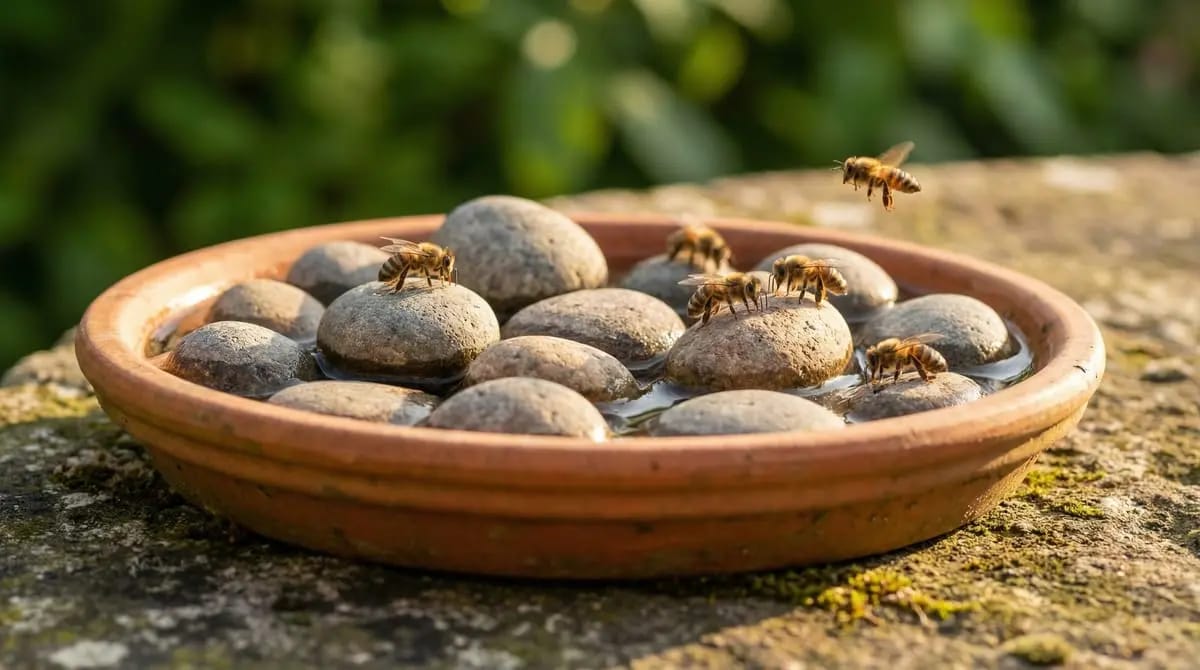
- Clean water sources: Avoid contaminated guttation water and puddles on treated fields
Distinguishing from Other Causes of Death
| Cause | Typical Symptoms | Difference from Poisoning |
|---|---|---|
| Varroa damage (DWV) | Deformed wings | Gradual increase, no convulsions |
| CBPV | Trembling, black bees | Hair loss, no mass die-off |
| Robbing | Fighting at entrance | Fighting visible, wax debris |
| Normal mortality | Few dead bees | Under 100/day, no convulsions |
| Starvation | Head in empty cell | No food, dead bees INSIDE hive |
Emergency Plan
IMMEDIATELY:
- Secure samples (200+ dead bees in paper bag)
- Photos and videos
- Call bee inspector / bee health advisor
WITHIN 24 HOURS: 4. Inform veterinary authority 5. Send samples to laboratory 6. If suspected violation: police
Contact your national beekeeping organization for the relevant laboratory and reporting channels in your country.
Every submitted sample is analyzed for several hundred active substances. But sample quality is critical -- fresh samples, correctly packaged, sent quickly. The more time passes, the harder detection becomes.
Knowledge Check
In the next lesson, we address weak colonies: finding causes, strengthening, or uniting -- with the newspaper method step by step.