Analyzing and Preventing Winter Losses
Understand typical winter losses, analyze dead colonies, and significantly increase your overwintering success rate with targeted prevention.
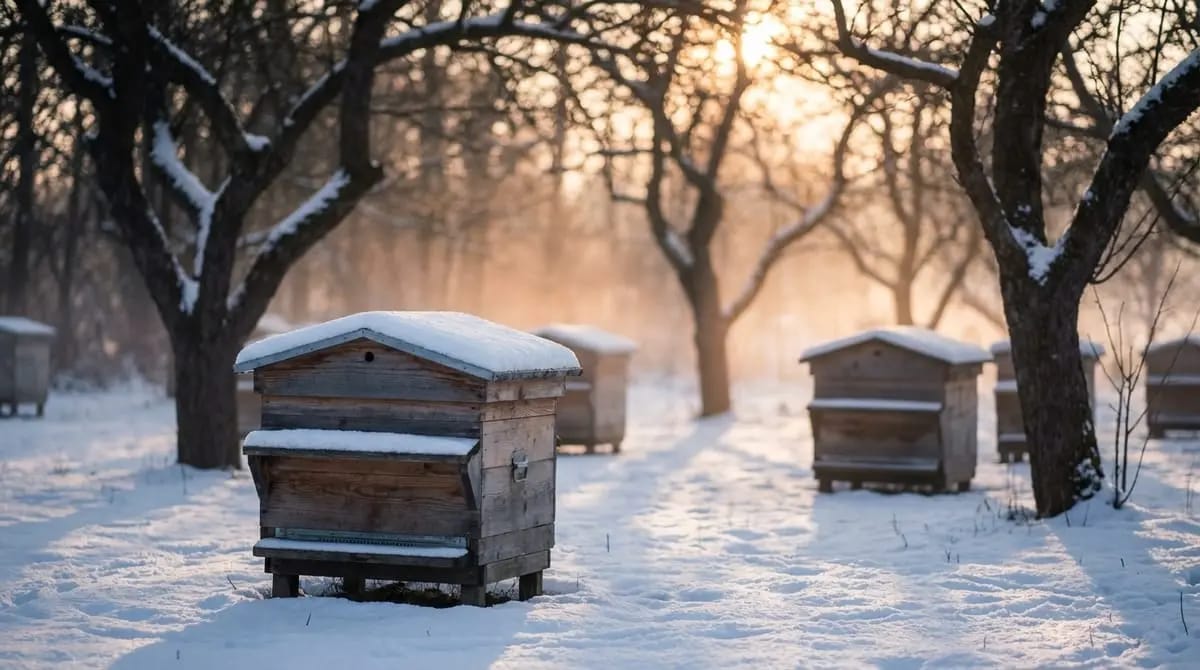
Winter losses are among the most painful experiences in beekeeping. When you open a hive in spring and find a dead colony, you face the question: What went wrong? Answering this question is not only important for your own learning -- it is crucial for doing better next winter.
In this lesson, you will learn how to realistically assess winter losses, systematically analyze a dead colony, and -- most importantly -- how to significantly increase your colonies' survival rate through targeted measures throughout the year.
Winter Losses: The Numbers
The statistics referenced here come from the German Bee Monitoring (DeBiMo) program. Similar monitoring programs exist in other countries (e.g., the BIP survey in the US, COLOSS internationally). Typical loss rates and their causes are broadly similar across temperate climates, though specific numbers vary by region.
Average Loss Rates
| Loss Rate | Assessment | Typical Cause |
|---|---|---|
| <10% | Very good -- exemplary management | Individual weak colonies, unavoidable individual cases |
| 10-15% | Normal -- average good beekeeping | Occasional varroa issues, individual queen losses |
| 15-20% | Elevated -- cause analysis recommended | Suboptimal varroa treatment, partly late feeding |
| 20-30% | Problematic -- urgent action needed | Systematic errors in varroa management or food shortage |
| >30% | Catastrophic -- review fundamental management practices | No or much too late varroa treatment, massive management failures |
Winter losses vary considerably between years. In good years (mild autumn, timely treatment) they are around 8-12%, in bad years (long cold spring, high reinvasion) they can rise to 20-25%. Occasional extreme years with 30%+ occur but disproportionately affect beekeepers with inadequate varroa management.
The Most Common Causes of Winter Losses
Cause #1: Varroa destructor
The varroa mite is by far the primary cause of winter losses. The mechanism: high mite load in late summer damages the winter bees that must carry the colony through winter. Winter bees normally live 6-8 months (compared to 4-6 weeks for summer bees), but varroa-damaged winter bees die prematurely. The colony shrinks continuously during winter and can no longer maintain the cluster.
An often overlooked factor is reinvasion: even well-treated colonies can be reinfested in late summer by mites from untreated neighboring colonies (via drifting bees, robbing, or drifting drones). In bee-dense areas, 100-300 mites per week can be introduced -- enough to negate a successful summer treatment.
The critical phase lies in August and September, when winter bees are being raised. Too high a mite load at this point causes damage that only becomes visible months later in winter. Those who only treat in October have already irreversibly damaged the winter bees -- even if the mites die afterward.
Cause #2: Food Shortage
The second most common cause of death: the colony starves. In temperate winters, a colony needs 15-20 kg of winter feed (sugar syrup stored as food reserves) depending on location and weather. Food shortage occurs through:
- Too little fed in autumn
- Too late feeding (the colony can no longer dry and cap the syrup)
- Feed gap: The winter cluster sits in one spot in the hive, has consumed the surrounding food, but cannot move to the full food frames in cold weather (below about 10 degrees Celsius) -- even if they are only a few centimeters away. Prevention: Arrange food frames tightly around the brood nest during wintering, not isolated at the edge of the box.
- Too early brood rearing in January/February consumes unexpectedly high amounts of food -- a brooding colony can consume twice as much food as a broodless one
Cause #3: Weak Colonies Wintered
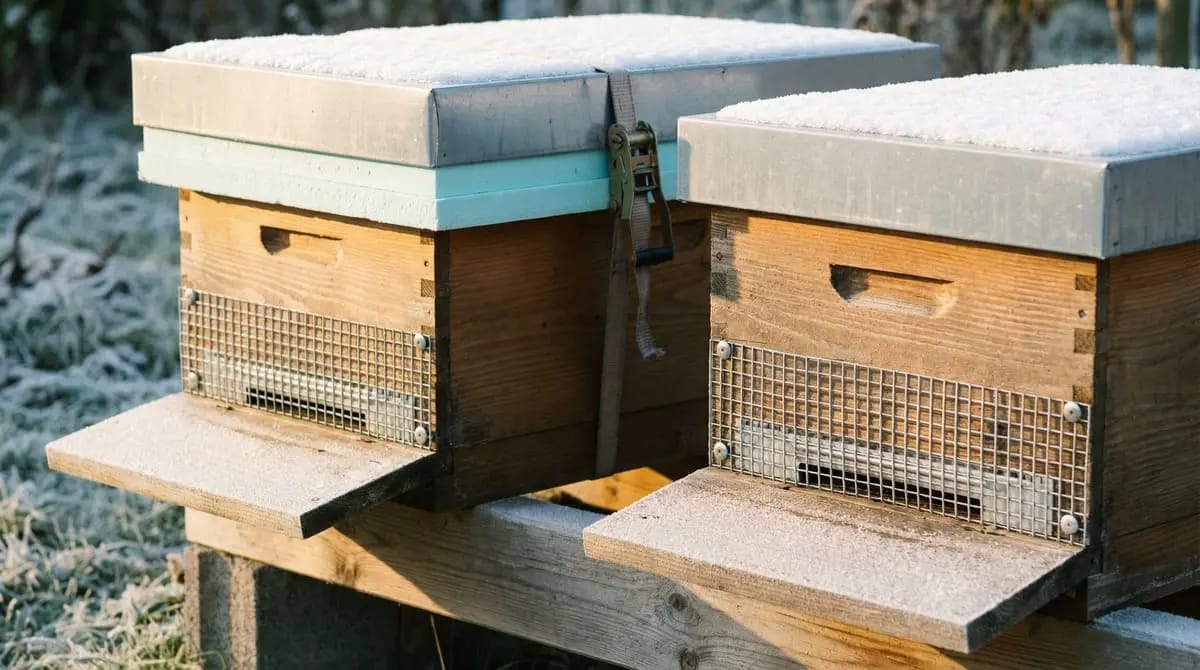
A colony must have a minimum size to maintain the winter cluster. The cluster is the survival mechanism: the bees form a dense ball and generate heat through muscle vibration. At the cluster core, temperatures of 20-25 degrees Celsius prevail, even with double-digit minus temperatures outside.
Rule of thumb: In October, a colony should have at least 8-10 well-occupied seams (approximately 5,000-8,000 bees) to overwinter safely. Weaker colonies should be united with others.
Cause #4: Queen Problems
- Old, weak queen: Does not lay enough brood in autumn to raise sufficient winter bees
- Unmated or missing queen: The colony enters winter without offspring
- Drone-laying: A drone-laying colony in autumn cannot be saved and should be united
Additional Causes
Dead Colony Analysis: Systematically Determining Causes
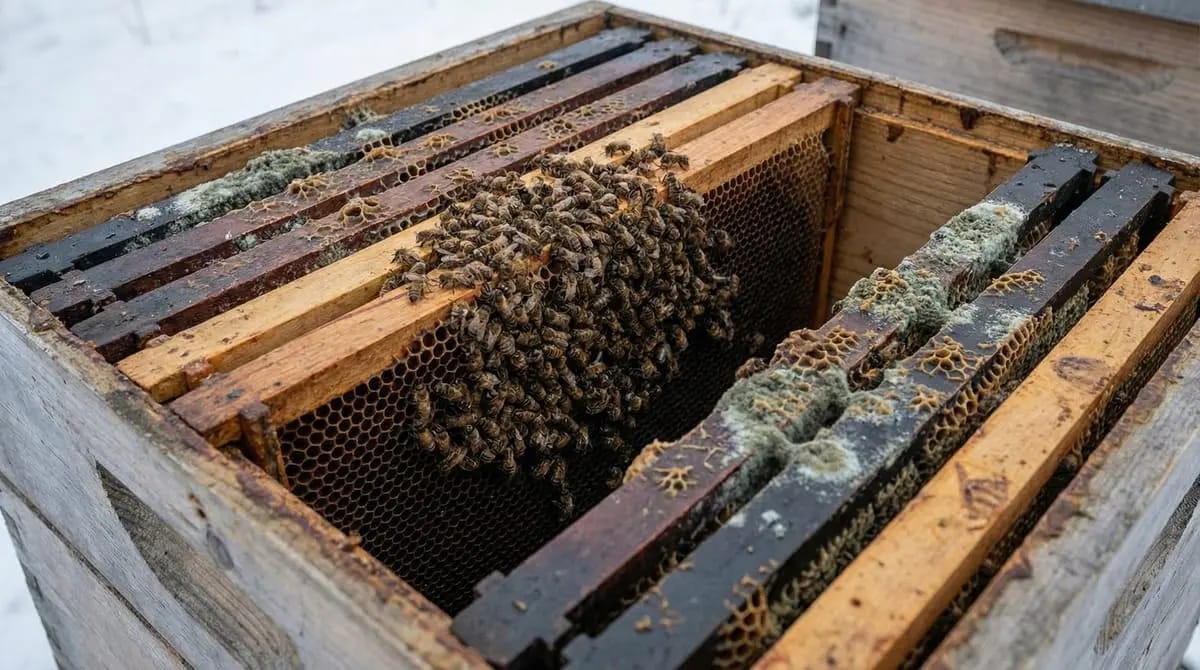
When you find a dead colony in spring, systematic analysis is essential. It provides the information you need to avoid repeating the same mistake.
- 1
External examination
Start from outside: Are there fecal spots on the hive, at the entrance, or on the front? Heavy soiling indicates Nosema or poor feed quality (honeydew in winter feed). Are dead bees piled up at the entrance? This may indicate a sudden cold snap or poisoning.
- 2
Examine dead bee debris
Examine the debris (material on the bottom board). Are there varroa mites? More than 5-10 mites per day natural mite drop in winter indicates too high residual infestation. Are there deformed bees with misshapen wings? This is a clear sign of DWV (Deformed Wing Virus) from varroa.
- 3
Position of dead bees
Where are the dead bees in the hive? The position reveals a lot:
- Head in cells, abdomen protruding: The bees starved. They tried to lick the last food remnants from cells and died doing so. Often you find full food frames right next to them -- a classic feed gap.
- Very few dead bees, hive nearly empty: The colony collapsed from varroa/viruses. The weakened bees flew out and did not return, or they became so few that the cluster could no longer be maintained.
- Many dead bees on the floor, normal amount: Probably poisoning or sudden cold death.
- 4
Check food reserves
Inspect the food frames: How much food remains? Full food frames with dead bees (head in cells) = feed gap (the cluster could not move). Empty frames everywhere = too little fed or too early brood start consumed reserves.
- 5
Analyze brood nest
Is there still capped brood? Brood with sunken, perforated caps may indicate foulbrood (contact the veterinary authority!). Normal but abandoned brood nest indicates sudden colony collapse (varroa/viruses).
- 6
Check combs for diseases
Examine combs for signs of disease: Ropy mass in brood cells = suspected American Foulbrood (immediately report to veterinary authority!). Mosaic-like brood nest with many empty cells = chalkbrood or other brood disease.
Quick Reference: Symptom Assignment
| Finding in Dead Colony | Most Likely Cause | Action |
|---|---|---|
| Head in cells, food available nearby | Feed gap (cluster could not move) | Next autumn: position food frames closer to brood nest |
| Head in cells, all frames empty | Too little fed / too early brood start | Feed more (at least 18-20 kg), check feed in February |
| Very few bees, frames nearly empty | Varroa/virus collapse | Review treatment strategy, treat earlier and more consistently |
| Heavy soiling inside and outside | Nosema / poor feed quality | No honeydew honey as winter feed, improve comb hygiene |
| Deformed bees, misshapen wings | DWV from high varroa infestation | Move summer treatment earlier, do not skip winter treatment |
| Ropy mass in brood cells | American Foulbrood (AFB) | IMMEDIATELY report to veterinary authority! Notifiable disease! |
If during dead colony analysis you find a ropy, brownish mass in capped brood cells (matchstick test: mass draws threads), contact the veterinary authority immediately. American Foulbrood is a notifiable animal disease. Do not reuse the combs and materials until the suspicion is resolved.
Prevention: The Key Lies in the Annual Cycle
Winter losses are not caused in winter -- they result from neglect in the months before. A consistent prevention plan throughout the entire beekeeping year is the best protection.
Spring (March-May)
- Spring inspection: Assess colony strength, support or unite weak colonies
- Check the queen: Is she vital and laying solidly? Replace old queens in time
- Comb hygiene: Sort out old, dark combs (maximum 3 years of use)
Summer (June-August)
- Varroa monitoring: Regularly check natural mite drop (debris analysis or sugar shake method)
- Summer treatment: Begin varroa treatment immediately after the last honey harvest (by end of July at the latest!)
- Make splits: Dividing strong colonies also reduces mite load through the brood break
Autumn (September-November)
Checklist: Wintering Preparation
Winter (December-February)
- Winter treatment with oxalic acid: During broodlessness (ideally 3 weeks after the last brood evidence, often late November to mid-December) perform oxalic acid treatment (trickling or sublimation)
- Feed check: In February/March, lift the hive from the back -- if it feels light, emergency feed with fondant on the top bars
- Entrance observation: On mild days, observe the cleansing flight; active bees, no fecal deposits on the hive = good sign
- Stay calm: Do not open, do not disturb, do not unnecessarily work at the apiary
If in February/March you find that a colony has too little food (hive noticeably light when lifted from the back), place fondant (sugar candy) directly on the top bars above the bee cluster. Liquid feed in winter is counterproductive -- it stimulates brood rearing and creates moisture. Fondant is consumed slowly as needed and prevents the worst.
Documentation: Learning from Losses
Careful documentation of every winter loss is the foundation for improvement. For each lost colony, record:
- Time of death (as far as determinable: last positive check vs. discovery of loss)
- Colony strength at wintering (seams)
- Food reserves at wintering (estimated in kg)
- Varroa treatments in the previous year (date, product, dose)
- Finding during dead colony analysis (symptoms, position of bees, remaining food)
- Presumed cause of death
- Measures for next year
Those who do not document and analyze their winter losses repeat the same mistakes. The beekeepers who consistently have under 10% losses year after year are not the luckiest -- they are the ones who consistently evaluate and adapt their practices.
Common Wintering Mistakes
Statistics and Trends
Monitoring data shows clear trends:
- Beekeepers who apply an integrated varroa control concept (summer treatment + winter treatment + biotechnical measures) average under 10% losses
- Beekeepers who only perform one treatment per year are at 20-25%
- Beekeepers without varroa treatment regularly lose 50-100% of their colonies
- Documentation and networking (beekeeping associations, monitoring programs) strongly correlate with lower losses
Knowledge Check
In the next lesson, we cover a topic that is often underestimated: hive hygiene -- from comb hygiene to the wax cycle to disease prevention.