Processing Honey: Extracting, Straining, Stirring
Professional honey processing: setting up the extraction room, producing creamed honey, pressed honey and comb honey as premium products. With the Dyce method for perfect creamed honey.
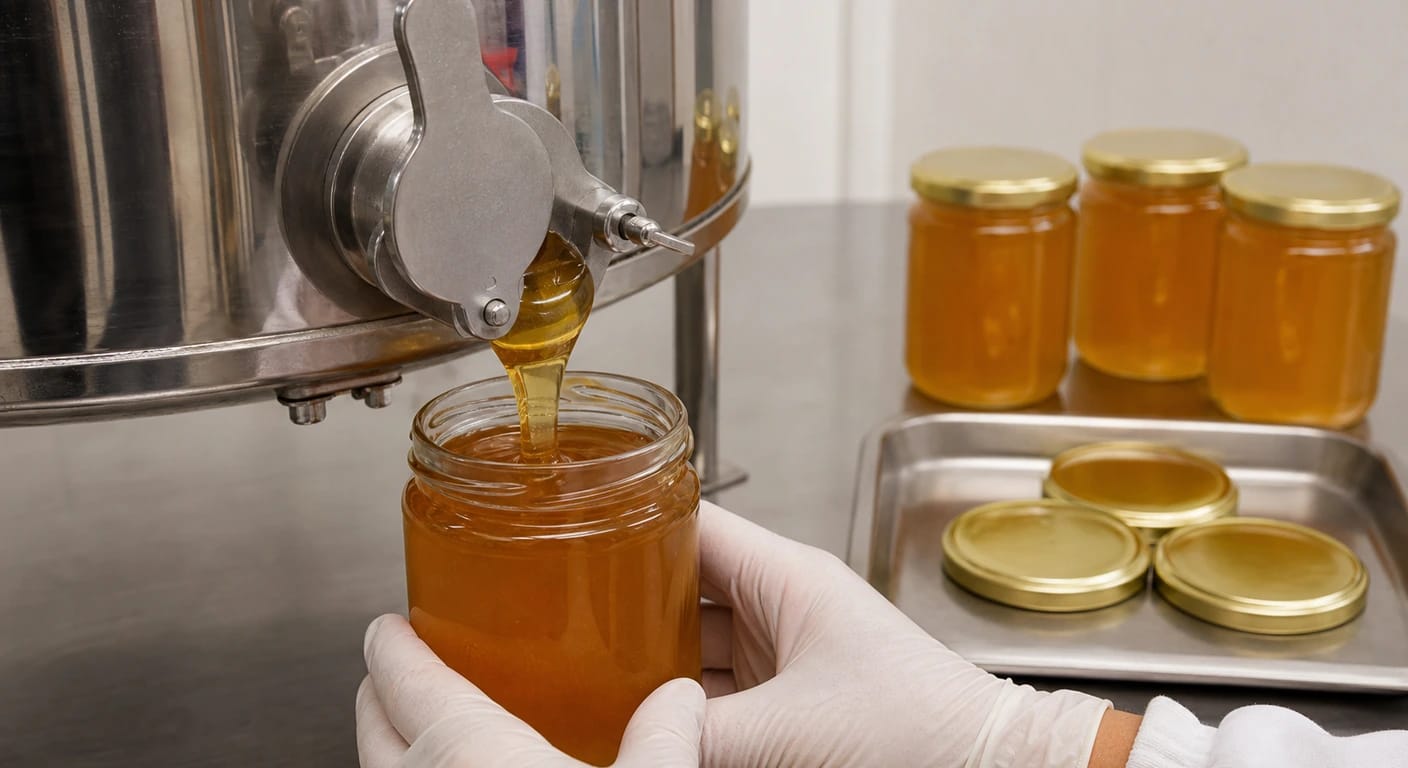
Processing determines whether your honey becomes a premium artisan product. In Lesson 2 we covered the harvest workflow. Here we go deeper into the critical steps: extraction room, uncapping, sieve technique and above all creamed honey production. We also look at two premium products: pressed honey and comb honey.
The Extraction Room
Legal Foundations
The specific legal references in this lesson (LMHV, EU 852/2004, HonigV) apply primarily to Germany. If you are based in another country, check your local food hygiene and honey regulations -- the principles of clean, hygienic processing are universal.
As soon as you place honey on the market, food law applies: the LMHV (Food Hygiene Regulation), EU 852/2004 and the Honey Ordinance (HonigV). Beekeepers with small quantities for direct sale benefit from simplified requirements.
In Germany, beekeepers with fewer than approximately 30-50 colonies who sell directly to consumers do not need a formal HACCP plan, but must maintain basic hygiene and be registered with the veterinary authority. Details vary by federal state.
Setting Up the Extraction Room
- 1
Choose the room
Tiled or smooth, washable walls and floor. A garage with epoxy floor, utility room or cellar will work. Kitchen: last resort.
- 2
Bee-proofing
Windows and doors must be bee-proof: fly screens on all windows. A single bee will attract dozens more.
- 3
Equipment
Water supply, drain, food-grade work surfaces (stainless steel, PE, PP), thermometer (target: 20-25 degrees), adequate lighting.
Many beekeeping associations operate shared extraction rooms with professional equipment. Ideal for beginners: you save the investment and learn from experienced members.
Hygiene
Hygiene Checklist
Every drop of water raises the moisture content and can trigger localised fermentation. Allow all equipment to dry completely after cleaning -- ideally overnight.
Uncapping in Detail
Cold vs. Heated
| Method | Price | Advantages | Recommendation |
|---|---|---|---|
| Cold knife + fork | 15-45 EUR | Affordable, sufficient | 1-10 colonies |
| Electrically heated | 40-80 EUR | Glides effortlessly, clean cut | 10-30 colonies |
| Steam uncapper | 80-150 EUR | Professional, consistently warm | 30+ colonies |
- Uncapping knife
- Uncapping fork
- Uncapping tray
- Stand the frame vertically on the uncapping tray
- Dip the knife in hot water (eases entry)
- Cut from bottom to top in a sawing motion, using the frame as a guide
- Work over depressions with the uncapping fork
- Repeat on the second side
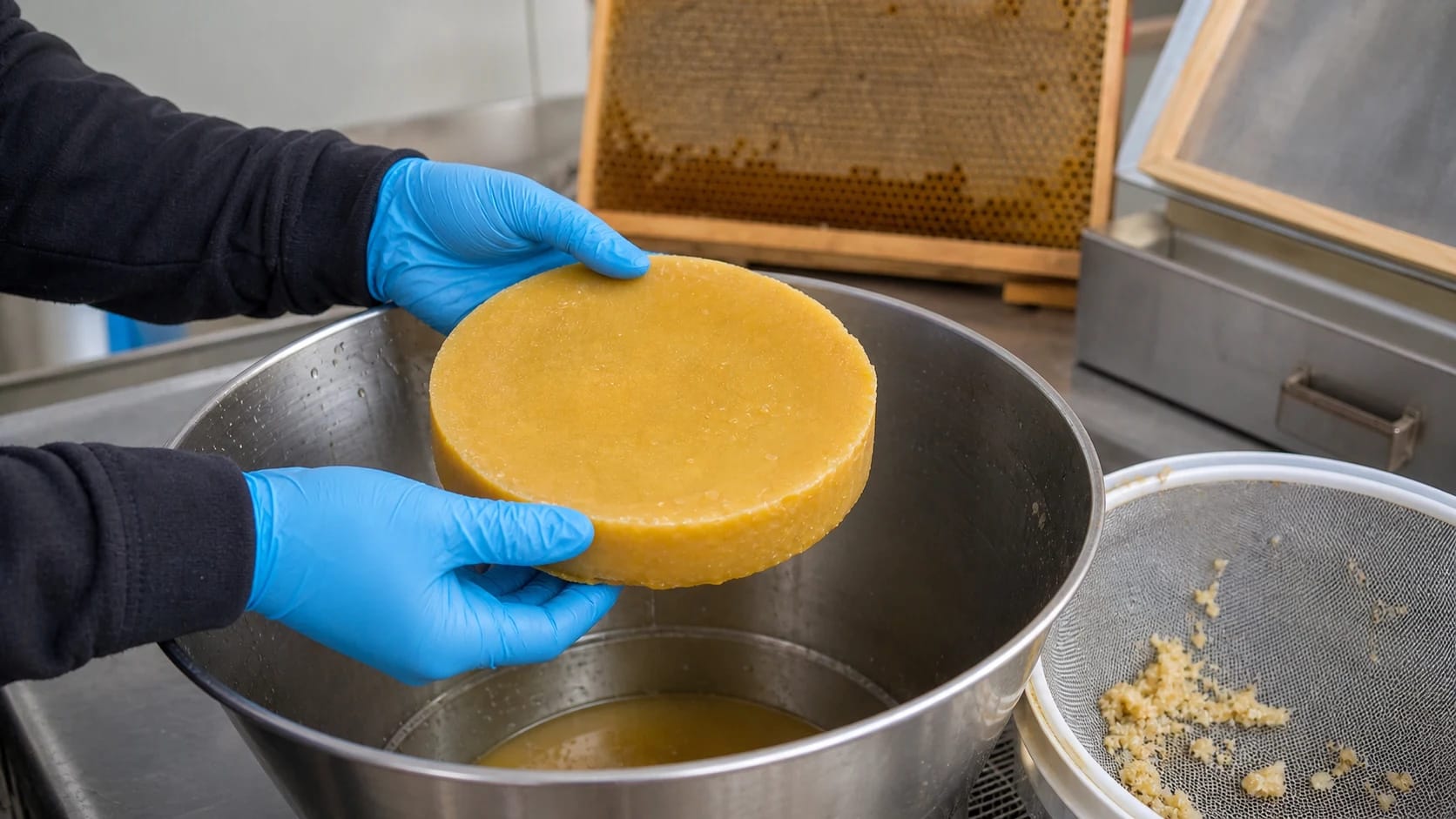
Using Cappings Wax
 AI-generated
Cappings wax is the lightest and lowest-residue wax. Uses: foundation sheets, candles, cosmetics, beeswax wraps. Value: 12-25 EUR/kg -- a worthwhile by-product.
Optimising Extraction
Speed Strategy
| Phase | Tangential extractor | Radial extractor | Goal |
|---|---|---|---|
| Ramp-up | 30-50 rpm | 50-80 rpm | Gentle start, no comb breakage |
| Main phase | 80-180 rpm | 100-250 rpm | Extract the honey |
| Final spin | 150-200 rpm | 200-300 rpm | Remove residual drops |
Starting too fast, asymmetric loading or cold combs cause comb breakage. Always start slowly and increase gradually!
Straining: Understanding Mesh Sizes
| Sieve type | Mesh size | Removes | Use |
|---|---|---|---|
| Coarse sieve | 0.8-1.2 mm | Wax pieces, propolis chunks | First stage (mandatory) |
| Fine sieve | 0.2-0.5 mm | Fine wax particles | Second stage (recommended) |
| Ultrafilter | under 0.01 mm | Pollen (!) | PROHIBITED under the Honey Ordinance |
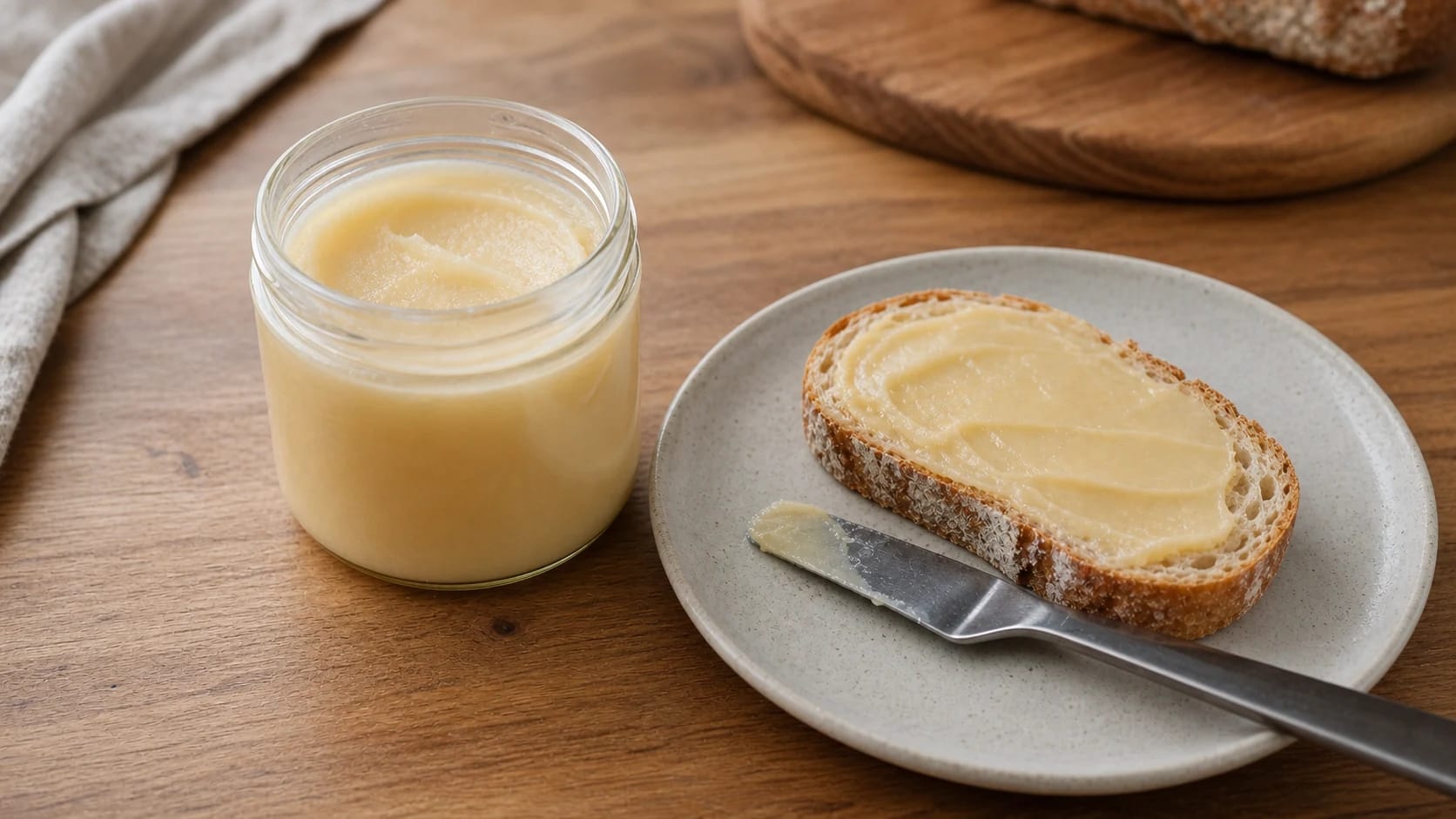
Making Creamed Honey: The Master Discipline
 AI-generated
The Principle
- Uncontrolled: Large crystals = coarse, sandy texture
- Controlled (stirred): Many microscopically small crystals = creamy, velvety, spreadable
The Dyce Method
The Dyce method (E.J. Dyce, Cornell University, 1935) is the gold standard for creamed honey.
- Freshly strained, skimmed honey
- Seed honey (5-10 % of the quantity)
- Stirring rod or stirring device
- Cool room (14-18 degrees C)
- Prepare honey: Freshly extracted, strained and skimmed, 20-25 degrees
- Stir in seed honey: Mix in 5-10 % finely crystallised honey evenly -- this provides crystallisation nuclei
- Cool storage: 14-18 degrees Celsius is optimal for many small crystals
- Days 1-3: Stir daily for 5-10 minutes, slowly and with a folding motion from bottom to top -- do NOT whisk quickly (air!)
- Days 4-10: Stir every 1-2 days. The honey becomes progressively firmer and lighter
- Readiness test: Uniformly creamy, no perceptible graininess on the tongue -- done!
- Bottle immediately -- overly firm creamed honey is difficult to dispense
For the first time: Buy fine-creamy honey (DIB quality). From the second season onwards, keep some of your own creamed honey as seed. Seed honey can also be frozen -- the crystal structure survives.
Stirring Methods
| Method | Tool | Effort | Recommended for |
|---|---|---|---|
| Hand stirring | Stainless steel stirring rod | High (daily 10-15 min.) | 1-3 settling tanks |
| Drill + paddle | Paint mixing paddle | Medium (daily 3-5 min.) | 3-10 settling tanks |
| Honey stirring machine | Nassenheider, CFM | Low (automated) | 10+ settling tanks |
Variety-Specific Stirring
| Variety | Start stirring | Duration | Note |
|---|---|---|---|
| Rapeseed honey | Immediately (day 1-2) | 5-7 days | Time-critical! Extremely fast crystallisation |
| Summer blossom | Day 3-5 | 7-14 days | Standard procedure |
| Linden honey | Day 5-7 | 10-14 days | Medium crystallisation |
| Acacia / forest honey | NOT stirred | -- | Stays liquid for a long time |
Common Stirring Mistakes
Pressed Honey: The Traditional Alternative
Pressed honey is obtained by pressing brood-free combs without heating -- the oldest method of honey production.
- Brood-free honeycombs
- Honey press (spindle/hydraulic)
- Press cloth
- Sieve
- Use only brood-free combs
- Break combs into coarse pieces, place in press cloth
- Press slowly and evenly -- pressing too fast forces wax through
- Filter through a fine sieve
- Let rest for 48 hours, skim
- Label as "Pressed honey" (mandatory!)
When it makes sense: Heather honey (cannot be extracted) and as a premium niche product. Price: 15-30 EUR/500g.
Comb Honey: The Premium Segment
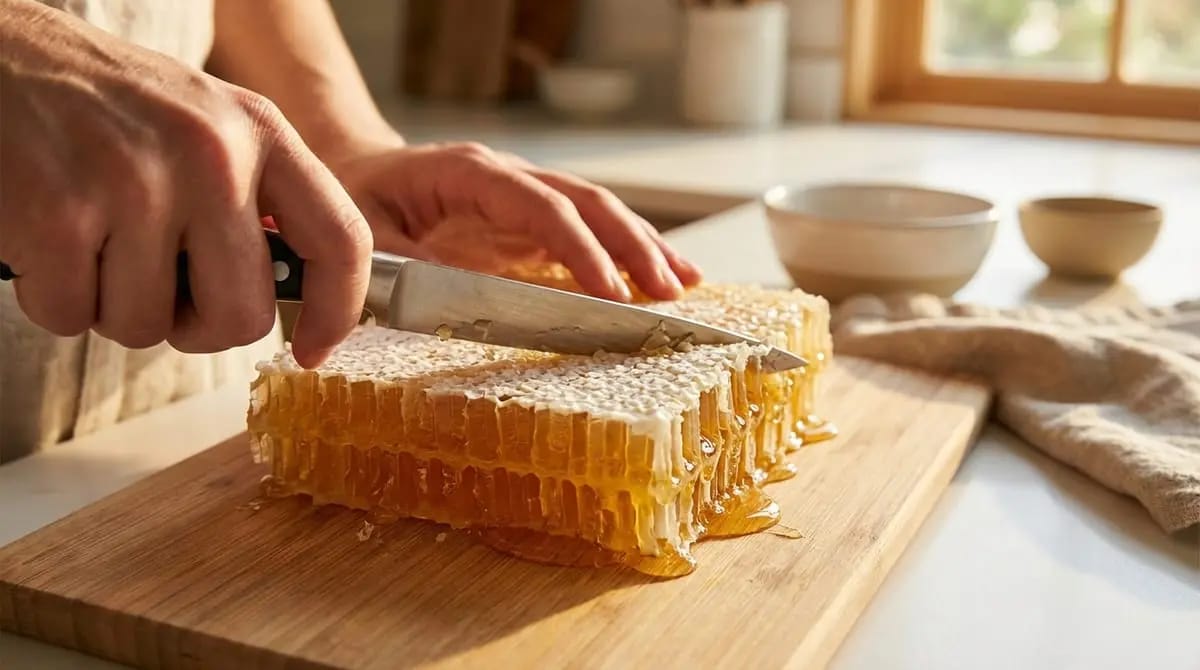
Comb honey is honey in capped combs -- the consumer eats it together with the edible wax.
- 1
Special frames
Use three-quarter frames or comb honey cassettes (e.g. Nicot). Use only starter strips instead of foundation -- the bees build pure natural comb.
- 2
Use strong colonies
Bees only build new comb rapidly during strong nectar flows. Weak colonies produce incomplete combs.
- 3
Wait for 100 % capping
Partially capped combs are not sellable. Combs must be light and fresh.
- 4
Portion and package
Cut into portions (200g, 350g), package in transparent trays. Determine the weight precisely.
Price Comparison of Product Forms
| Product form | Price / 500g | Effort | Feature |
|---|---|---|---|
| Extracted honey (liquid) | 6-10 EUR | Standard | Classic |
| Creamed honey (stirred) | 7-12 EUR | Medium | Most popular form in many markets |
| Pressed honey | 12-20 EUR | High | Niche, distinctive flavour |
| Comb honey | 15-30 EUR | High | Premium, gift item |
| Honey with comb piece | 12-18 EUR | Medium | Visual appeal |
Documentation: Batch Records
What to document?
Apps like Hivekraft make batch documentation easy: harvests are automatically linked to colonies and apiaries, batch records exported as PDF.
A first-class honey can be ruined by poor processing -- and an average honey can be elevated to a premium product through perfect processing.
Knowledge Check
In the next lesson you will learn about correct labelling: what must appear on the label, DIB rules and QR code integration.