Marketing Strategies: From Farm Gate to Online
Discover the best sales channels for your honey: direct sales, retail, online selling and restaurants with practical tips for implementation.
You have produced high-quality honey, bottled it cleanly and calculated your prices fairly (see Lesson 6). Now the decisive question arises: How do you get your honey to the customer? The choice of the right sales channel significantly determines your economic success -- and how much you enjoy the selling process.
In this lesson you will learn about the most important sales channels, from classic doorstep selling to a professional online shop. You will discover what legal frameworks apply, how to win and retain customers, and which mix of sales channels best suits your situation.
The specific legal references in this lesson (trade registration, small business regulations, tax rules) apply primarily to Germany. If you are based in another country, check your local regulations -- the marketing principles and sales strategies are universal.
Sales Channels at a Glance
Not every channel suits every beekeeping operation. The right choice depends on your colony count, time budget, region and personal strengths.
| Sales Channel | Investment | Time Required | Margin | Reach | Suitable From |
|---|---|---|---|---|---|
| Doorstep / friends & family | None | Very low | Very high | Very limited | 1 colony |
| Farm shop / farm gate | Low | Low | Very high | Local | 3 colonies |
| Farmers' market | Medium | High | High | Regional | 8 colonies |
| Zero-waste / organic shops | Low | Medium | Medium | Regional | 10 colonies |
| Retail / delicatessens | Medium | Medium | Medium-Low | Regional | 15 colonies |
| Own online shop | Medium-High | High | High | Supra-regional | 10 colonies |
| Marketplaces (Etsy, Amazon) | Low | Medium | Medium | Supra-regional | 5 colonies |
| Restaurants & hotels | Low | Low | Medium | Local | 10 colonies |
Channel 1: Direct Sales at the Doorstep
The simplest and most profitable form of marketing: you sell directly to neighbours, colleagues, friends and their acquaintances. No stall, no shop, no shipping -- just you and your honey.
Why This Works
- Highest margin: 100 % of the selling price stays with you
- No overhead: No stall fees, no shipping costs
- Trust: Your customers know you personally
- Word of mouth: The best advertising is a personal recommendation
How to Build Your Customer Base
- 1
Inform your circle
Tell neighbours, colleagues, club members and parents from the nursery or school that you keep bees and sell honey. Many do not know, even though they buy honey regularly. A short post in the neighbourhood WhatsApp group works wonders.
- 2
Offer tasting portions
Give away small tasting jars (50g) to potential customers. The effort is minimal, but once someone has tried your honey, they typically come back as a buyer. Expect a conversion rate of 60-80 % from tasting portions.
- 3
Make yourself visible
A small sign on your garden fence ("Honey from our own apiary") or a notice on the supermarket pinboard brings surprisingly much. Even a simple business card with your phone number and a photo of your bees is often enough.
- 4
Create a customer list
Keep a simple list with names and contact details of your customers. When the new harvest comes, send them a short message. Repeat customers are gold -- they buy regularly and recommend you further.
- 5
Offer a delivery service
Offer to drop off the honey at the next opportunity -- on the way to work, during a walk in the neighbourhood. This convenience creates loyalty and is hardly any extra effort for you.
If each of your 50 repeat customers buys 2 jars of 500g twice a year, that is 200 jars = 100 kg of honey. At 8.50 EUR per jar, that is 1,700 EUR revenue -- purely through word of mouth, without a single market day. For a beekeeping operation with 5-8 colonies, this can already cover the entire harvest.
Channel 2: Farmers' Market
The farmers' market is the classic of honey marketing and offers a unique combination of visibility, personal contact and fair prices.
Prerequisites
- Market registration: Apply at the town council or market manager
- Stall fee: Depending on the city, 10-50 EUR per market day (sometimes seasonal fee)
- Equipment: Table, standing table, tablecloth, price signs, change, bags
- Products: At least 3-5 different varieties/products to fill an attractive stall
- Trade registration: Usually required for regular market participation (unless covered by primary production rules, see below)
Tips for a Successful Market Stall
Market Stall Checklist
The farmers' market thrives on regularity. If you are there every week, customers know: Saturday morning I get my honey from Sabine. That builds a relationship no online shop in the world can replace. And these customers also come when it is not market season -- they simply call.
Revenue Potential at the Farmers' Market
A well-attended market stall can generate 150-500 EUR revenue on a Saturday morning. Over 40 market days a year (roughly once a week, excluding holidays), that is 6,000-20,000 EUR annual revenue. Of course, you need corresponding quantities -- a farmers' market is realistically worthwhile from 15-20 colonies or when you supplement your range with by-products.
Channel 3: Retail (Organic Shops, Zero-Waste Shops, Delicatessens)
Retail offers you continuous sales without your own stand time. However, you share the margin with the retailer.
Which Shops Are Suitable?
| Shop Type | Typical Margin for You | Advantages | Disadvantages |
|---|---|---|---|
| Organic shops | 55-65 % of retail price | Quality-conscious customers, good image | Often expect organic certification |
| Zero-waste shops | 60-70 % of retail price | Sustainability-minded audience | Small quantities, bulk containers needed |
| Delicatessens | 50-60 % of retail price | Higher end prices accepted | High expectations for packaging |
| Farm shops (others') | 65-75 % of retail price | Fitting environment, regional customers | Limited passing trade |
| Health food stores | 50-60 % of retail price | Health-conscious target group | Declining sector in some markets |
| Bakeries / cafes | 60-70 % of retail price | Daily customer traffic | Limited shelf space |
How to Convince a Shop Owner
- 1
Research and preparation
Visit the shop as a customer. Look at the range: Is there already honey? What price category? Which brands? Note what makes your honey different or better.
- 2
Seek a personal conversation
Do not simply walk in with a jar of honey. Arrange a short meeting. Explain who you are, where your bees are located and what makes your honey special (regional origin, varietal purity, quality standards).
- 3
Bring samples
Bring 2-3 jars for tasting. Let the honey speak for itself. Quality convinces -- especially with food retailers who taste good products daily.
- 4
Discuss terms
Be open about your price expectations. Standard in the natural food trade: purchase price = 55-70 % of the retail price. With a retail price of 10.00 EUR, you receive 5.50-7.00 EUR per jar. Also clarify: delivery frequency, minimum order quantity, consignment vs. outright purchase.
- 5
Provide professional documents
Create a simple price list with all available products, container sizes and your wholesale prices. A brief producer profile (1 page) with photo, location and specialities helps the retailer actively recommend your honey.
Outright purchase means: the shop buys the honey from you and bears the sales risk. You receive your money immediately. Consignment means: the honey remains yours until it is sold. You bear the risk but often receive a higher share. For getting started, consignment is easier because the retailer takes no risk. For established relationships, outright purchase is better for your liquidity.
Channel 4: Online Sales
Online selling opens up customers far beyond your region. However, it also brings challenges: shipping costs, packaging effort and legal requirements.
Option A: Marketplaces (Etsy, Amazon, classified ads)
| Platform | Fees | Effort | Reach | Recommendation |
|---|---|---|---|---|
| Etsy | 6.5 % transaction + 4 % payment processing + 0.30 EUR per sale + 0.18 EUR/listing (effective 12-15 %) | Medium | High (artisanal) | Ideal for gift sets and premium |
| Amazon (FBM) | 8-15 % + 39 EUR/month | High | Very high | Only worthwhile for large quantities |
| Local classifieds | Free (basic) | Low | Regional | Good for local pick-up |
| Regional platforms | Variable | Low | Regional | Local food cooperatives, community-supported platforms |
Platforms that combine online ordering with local pick-up are growing worldwide. Customers order online, you deliver once a week to a collection point. The platform typically takes 15-20 % commission, but you get a regular sales channel with no stall fees and with predictable quantities. An excellent option, especially in cities.
Option B: Your Own Online Shop
Your own shop gives you full control over brand, prices and customer relationships. However, the effort is considerably higher than with marketplaces.
Recommended platforms for beekeepers:
| Platform | Monthly Cost | Difficulty | Features |
|---|---|---|---|
| Shopify | from 36 EUR | Easy | Professional, many templates |
| WooCommerce (WordPress) | from 5 EUR (hosting) | Medium | Flexible, open source |
| Squarespace / Jimdo | from 15 EUR | Very easy | Drag-and-drop, built-in compliance tools |
| Etsy + own domain | from 0 EUR | Easy | Quick start, limited customisation |
Shipping Costs and Packaging
Honey shipping has special requirements:
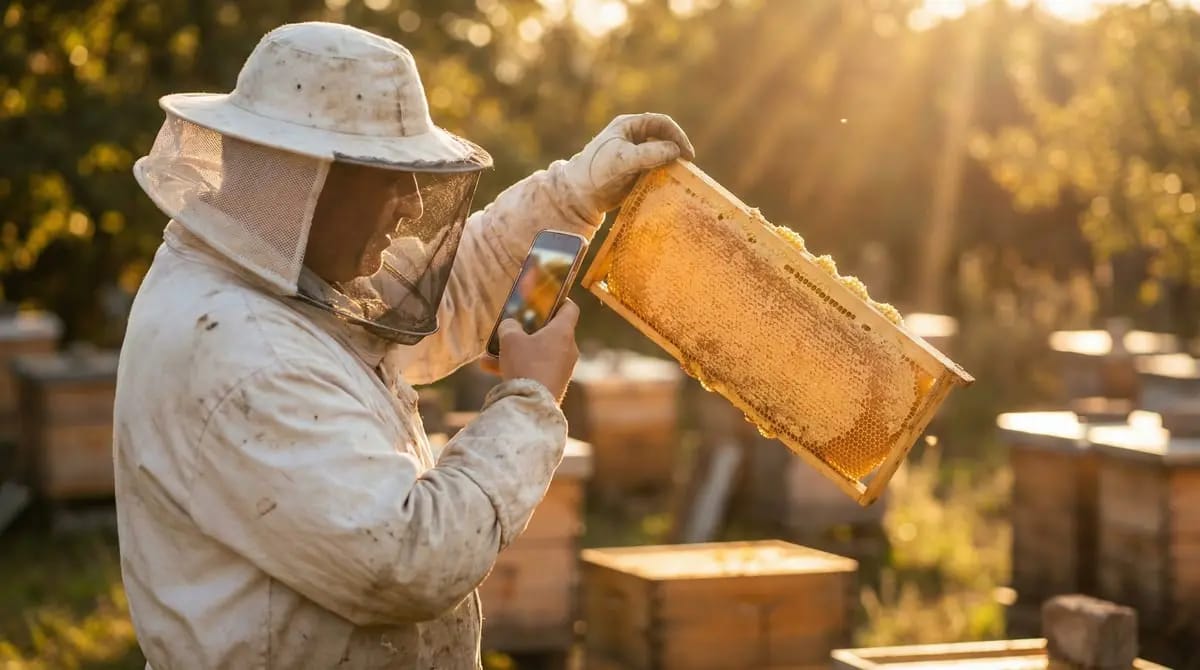
Honey jars must be break-proof packaged. A broken jar in a parcel means not only product loss but also an unhappy customer. Invest in proper shipping packaging -- this is not a place to cut costs.
Recommended packaging solution:
- Special honey shipping boxes (approx. 1-2 EUR/piece for 2-6 jars)
- Alternatively: bubble wrap + sturdy boxes
- Wrap each jar individually
- Mark the box "Fragile" / "Handle with care"
Shipping costs (indicative, national parcel services):
- Small packet (up to 2 kg): approx. 4-5 EUR
- Parcel (up to 5 kg): approx. 7-8 EUR
- Parcel (up to 10 kg): approx. 10-11 EUR
Most customers dislike shipping costs. Three proven strategies:
- Free shipping above X EUR (e.g. above 30 EUR) -- encourages larger orders
- Flat rate (e.g. 4.90 EUR) -- simple and transparent
- Included -- factor shipping costs into the product price and advertise "free shipping"
Channel 5: Restaurant Partnerships
Restaurants, cafes, hotels and bakeries are often looking for regional quality products -- and willing to pay fair prices.
How to Win Restaurant Customers
- 1
Identify the target group
Look specifically for businesses that focus on regionality and quality: restaurants with a "from producer to plate" philosophy, organic cafes, breakfast hotels, artisan bakeries. Read menus and websites.
- 2
Create a tailored offer
Do not just offer honey in jars -- think about the needs of the restaurant trade: bulk containers (1-5 kg) for the kitchen, attractive portion jars (50g) as breakfast honey in hotels, varietal honey as a component of desserts.
- 3
Send a tasting package
Put together an attractive tasting package: 2-3 varieties in small jars with a personal cover letter and your price list. Mention that you can deliver regularly and reliably.
- 4
Offer added value
Offer the restaurant to be named as a supplier on the menu ("Honey from [Your Apiary], [Town]"). That is free advertising for you and a quality signal for the restaurant. Win-win.
- 5
Ensure regular delivery
Restaurants need reliability. Agree on fixed delivery intervals (e.g. monthly) and stick to them. Nothing is worse than a restaurant having to switch its honey supplier because a delivery failed to arrive.
Prices for Restaurants
Restaurant prices are typically 20-30 % below the retail price, but you get regular orders and no marketing effort:
- 1 kg bulk container: 12-18 EUR (instead of 17-24 EUR/kg in retail)
- 50g portion jars: 2.00-3.50 EUR/piece
- 250g for hotel breakfast: 4.50-6.50 EUR/piece
- Minimum order value: 50-100 EUR (to justify delivery costs)
Channel 6: Subscription Models and Bee Sponsorships
Subscription models create predictable, regular income -- every entrepreneur's dream. Two models have proven effective in beekeeping:
Honey Subscription
Customers receive a honey package regularly (quarterly or semi-annually).
Example subscription:
- Quarterly box: 2 jars of 500g (current seasonal varieties) for 20-25 EUR
- Annual subscription: 4 deliveries x 2 jars = 8 jars for 75-90 EUR (discount vs. individual purchase)
- Discovery subscription: 4 deliveries x 3 different 250g jars for 60-75 EUR
Bee Sponsorship
A more emotional model: customers "adopt" a bee colony and receive honey, updates and special experiences in return.
Typical offering:
- Annual fee: 60-120 EUR
- Included: 2-4 jars of honey (500g), sponsorship certificate, regular photo updates by email, 1x visit to the apiary (optional)
- Premium: Personalised label ("Honey from [sponsor name]'s bees"), VIP invitation to the extraction party
Bee sponsorships are an excellent gift for Christmas, birthdays or company anniversaries. Create an attractive gift package with a certificate, a jar of honey and an information booklet. Price: 70-100 EUR. The conversion rate for gifts is high because the overall package is convincing.
Social Media Marketing for Beekeepers
Social media is a gift for beekeepers: bees, honey and nature are visually appealing, emotionally touching and in need of explanation -- the perfect combination for organic reach.
Which Platform for Which Purpose?
| Platform | Strength | Content Type | Effort | Target Group |
|---|---|---|---|---|
| Visual, reach | Photos, Reels, Stories | Medium-High | 25-45, urban, quality-conscious | |
| Community, groups | Posts, events, marketplace | Medium | 35-65, regional, trust-based | |
| WhatsApp Status / Newsletter | Direct, personal | Short messages, images | Low | Existing customers |
| TikTok | Viral reach | Short videos (15-60s) | Medium | 16-35, curious, trend-aware |
| YouTube | Depth, trust | Tutorials, vlogs | High | All ages, eager to learn |
Content Ideas for Beekeepers
You do not need to be a marketing professional. Authentic insights work better than polished advertising:
- Seasonal updates: "The rapeseed bloom has started -- our bees are busy!" (photo + short text)
- Behind the scenes: Extracting, bottling, Varroa treatment -- show the effort behind the product
- Share knowledge: Brief facts about bees ("Did you know a bee flies 150,000 km for 1 kg of honey?")
- Customer stories: "Thanks to the Meyer family, who have been enjoying our honey for 3 years!"
- Before and after: Empty comb in spring vs. full honeycomb in summer
- Time-lapse: Bees returning to the hive, honey being extracted, wax melting
80 % valuable content (knowledge, insights, entertainment) and 20 % sales (products, offers, promotions). Anyone who only posts "Buy my honey!" loses followers. Anyone who tells exciting stories and mentions at the end that the honey is available sells more.
Seasonal Promotions and Events
Clever seasonal promotions create buying occasions and bind customers emotionally.
- Announce fresh early harvest, promote bee sponsorships as Easter gifts, open day at the apiary
- Invite customers to extraction, summer parties with honey tasting, family holiday activities, wedding honey service (personalised jars)
- Market forest honey as a seasonal speciality, visit autumn markets and harvest festivals, honey mulled wine as a tasting promotion
- Assemble gift sets (honey + candles + propolis), advent calendar with 24 mini jars, offer corporate gifts, newsletter with order deadline before Christmas
Announce fresh early harvest, promote bee sponsorships as Easter gifts, open day at the apiary
Invite customers to extraction, summer parties with honey tasting, family holiday activities, wedding honey service (personalised jars)
Market forest honey as a seasonal speciality, visit autumn markets and harvest festivals, honey mulled wine as a tasting promotion
Assemble gift sets (honey + candles + propolis), advent calendar with 24 mini jars, offer corporate gifts, newsletter with order deadline before Christmas
Legal Framework
The marketing of food is subject to numerous regulations. Violations can result in warnings, fines and, in the worst case, a sales ban. When in doubt, seek advice -- the costs are lower than a penalty.
Primary Production vs. Trade
Small Business Regulation
Labelling Requirements
Regardless of the sales channel, your honey must be correctly labelled (see also Lesson 5):
Mandatory Label Information
Additionally for online sales:
- All mandatory information must be visible before purchase (product page)
- Right of withdrawal (14 days; for food with limited shelf life, possibly excluded)
- Legal notice, privacy policy, terms and conditions
- Unit price (EUR per kg)
Customer Retention: Turning Buyers into Repeat Customers
Acquiring new customers is expensive and time-consuming. Repeat customer care is five times cheaper and generates more revenue in the long run. Here are proven strategies:
Newsletter / WhatsApp Updates
Collect (with consent!) your customers' contact details and inform them regularly:
- New harvest is available (2-3x per year)
- Seasonal offers and gift sets
- Insights into beekeeping (1-2 sentences + photo)
- Personal touch: "Hello Mrs Smith, the acacia honey you liked so much last year is back!"
Loyalty Programme
- From the 5th jar, there is a free small tasting jar
- Repeat customers receive new varieties first for testing
- Year-end thank-you: Small jar of Christmas honey for the best customers
Maintaining Personal Relationships
- Remember preferences ("Mrs Schmidt always buys forest honey")
- Congratulate on birthdays (if known) with a small greeting
- Invite repeat customers to events (extraction party, farm visit)
The Optimal Sales Channel Mix
Most successful beekeepers combine several channels. Here are three proven mixes:
Knowledge Check
Test your knowledge of honey marketing:
In the next lesson we cover by-products: beeswax, propolis and pollen. You will learn how to create additional revenue streams from the full spectrum of bee products -- from candles to tinctures to cosmetics.