By-Products: Marketing Wax, Propolis and Pollen
Unlock the full potential of your beekeeping operation: professionally process and market beeswax, propolis, pollen and other bee products.
Honey is the main product of beekeeping -- but by far not the only one. Bees produce an astonishing variety of valuable substances: beeswax, propolis, bee pollen, royal jelly and even bee venom. Each of these products has its own market and can significantly increase your income without needing more colonies.
In this lesson you will learn how to professionally harvest, process and market these by-products. You will discover what legal frameworks apply -- and which products you are better off leaving to the professionals.
The specific legal references in this lesson (EU Cosmetics Regulation, Novel Food Regulation, German Alcohol Tax Act) apply primarily to the EU and Germany. If you are based outside the EU, check your local regulations for cosmetics, food supplements and alcohol production. The general principles of quality processing and product development apply universally.
Beeswax: The Most Versatile By-Product
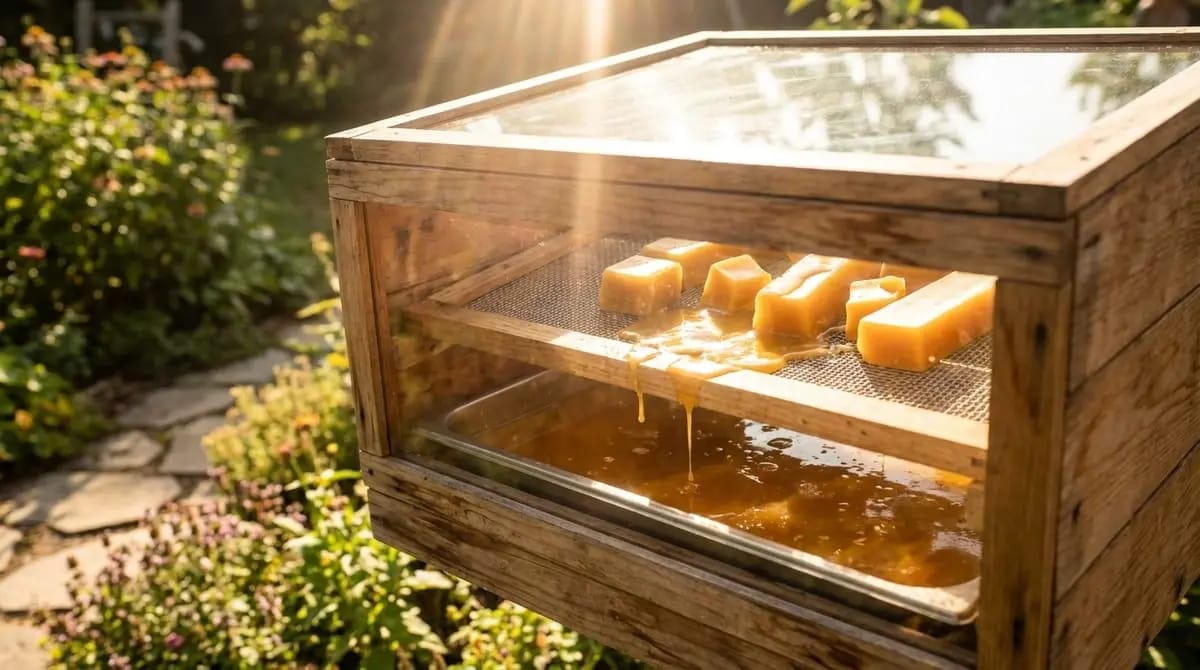
Beeswax is produced in every beekeeping operation -- during uncapping of honeycombs, when melting old combs and during wax renewal. Many beekeepers send their wax for reprocessing and receive foundation sheets in return. But wax as a raw material and finished product has considerable value.
Beeswax is a natural wax produced by the wax glands of the honey bee (Apis mellifera). It consists of over 300 different substances, mainly esters, hydrocarbons and free fatty acids. Melting point: 62-65 degrees C.Wax Harvesting and Purification
- 1
Collect cappings wax
The most valuable wax is produced during uncapping of honeycombs. It is light, clean and aromatic. Collect it in a clean container and let the residual honey drip off. Cappings wax is premium wax -- keep it separate from old comb wax.
- 2
Melt old combs
Old, dark combs (replace after 3-5 years of use!) are melted down. There are various methods: solar wax melter (free but slow), steam wax melter (fast, energy-intensive) or hot water process.
- 3
Clarify wax
Let melted wax cool slowly. Impurities settle at the bottom (sediment). Lift the clean wax block from above and scrape off the sediment. For best quality: repeat the process 2-3 times or filter through a fine cloth.
- 4
Check quality
Pure beeswax has a golden-yellow colour, a typical honey-sweet scent and breaks cleanly (not crumbly). Be suspicious of: grey colour (contamination), absent smell (paraffin adulteration) or greasy fracture.
In conventional beekeeping, foundation sheets are often manufactured from pooled wax from many beekeepers. The problem: there is a risk of residues (pesticides, Varroa treatments) and adulteration (paraffin, stearin). An own wax cycle -- you use only your own clean wax for new foundation sheets -- guarantees quality and is a prerequisite for organic certification.
Product 1: Beeswax Candles
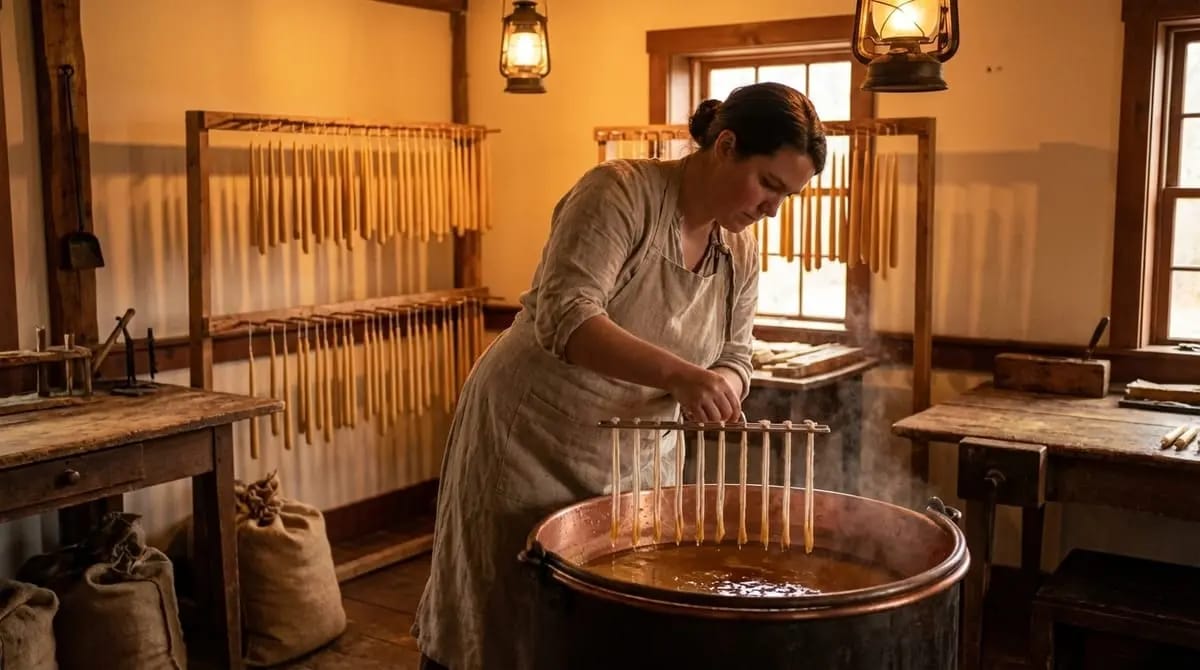
Candles made from pure beeswax are a premium product: they burn calmly, hardly drip, smell pleasant and even purify the room air (negative ions). The market for natural candles has been growing for years.
- Pure beeswax (min. 500g)
- Tall pot or bucket (water bath)
- Cotton wick (braided, thickness matching the candle size)
- Wick sticks or rod for hanging
- Thermometer
- Newspaper as base layer
Step 1: Slowly warm beeswax in a water bath to 70-75 degrees C. Never heat above 80 degrees C (fire hazard, quality loss)!
Step 2: Cut wick to the desired candle length + 5 cm. Attach the top end to a stick.
Step 3: Dip the wick into the liquid wax (3-5 seconds), pull out and let drip for 30 seconds.
Step 4: Repeat the process -- each dip adds approx. 1 mm of wax layer. For a taper candle (approx. 22 mm diameter) you need approx. 25-30 dips.
Step 5: Let the candle dry slightly between dips. At room temperature this takes 20-30 seconds; in a cool room it is faster.
Step 6: Hang finished candles to dry (at least 24 hours). Then cut the bottom straight and trim the wick at the top to approx. 1 cm.
Besides dipped candles, there are two simpler methods: poured candles (pour wax into silicone moulds -- fast, many shapes possible) and rolled candles (roll warm foundation sheets -- perfect for beginners and workshops with children). Rolled candles are an excellent workshop product.
Prices for beeswax candles:
| Candle Type | Material Cost | Selling Price | Margin |
|---|---|---|---|
| Taper candle (22 mm, 25 cm) | approx. 0.80 EUR | 4.00-6.00 EUR | Very good |
| Pillar candle (60 mm, 10 cm) | approx. 2.00 EUR | 8.00-12.00 EUR | Very good |
| Rolled candle (foundation) | approx. 0.60 EUR | 3.00-5.00 EUR | Excellent |
| Tea light (beeswax) | approx. 0.30 EUR | 1.50-2.50 EUR | Very good |
| Figurine candle (bee, bear) | approx. 1.50 EUR | 6.00-10.00 EUR | Excellent |
Product 2: Beeswax Wraps
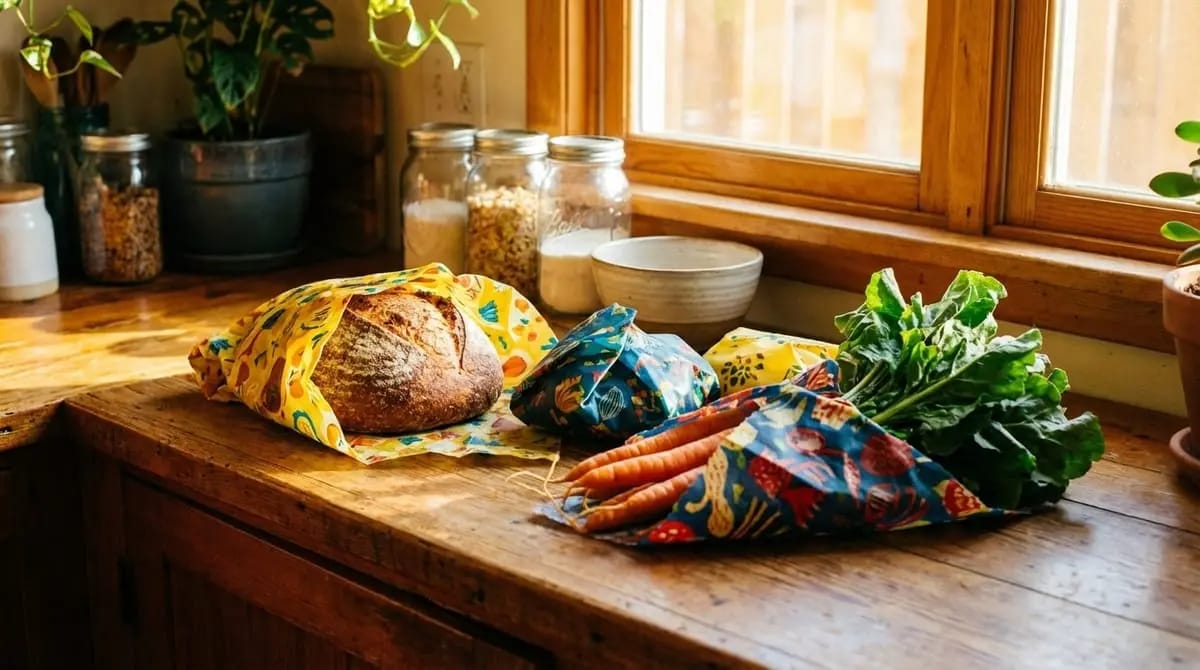
Beeswax wraps are a sustainable alternative to cling film and have been booming for years. Production is simple and margins are excellent.
- Pure beeswax (grated, approx. 30g per wrap)
- Organic cotton fabric (patterned or plain)
- Iron
- Baking paper
- Optional: jojoba oil (5 %) and tree resin/rosin (15 %) for better adhesion
Step 1: Cut cotton fabric to the desired size (common: 20x20, 25x25, 30x30 cm). Cut edges with pinking shears or hem them.
Step 2: Place fabric on baking paper, sprinkle evenly with wax shavings (approx. 3 g per 100 cm squared).
Step 3: Place a second sheet of baking paper on top and iron over on medium heat until the wax has spread evenly.
Step 4: Carefully peel off the top baking paper and hang the wrap to dry (sets in seconds).
Step 5: Quality check: the wrap should feel supple, be slightly sticky and adhere to itself when pressed together.
Recommended prices:
- Set of 3 (S/M/L): 12-18 EUR
- Single wrap (25x25 cm): 5-8 EUR
- Bread bag (40x50 cm): 10-14 EUR
Product 3: Wax as Raw Material
Pure beeswax in block or pastille form has a stable market with:
- Cosmetics manufacturers (lip balm, creams, salves)
- Wood care (furniture wax, floor wax)
- Crafters and artisans (batik, encaustic)
- Archery (string wax)
Market prices for pure beeswax:
- Organic beeswax: 25-40 EUR/kg
- Conventional beeswax: 15-25 EUR/kg
- Cappings wax (premium): 30-45 EUR/kg
Propolis: The Bee Glue
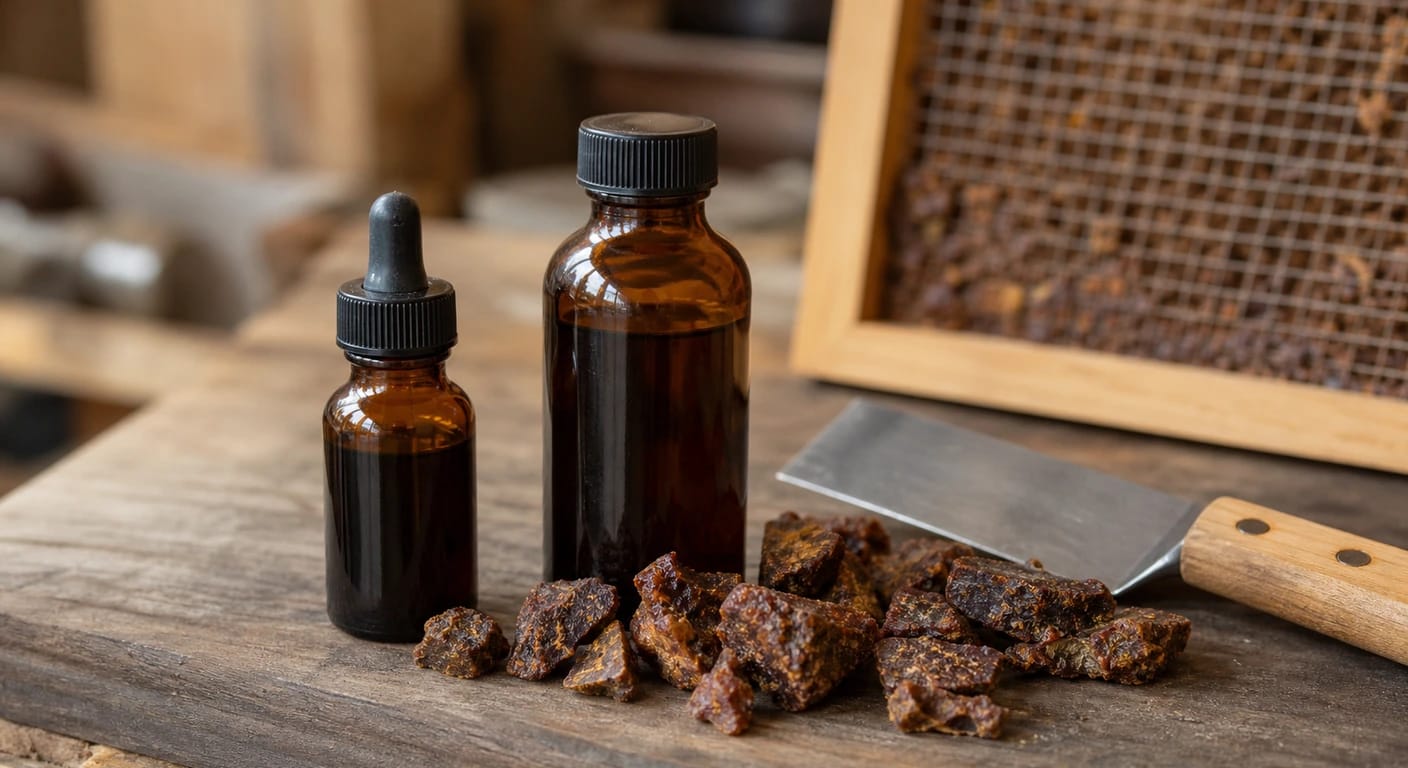
Propolis Harvesting
A bee colony produces approximately 50-200 g of propolis per year (highly dependent on breed, climate and hive type). There are two main harvesting methods:
Method 1: Propolis trap
- Place a special plastic grid with 2-3 mm wide slots on the top bars
- The bees seal the slots with propolis
- After 4-8 weeks, freeze the trap and break off the brittle propolis
- Yield: 50-100 g per trap per season
Method 2: Scraping
- Propolis is scraped from frame edges, hive rebates and lids during regular work
- Less pure product (more wax and wood particles)
- Requires more thorough cleaning
Fresh propolis is sticky and hard to process. In the freezer it becomes brittle and can be easily broken down, scraped and ground. Collect propolis over the season in a clean container in the freezer until you have enough for a batch.
Marketing Propolis Conservatively
The cautious starting point is cleaned raw propolis, provided the offer and advertising do not imply a medicinal purpose or health effect. Clean harvesting, traceability and a clear allergy warning still matter because propolis can sensitise and cause allergic reactions.
German LWG guidance classifies propolis tincture as a finished medicinal product and describes beekeeper manufacture as being for personal use only. Do not include home-made tincture in a product range or revenue forecast. Before manufacture, labelling or sale, obtain a current case-specific assessment from the competent authority or qualified legal adviser. Health claims require the appropriate authorisation or permitted claim.
Bee Pollen: The Superfood from the Hive
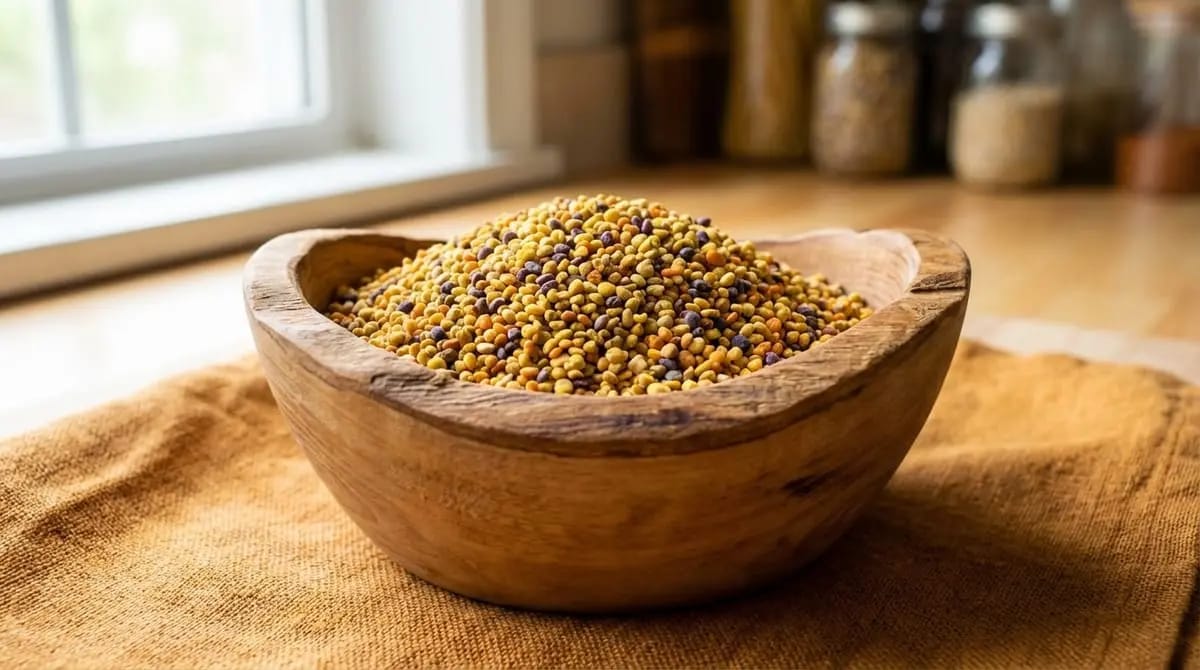
Pollen Harvesting
Pollen is collected with a pollen trap at the hive entrance. The bees must pass through a grid with approx. 5 mm wide openings, whereby the pollen baskets on the hind legs are stripped off and fall into a collection drawer.
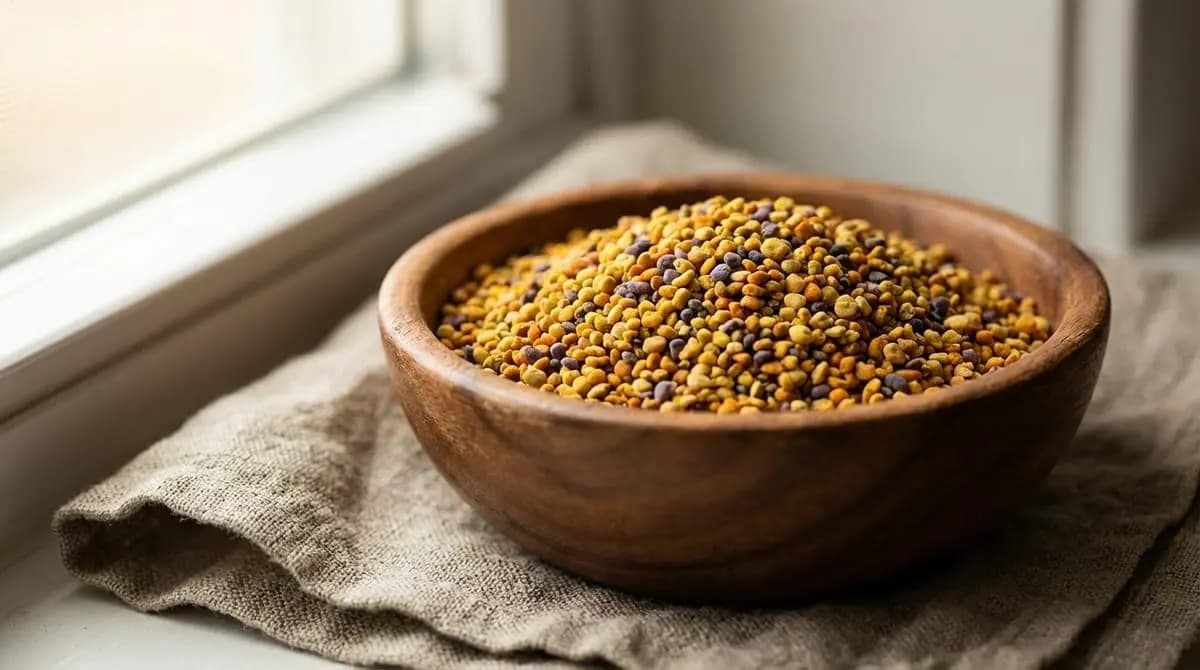
Pollen traps come as landing board models (attached) or as bottom slider models (integrated). Ensure sufficiently large collection drawers and good ventilation so that the pollen does not go mouldy. The trap should not be permanently active -- maximum 2-3 days per week, so that the colony retains enough pollen for its own supply.
Pollen Drying and Storage
Freshly collected pollen has a moisture content of approx. 20-30 % and is only viable for 1-2 days. Gentle drying is decisive for quality:
- 1
Harvest daily
Empty the pollen trap daily, at the latest every 2 days. In damp weather or warmth, the pollen will otherwise begin to go mouldy or ferment.
- 2
Pre-cleaning
Remove coarse debris (bee parts, wax crumbs). Easiest by gently swirling on a fine-mesh sieve.
- 3
Drying
Spread pollen thinly (max. 1 cm) on drying racks and dry at a maximum of 40 degrees C. Ideal: food dehydrator with temperature control. At room temperature it takes 2-3 days (well-ventilated, dry room). Target moisture content: under 8 %.
- 4
Quality check
Dried pollen should be hard and not stick when pressed together. Individual granules do not crumble between the fingers. Colour: diverse (yellow, orange, brown, violet -- depending on plant species).
- 5
Storage
Fill into airtight, dark jars or bags. Store cool and dry (ideally in the refrigerator). Shelf life: 1-2 years. Freezing extends shelf life to 3+ years.
Marketing Bee Pollen
Typical prices:
- 250 g jar: 8-14 EUR
- 500 g jar: 14-22 EUR
- 1 kg: 22-35 EUR
Target groups:
- Health-conscious consumers (smoothies, muesli topping)
- Athletes (natural protein source)
- Natural food enthusiasts
- Allergy sufferers (under medical supervision for desensitisation)
Bee pollen can cause severe allergic reactions in pollen allergy sufferers. A corresponding warning on the label is strongly recommended and practically mandatory for liability reasons: "May cause allergic reactions in pollen allergy sufferers. Not suitable for children under 1 year."
Royal Jelly: For Specialists
Royal jelly is the secretion of the food glands of young worker bees. It serves as food for all bee larvae in the first 3 days and thereafter exclusively for the queen -- for her entire life. This special nutrition causes the queen to grow larger, live 5 years (instead of 6 weeks) and lay up to 2,000 eggs per day.Royal jelly is the most expensive bee product, but also the most labour-intensive to harvest:
- Yield: Approx. 300-500 g per colony per season (very labour-intensive)
- Method: Special grafting bars with queen cells, from which the royal jelly is aspirated after 72 hours
- Storage: Freeze immediately (-18 degrees C), otherwise quality loss within hours
- Price: 100-250 EUR per kg (fresh), 150-400 EUR per kg (freeze-dried)
Harvesting royal jelly is extremely labour-intensive and requires specialised equipment and experience. For most hobby and sideline beekeepers, the ratio of effort to yield is not economical. Royal jelly is a product for specialised professional beekeepers with the corresponding know-how and sales channel.
Bee Venom: A Niche for Professionals
Bee venom (apitoxin) is used in apitherapy and the cosmetics industry. It is harvested using special collection frames with a weak electrical impulse that stimulates the bees to sting (onto a glass plate) without killing them. The dried venom is scraped from the plate.
Prices: 30-80 EUR per gram (!) -- but harvesting requires specialist equipment, permits and carries risks. Not recommended for hobby beekeepers.
Adding Value Through Further Processing
The highest margins are achieved not with raw materials but with processed products. Here are the most important possibilities:
Honey Cosmetics
| Product | Main Ingredients | Production Effort | Selling Price | Legal Requirements |
|---|---|---|---|---|
| Honey lip balm | Beeswax, honey, plant oil | Low | 3-6 EUR (5 ml) | EU Cosmetics Regulation, CPNP notification |
| Propolis salve | Propolis tincture, beeswax, olive oil | Low-Medium | 8-14 EUR (30 ml) | EU Cosmetics Regulation, CPNP notification |
| Honey soap | Soap base, honey, beeswax | Medium | 4-8 EUR (100 g) | EU Cosmetics Regulation, CPNP notification |
| Beeswax hand cream | Beeswax, almond oil, honey | Medium | 8-15 EUR (50 ml) | EU Cosmetics Regulation, CPNP notification |
Anyone who sells cosmetic products (even in small quantities!) must comply with the EU Cosmetics Regulation (EC) No. 1223/2009. This means:
- Safety assessment by a certified expert (cost: 200-500 EUR per product)
- Notification in the CPNP (Cosmetic Products Notification Portal) of the EU
- INCI declaration (ingredients in the international nomenclature) on the label
- Good Manufacturing Practice (GMP) in production
- Responsible person with domicile in the EU
These requirements apply even to homemade honey soap or lip balm, as soon as you sell them. The costs for the safety assessment are only worthwhile from a certain volume.
Honey Food Products
| Product | Features | Selling Price | Legal Requirements |
|---|---|---|---|
| Honey sweets | Simple production, good gift item | 5-8 EUR (100 g) | Food law, possibly trade registration |
| Honey with nuts/fruits | Visually appealing, gift item | 8-14 EUR (250 g) | Food law, allergen declaration |
| Honey liqueur | Traditional product, gift item | 10-18 EUR (200 ml) | Alcohol tax law, customs registration |
| Mead / honey wine | Growing interest, niche | 8-15 EUR (500 ml) | Wine law, trade registration |
| Honey mustard | Possible cooperation with mustard mill | 4-7 EUR (200 ml) | Food law, trade registration |
The production of mead (honey wine) and honey liqueur is subject to special regulations. In the EU and many other jurisdictions, producing and selling alcoholic beverages requires specific licences and registrations with customs/tax authorities. Consult your local authorities before starting -- the fines for violations can be substantial.
Building the Product Range: Step by Step
Not everything at once! Build your range strategically:
- 1
Stage 1: Wax candles (Year 1)
The simplest entry: you have the wax anyway, production is straightforward, and there are no special regulatory hurdles. Investment: minimal (moulds, wicks). Ideal as a Christmas product. Start with rolled and poured candles.
- 2
Stage 2: Raw propolis and partnerships (Year 1-2)
Harvest and sort raw propolis cleanly and offer it without medicinal claims. For processed products, first clarify the intended purpose and legal framework or work with an appropriately qualified manufacturer.
- 3
Stage 3: Beeswax wraps (Year 2)
Trending product with good margins. Slightly more material effort (fabric, resin), but production is quickly learned. Ideal for markets and online sales.
- 4
Stage 4: Bee pollen (Year 2-3)
Investment in pollen trap and dehydrator needed. Regular effort during the season (daily harvest). Good market among health-conscious customers.
- 5
Stage 5: Cosmetics and speciality products (Year 3+)
Only when the basics are established does it make sense to enter cosmetics. The regulatory requirements (EU Cosmetics Regulation) require investment in safety assessment and documentation. Alternative: cooperate with a local manufacturer who processes your wax and raw materials.
Quality Assurance for All By-Products
Regardless of the product, common quality principles apply:
By-Product Quality Assurance
Economic Overview: What Do By-Products Yield?
A sample calculation for a beekeeping operation with 15 colonies:
| Product Group | Annual Yield | Revenue (approx.) | Share of Total Revenue |
|---|---|---|---|
| Honey (375 kg) | 750 jars of 500g | 6,375 EUR | 68 % |
| Wax candles | 100 pairs of tapers, 50 pillars | 1,000 EUR | 11 % |
| Beeswax wraps | 60 sets of 3 | 900 EUR | 10 % |
| Raw propolis | 80 packs of 10 g | 320 EUR | 3 % |
| Bee pollen | 15 jars of 250g | 150 EUR | 2 % |
| Gift sets | 20 sets | 600 EUR | 6 % |
| TOTAL | 9,345 EUR | 100 % |
Knowledge Check
Test your knowledge of bee by-products:
In the next lesson we cover brand building: how to develop a memorable logo, tell your story and create a brand that customers recognise and recommend.