Brand Building: Logo, Story, Recognition
Develop a strong brand identity for your beekeeping operation: from finding a name to logo design to storytelling with practical instructions and tips.
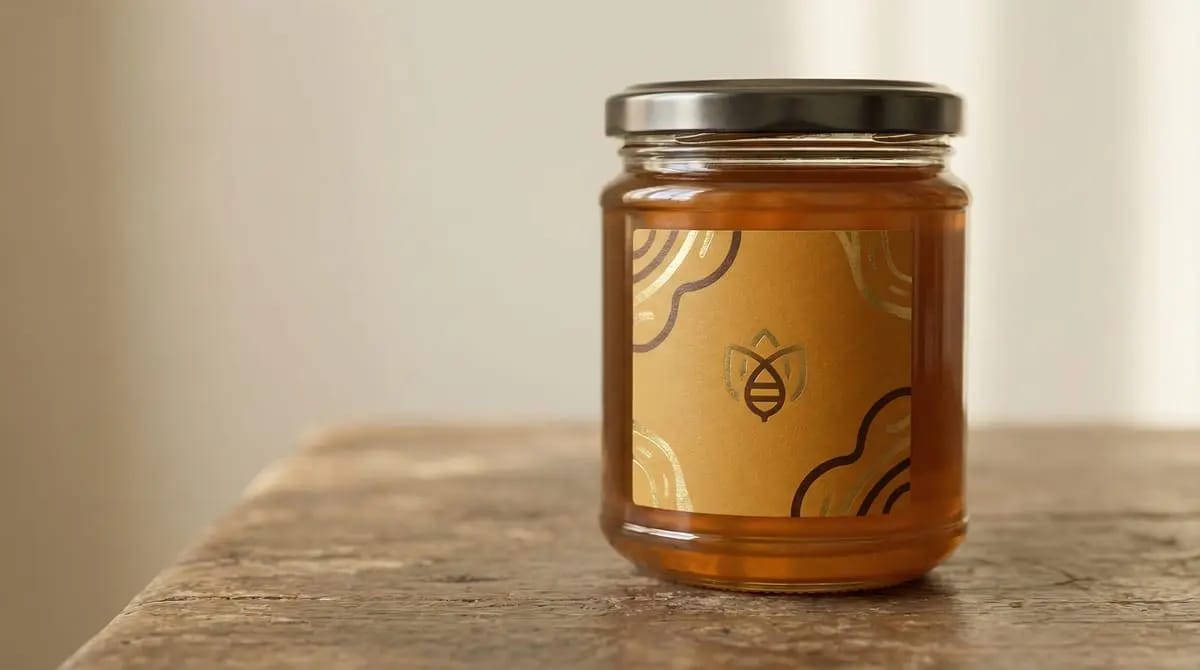
In the previous lessons you learned how to calculate fair prices for your honey (Lesson 6) and market it through various channels (Lesson 7). But why do customers in the organic shop reach for this honey and not that one? Why do people remember a particular apiary and recommend it? The answer: brand.
A brand is more than a logo. It is the total picture that customers have of you and your products -- from the visual identity to the story to the feeling your honey evokes. In this lesson you will learn how to build an authentic, memorable brand identity that fits you and delights your customers.
Some references in this lesson (DPMA trademark registration, DIB jar) are specific to Germany. The principles of brand building -- naming, logo design, storytelling, corporate design and online presence -- are universally applicable. Check your local trademark office and labelling regulations.
What Is a Brand -- and Why Do You Need One?
A brand is the sum of all ideas, experiences and feelings that a customer associates with a product or company. It encompasses name, logo, design, quality, story and values -- and is created in the customer's mind, not on paper.You might think: "I am a hobby beekeeper with 10 colonies, not a corporate brand." True. But even as a small beekeeping operation, you benefit enormously from a clear brand identity:
- Recognition: Customers find you at the market, in the shop and online immediately
- Trust: A professional presentation signals quality and care
- Price willingness: Branded products achieve higher prices than no-name products
- Recommendations: "Buy the honey from Sunlit Apiary!" is more specific than "There was a beekeeper somewhere..."
- Differentiation: In a region with 10 beekeepers, the brand makes the difference
- Emotional connection: Customers buy not just honey -- they buy a story
A brand is not what you say it is. It is what they say it is.
Step 1: Finding the Name
Your apiary's name is the foundation of your brand. It should be memorable, pronounceable and searchable.
Categories of Apiary Names
| Name Type | Examples | Advantages | Disadvantages |
|---|---|---|---|
| Personal name | Miller's Apiary, Johnson Bees | Personal, trustworthy, unique | Hard to transfer if sold, not very creative |
| Place name / region | Alpine Blossom Honey, Valley Apiary | Strong regional association, SEO advantage | Can be limiting if you expand |
| Descriptive | Golden Comb, Bee Paradise, Honey Gold | Immediately understandable, vivid | Can feel generic |
| Creative / wordplay | BeeHappy, HumbleBee, The Honey Factory | Memorable, modern, social-media-friendly | Not always immediately understood |
| Emotional name | Sunlit Apiary, Bee Bliss, Meadow Dream | Evokes positive feelings, warm-hearted | Can seem overly sweet if overdone |
| Combination | Miller's Bee Bliss, Alpine Apiary Berger | Personal + descriptive | Can become long |
Checklist for the Naming Process
Finding a Name
When you have found a good name: secure the matching domain straight away (.com and your local country domain). Domains cost only 5-12 EUR per year and prevent someone else from occupying your name on the internet. Even if you do not yet need a website -- the domain is your address on the web.
- 1
Brainstorming
Write down everything that comes to mind: your location, your specialities, words you associate with your apiary. No censoring -- even absurd ideas. Collect at least 30 ideas.
- 2
Combine and vary
Take the best words and combine them. Play with alliterations, metaphors, regional references. Reduce to 8-10 favourites.
- 3
Practical test
Speak the names aloud. Write them in different font sizes. Test: does the name fit on a label? On a business card? As an Instagram name? Reduce to 3 favourites.
- 4
Get feedback
Ask 10 people from your target group (not only family!): "If you saw a honey with this name, what would you expect?" The most honest answers come from people who do not know you well.
- 5
Check availability
Check with your national trademark office whether the name is already protected. Check domain availability. Check social media handles.
Step 2: Designing the Logo
Your logo is the visual hallmark of your brand. It appears on every label, every business card and every social media page. It does not need to be perfect -- but it must be memorable, legible and versatile.
Principles of Good Logo Design
- Simplicity: The best logos are simple. Think Apple, Nike, Mercedes. Less is more.
- Recognition: Your logo must work even small (on a honey label) and in black and white
- Timelessness: Avoid trends that will look outdated in 5 years. Classic design lasts longer
- Relevance: The logo should have a connection to bees, honey or nature -- but not be cliched
- Versatility: It must work on the label, the website, the market stall banner and on social media
Logo Options and Costs
| Option | Cost | Quality | Recommendation |
|---|---|---|---|
| Design yourself (Canva, Looka) | 0-15 EUR/month | Basic-Medium | Good for the start, upgrade later |
| Logo generator (AI-based) | 20-80 EUR one-off | Medium | Fast, but not unique |
| Freelancer (Fiverr, 99designs) | 50-300 EUR | Medium-Good | Good value for money |
| Local graphic designer | 300-1,500 EUR | Good-Very good | Best option for a professional result |
| Design student (contact a university) | 100-400 EUR | Good | Fresh ideas, motivated designers |
Canva (canva.com) is a free online design tool with hundreds of logo templates. In the free version you can create logos, design labels and make social media graphics. The Pro version (approx. 110 EUR/year) gives you access to millions of graphics, icons and photos. For starting a hobby apiary, Canva is completely sufficient.
What a Good Apiary Logo Can Include
Popular elements:
- Bee (stylised, not too detailed)
- Honeycomb / hexagon pattern
- Honey drop
- Flowers / plants
- Regional elements (mountains, river, church tower)
- Handwritten lettering
To avoid:
- Too many details (illegible at small sizes)
- More than 3 colours
- Clip-art bees (look unprofessional)
- Too much text in the logo
- Trendy effects (3D, shadows, colour gradients)
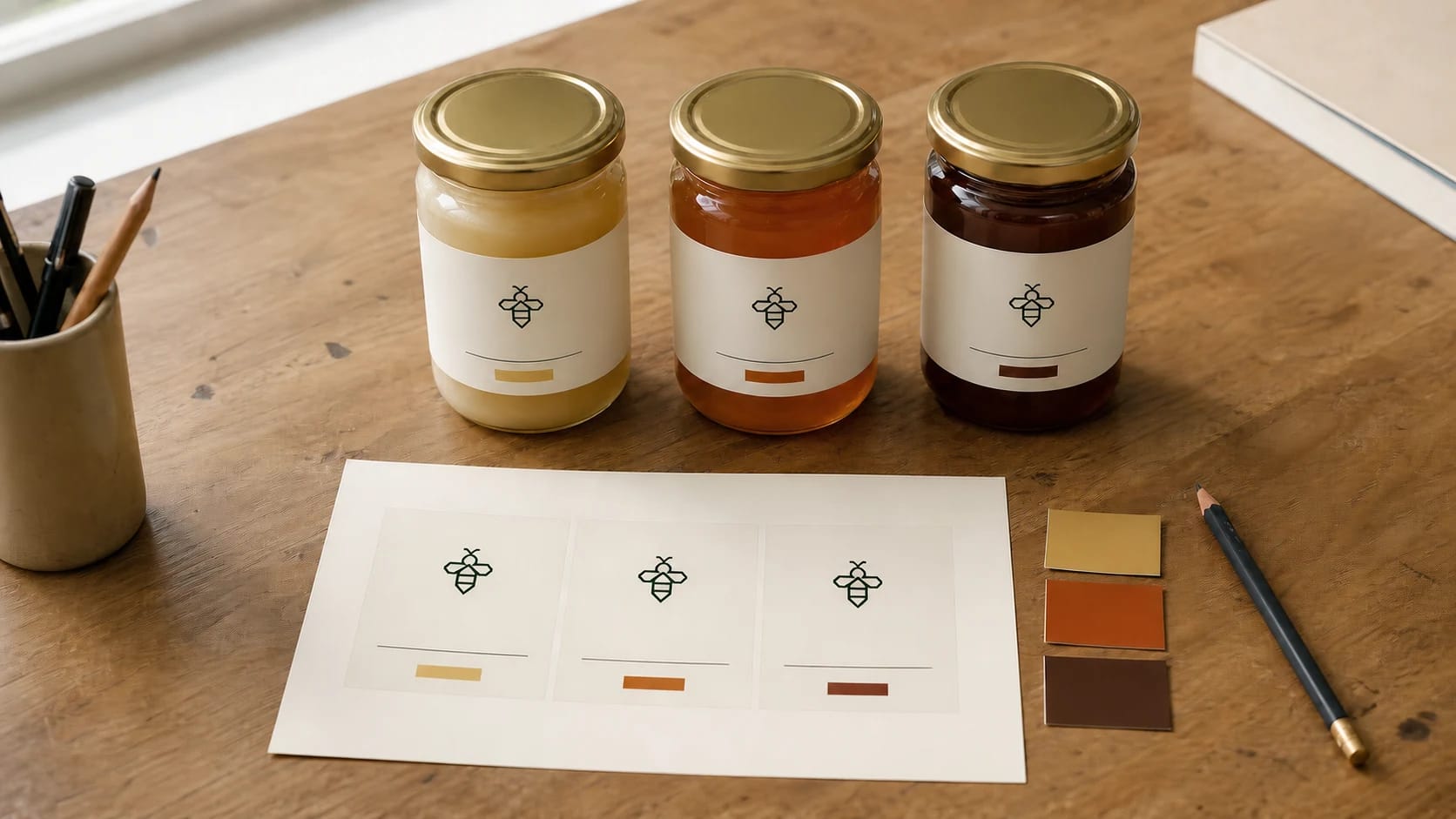 AI-generated
Step 3: Packaging Design -- the Label as Salesperson
The label is the most important touchpoint between your product and the customer. In the second someone sees your jar on the shelf, the label decides between purchase and no purchase.
DIB Jar vs. Neutral Jar
| Aspect | DIB Standard Jar | Neutral Jar (own design) |
|---|---|---|
| Recognition | High (well-known format in Germany) | Individual (your brand) |
| Trust | Very high (DIB seal) | You must build it yourself |
| Design freedom | Low (fixed layout) | Full freedom |
| Cost per jar | Higher (DIB fee + jar) | Can be cheaper |
| Brand building | Limited | Full control |
| Premium perception | Traditional, trustworthy | Modern, individual, premium |
| Prerequisite | DIB membership, quality guidelines | Comply with Honey Ordinance |
The DIB jar (German Beekeepers' Association standard jar) is not an outdated model -- it enjoys high trust among German consumers. Many successful beekeepers use both approaches: the DIB jar for the traditional customer base and their own neutral jar design for premium varieties, gift sets and online sales. This way you serve different customer segments. If you are outside Germany, a custom jar with your own label design is the standard approach.
Label Design: Dos and Don'ts
Mandatory information (must appear on every label, see also Lesson 5):
- Product description ("Blossom honey" etc.)
- Net fill quantity
- Best-before date
- Name and address of the beekeeper
- Origin indication
- Lot number (can be replaced by the best-before date)
Optional information that adds value:
- Your logo and brand name (large and central)
- Location/region of the bees
- Harvest year
- Variety note and flavour description
- QR code (linking to your website or location info)
- Brief story (1-2 sentences about you and your apiary)
Getting Labels Printed
| Printing Method | Unit Price (from) | Minimum Quantity | Quality | Recommendation |
|---|---|---|---|---|
| Self-print (inkjet) | 0.05 EUR | 1 | Basic | Only for prototypes |
| Self-print (laser, water-resistant) | 0.08 EUR | 1 | Medium | OK for small quantities |
| Online print shop | 0.06 EUR | 100-250 | Good-Very good | Best value for money |
| Specialist label printer | 0.10 EUR | 250-500 | Very good | Premium products |
| Local printer | 0.15 EUR | 50-100 | Good-Very good | Personal advice, small quantities |
Choose water-resistant material (polypropylene or laminated paper). Honey jars get wet -- through condensation, during transport or through sticky fingers. A paper label that curls in moisture looks unprofessional. For premium products: textured paper with hot foil stamping (gold or copper) conveys value but costs 0.20-0.40 EUR more per label.
Step 4: Storytelling -- Telling Your Story
People do not buy products -- they buy stories. The personal story behind your honey is your strongest marketing tool. It makes you unique, because no one else has exactly your story.
The Elements of a Good Apiary Story
- 1
The origin: How it all began
Why did you start beekeeping? Was it the grandfather who was a beekeeper? A nature experience? Concern about bee decline? A course that changed your life? The more personal and honest, the better. Customers love origin stories.
- 2
The place: Where your bees live
Describe your location vividly: the orchard at the forest edge, the city garden, the heath. Places create images -- and images create longing. When customers know where your honey comes from, they connect it with a real place.
- 3
The philosophy: What you stand for
What sets you apart? Own wax cycle? Bee-friendly management? Natural processing? Regional commitment? Find 2-3 core values and communicate them consistently.
- 4
The passion: What drives you
Show that beekeeping is more than honey production for you. The moment the first colony flies out in spring. The stillness at the apiary at sunset. The fascination of watching 50,000 bees cooperate perfectly. Emotions sell.
- 5
The future: Where the journey leads
What are your plans? More biodiversity at the apiary? A new rare honey variety? School projects with children? Customers want to be part of a growing story, not just buying a status quo.
Where to Tell Your Story
- On the label: 1-2 sentences (e.g. "Hand-harvested from our bees on the outskirts of Freiburg, where they fly between orchards and the Black Forest.")
- On the website: "About us" page with photos, personal story, images from the apiary
- On social media: Regular insights into beekeeping life
- At the market stall: Tell it personally -- nothing is more convincing than genuine enthusiasm
- On a leaflet: Small card in the gift set with your story and a photo
- As a QR code: On the label, linking to a short video or your website
People don't buy the best products. They buy the products they can understand the fastest.
Step 5: Corporate Design -- the Visual Framework
Corporate design (CD) is the visual language of your brand: colours, fonts, image style and design elements that run through all materials.
Defining Your Colour Scheme
Choose 2-3 main colours and 1-2 accent colours:
| Colour Family | Effect | Suitable For |
|---|---|---|
| Gold / amber / honey yellow | Warmth, quality, naturalness | Universal for apiaries, premium positioning |
| Dark green / forest green | Nature, organic, sustainability | Organic apiaries, forest and nature focus |
| Dark brown / earth tones | Tradition, craft, groundedness | Traditional apiaries, rustic style |
| Cream white / ivory | Purity, clarity, elegance | Premium products, minimalist design |
| Terracotta / rust | Warmth, autumn, cosiness | Seasonal products, artisan apiaries |
| Black + gold | Luxury, exclusivity | Premium honey, delicatessen segment |
Choosing Your Font
- Handwriting / script fonts: Feel personal, handmade, warm (e.g. Dancing Script, Pacifico)
- Serif fonts: Feel classic, trustworthy, traditional (e.g. Playfair Display, Lora)
- Sans-serif fonts: Feel modern, clean, contemporary (e.g. Open Sans, Montserrat)
- Combination: One decorative font for the brand name + one legible font for body text
Use a maximum of 2 different fonts across all your materials: one for headings/brand name and one for body text. More fonts look restless and unprofessional. Consistency matters more than variety.
Photographic Style
Define a uniform image style for your social media posts, website and print materials:
- Colour mood: Warm tones (golden hour) or cool nature tones?
- Perspective: Close-ups (detail-loving) or wide angle (landscape)?
- Filter: Use the same filter/preset for all photos (Lightroom presets, Instagram filters)
- Motifs: Recurring elements (your apiary, your hands with a comb, certain jars)
Step 6: Building an Online Presence
Website: Your Digital Home
Even if you do not (yet) have an online shop, a simple website is important. It is your business card on the internet and the destination your QR code on the label links to.
Minimum content for an apiary website:
- Homepage: Who are you? What do you offer? Beautiful header image
- About us: Your story, photos of you and your bees
- Products: Overview of your range with prices
- Contact: Phone, email, possibly order form
- Legal notice + privacy policy: Legally required
| Website Option | Cost/Year | Difficulty | Recommendation |
|---|---|---|---|
| Google My Business (listing only) | 0 EUR | Very easy | Do it immediately -- even without a website |
| Jimdo / Wix / Squarespace | from 100 EUR | Easy | Good for beginners |
| WordPress + hosting | from 60 EUR | Medium | Flexible, best long-term option |
| Instagram as 'website' | 0 EUR | Easy | Interim solution, not permanent |
Create a Google Business Profile for your apiary immediately. Free, takes 15 minutes and ensures you appear on Google Maps and in local searches ("buy honey in [your town]"). Upload photos, state your opening hours and ask satisfied customers for a Google review. This one step brings more visibility than any Facebook page.
Social Media: Consistency Beats Perfection
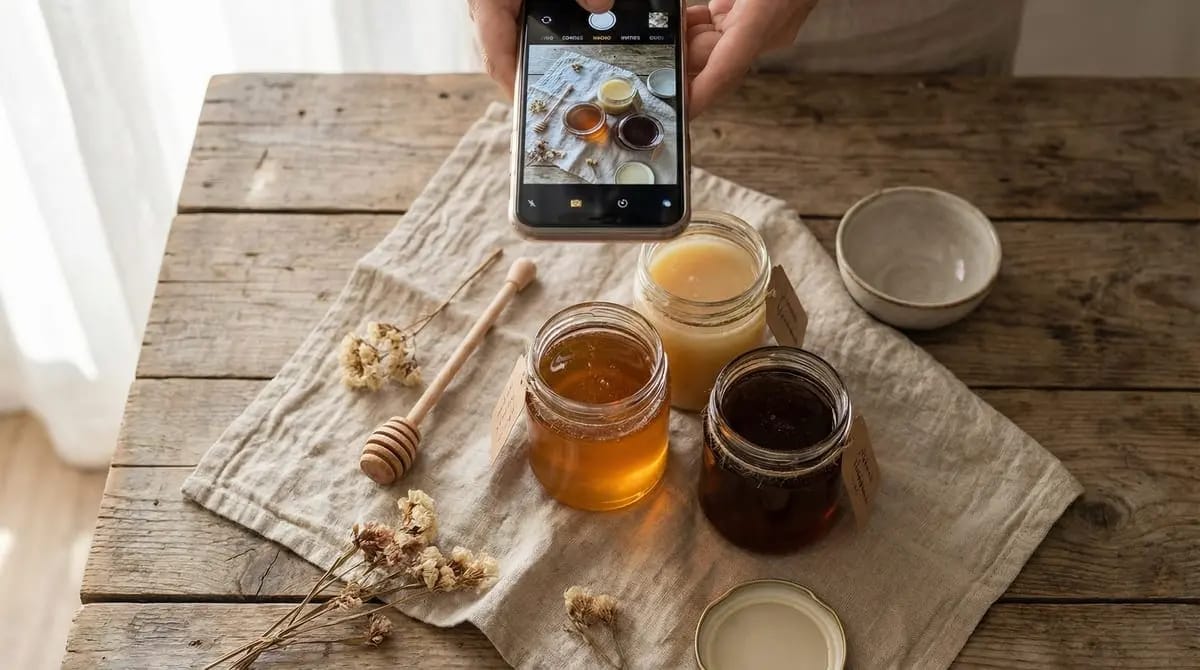
You do not need to be active on every platform. One platform done well is better than three platforms done badly.
Recommendation for most beekeepers:
- Instagram as the main channel (visual, growing reach, story format ideal for beekeeping life)
- Facebook as a secondary channel (especially for local community, events, marketplace)
- WhatsApp as a direct customer channel (personal, low-threshold)
Posting frequency: 2-3 posts per week are ideal. Once a week is the minimum. Better regular and little than irregular and much.
Step 7: Trademark Registration
As your brand grows, you should legally protect it. This is done via a trademark registration with your national trademark office.
In Germany, trademark registration is handled by the DPMA (German Patent and Trade Mark Office). In other countries, check your national intellectual property office (e.g. UKIPO in the UK, USPTO in the US, EUIPO for EU-wide protection).
When Is Trademark Registration Worthwhile?
- You have a unique name/logo
- You sell supra-regionally
- You invest in brand building (website, design, advertising)
- You want to prevent someone else using your name
Process and Costs
- 1
Trademark search (free)
Check in the trademark database of your national office whether your name or a similar name is already registered. Search in the relevant Nice classes: Class 30 (honey), Class 4 (candles), Class 3 (cosmetics).
- 2
File the application
Online via the trademark office portal. You need: brand name and/or logo, goods/services list (which products do you want to protect?), your contact details.
- 3
Pay fees
Application fee: 290 EUR (electronic, DPMA) for up to 3 Nice classes. Each additional class: 100 EUR. For a beekeeping operation, 1-2 classes usually suffice (Class 30 for honey, possibly Class 4 for candles). Fees vary by country.
- 4
Wait for examination
The office examines the application (approx. 4-8 months). It checks whether the trademark is distinctive and does not infringe on older rights.
- 5
Registration
After successful examination, the trademark is registered. Protection is valid for 10 years and can be renewed indefinitely.
No. For a small hobby apiary that only sells locally, trademark registration is often unnecessary. The protection is worthwhile above all if you market supra-regionally, operate an online shop or want to secure your brand name long-term. However: Even without trademark registration you can assert name rights if you can demonstrably prove that you have been economically active under this name.
Customer Retention Through Brand
A strong brand is not an end in itself -- it serves long-term customer retention. Here are measures that go beyond pure product quality:
Checklist: Your Brand Building
Brand Building Checklist
Knowledge Check
Test your knowledge of brand building:
In the next and final lesson of this course we cover scaling: when and how to grow from a hobby to a sideline business, what legal and tax aspects play a role, and how to sustainably expand your beekeeping operation.