

Varroa Mite
The varroa mite (Varroa destructor) is the most dangerous parasite of the western honey bee. It reproduces in capped brood cells and transmits viruses. Without regular treatment, an infestation leads to colony collapse. Varroa management is the central responsibility of every beekeeper.
- Scientific name
- Varroa destructor
- Infests
- the western honey bee
- Reproduces
- in capped brood
- Harms
- through transmitted viruses, such as deformed wing virus
Last reviewed: Data missing · Sources: Data missing
Measuring infestation
Three methods, two units: powdered sugar and washing give mites per 100 bees, the debris count mites per day. The varroa calculator works out both.
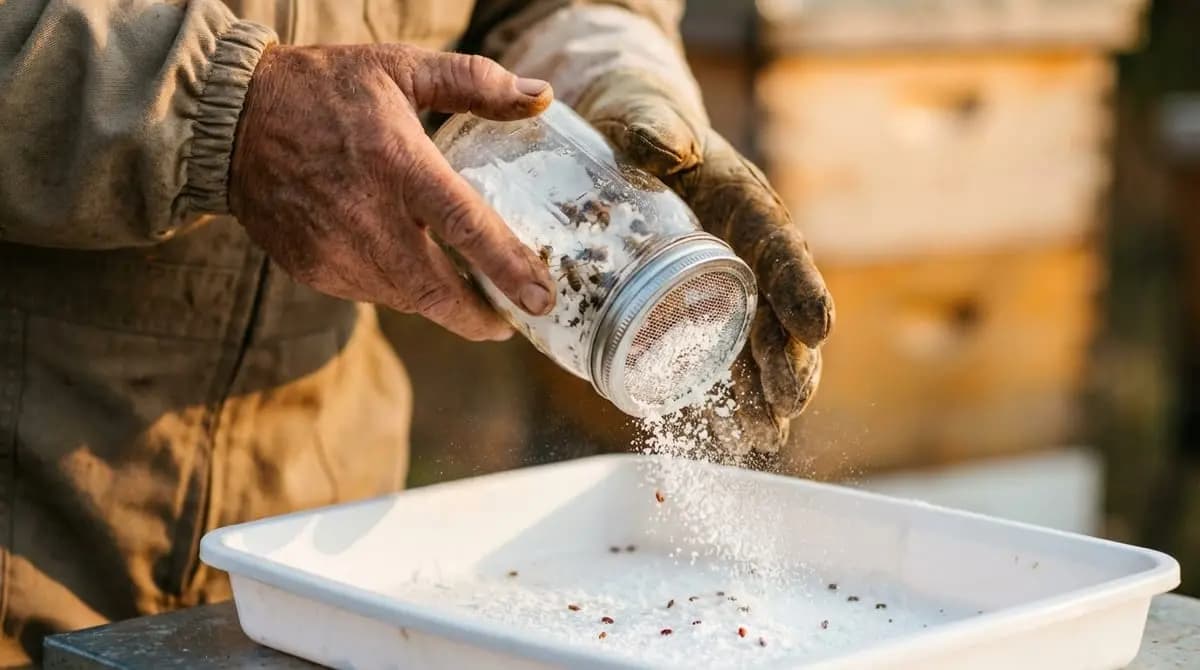
- Powdered Sugar RollThe powdered sugar roll is a non-lethal method for determining varroa mite infestation levels. Approximately 300 bees are placed in a jar with powdered sugar, which dislodges the mites from the bees. The mites fall through a mesh screen and are counted, while the bees can be returned unharmed to the colony.Mites per 100 beesBees survive
- Alcohol Wash MethodThe alcohol wash method is a procedure for determining varroa mite infestation levels. Approximately 300 bees are washed in alcohol or soapy water to dislodge the mites, which are then counted. The result indicates the percentage of infestation and helps determine whether treatment is needed.Mites per 100 beesBees die
- Debris Analysis (Mite Drop Count)Debris analysis is a method for assessing the varroa mite load of a bee colony. A sticky board is placed under the screened bottom board to collect the natural mite fall over several days. The daily mite drop indicates whether treatment is necessary.Mites per dayNo intervention in the colony
Varroa through the year
This is how the HiveKraft seasonal planner lists it. The months apply to a typical year; the treatment plan in the app works with your own measurements instead.
- JanuaryOxalic acid follow-up treatmentIf not done in December: Apply oxalic acid by trickling during the broodless period.
- MarchCheck varroa boardsDebris diagnosis: Natural mite fall provides first clues about Varroa infestation.
- AprilInsert drone framesUse drone foundation frames as Varroa traps. Cut out after capping.
- JuneVarroa monitoringPerform debris diagnosis. From 5 mites/day, plan treatment after harvest.
- JulyFormic acid treatmentStart long-term formic acid treatment immediately after the last harvest.
- AugustVarroa treatmentContinue or repeat formic acid treatment. Check success via debris monitoring.
- DecemberOxalic acid winter treatmentApply oxalic acid by trickling during the broodless period (late December). Most important Varroa treatment!
Terms around Varroa
- Infestation Level
- The infestation level indicates the percentage of varroa-infested bees in a colony. It is determined through alcohol wash, powdered sugar roll, or natural mite drop methods. Treatment is urgently recommended above 3% infestation in summer; above 5%, the colony is in acute danger.
- Reinvasion (Mite Drift)
- Reinvasion is the reinfection of a successfully treated colony with varroa mites carried in by drifting bees or robbing bees from neighboring untreated or collapsing colonies. This phenomenon can rapidly rebuild mite populations even after effective treatment. Coordinated treatment timing among nearby beekeepers is the best strategy to minimize reinvasion.
- Varroa Management Plan
- A varroa management plan is an integrated annual strategy for controlling varroa mite populations throughout the beekeeping season. It combines biotechnical measures such as drone frame removal and brood interruption with timed organic acid treatments in summer and winter. Consistent execution of the plan is critical for keeping mite levels below the damage threshold.
- Drone Frame (Comb Trap)
- A drone frame is an empty frame without foundation where bees preferentially build drone-sized cells. Varroa mites prefer to reproduce in drone brood due to its longer development period, so regularly cutting out sealed drone comb significantly reduces the mite population. This biological control method is a key element of integrated varroa management.
- Trapping Comb Method
- The trapping comb method is a biotechnical varroa control technique where the queen is caged on a single frame while remaining brood is removed. Varroa mites concentrate on the single comb with brood, which is then removed and destroyed. This method significantly reduces the mite load without chemical treatments.
- Formic Acid
- Formic acid is an organic acid used for summer varroa treatment that evaporates inside the hive. Unlike other treatments, it penetrates capped brood cells where mites reproduce. It can be applied as a long-term treatment over several days or as a flash treatment method.
- Oxalic Acid
- Oxalic acid is an organic veterinary treatment used against varroa mites. It is applied during the brood-free winter period using the trickle or spray method. The treatment is highly effective against mites sitting on bees and is an important component of integrated varroa management.
- Deformed Wing Virus (DWV)
- Deformed Wing Virus is the most common virus transmitted by varroa mites to developing bee pupae. Infected bees emerge with crippled, shriveled wings and have a significantly shortened lifespan. High DWV levels are a primary cause of colony losses associated with varroa mite infestations.
Whether and with what you treat is your decision.
More
If in doubt, have an infestation assessed by an expert, for example your beekeeping association or bee health inspectors.
Varroa in HiveKraft
- Enter the daily mite drop and Hivekraft calculates the natural infestation. Detect critical thresholds before it's too late.
- Document every treatment with active ingredient, dosage, duration and withdrawal period. Simultaneously fulfil documentation requirements per EU Regulation 2019/6.
- When is the next treatment due? When does the withdrawal period end? Hivekraft reminds you of all important dates in time.
- Compare treatment success over the years. Which active ingredient works best? How does infestation develop over the year?
- Automatically transfer treatments to hive records.