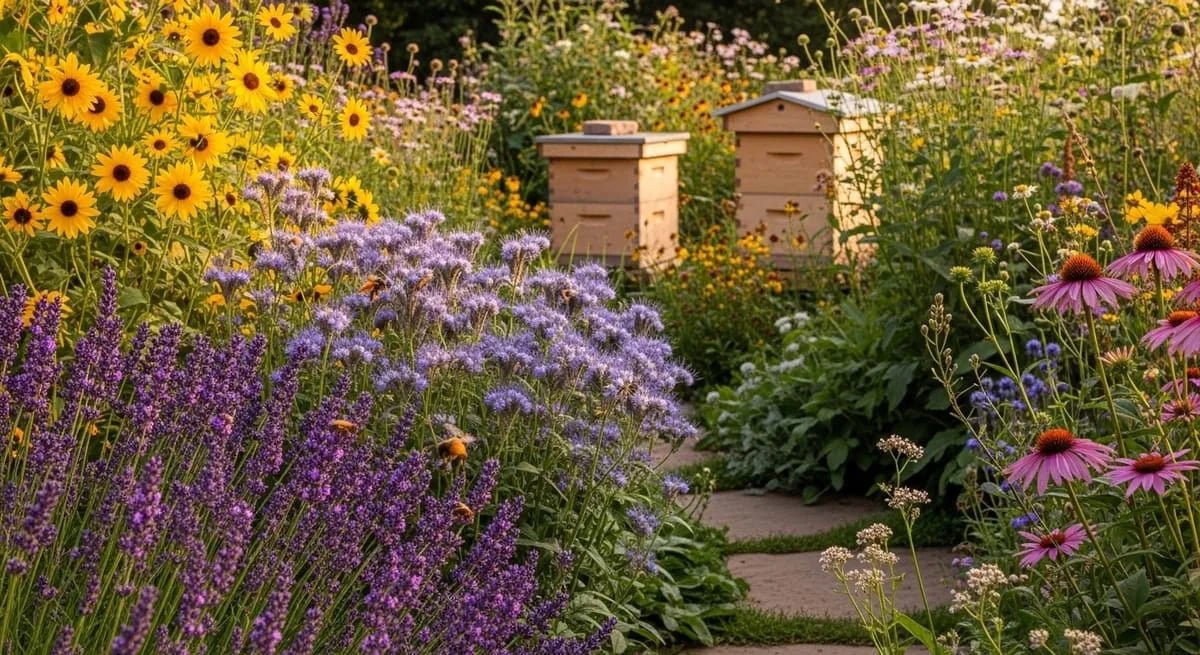
Bee-Friendly Garden: Plants for Every Season
With the right plants, you can turn your garden into a bee paradise. A bloom calendar from spring to autumn.
Bees need nectar and pollen — and as continuously as possible from February to October. With the right plant selection, you can turn your garden into a paradise for bees while improving forage for your colonies.
Why Is a Continuous Bloom Supply Important?
Bees depend on an uninterrupted forage band. Particularly critical periods are:
- Early spring (February/March): Colonies are growing, need pollen for brood rearing
- June gap: Between orchard bloom and summer forage, there is often little available
- Late summer: From August, things get thin — right when winter bees are being raised
Bloom Calendar: The Best Plants for Bees
Spring (February - April)
| Plant | Bloom Time | Special Feature |
|---|---|---|
| Crocus | Feb-Mar | First pollen of the year |
| Willow (Pussy willow) | Mar-Apr | Most important spring plant |
| Fruit trees (cherry, apple, pear) | Apr-May | High nectar value |
| Dandelion | Apr-May | Abundant nectar and pollen |
| Maple | Apr | Often underestimated, very productive |
Early Summer (May - June)
| Plant | Bloom Time | Special Feature |
|---|---|---|
| Black Locust (Acacia) | May-Jun | Produces mild, light honey |
| Phacelia | May-Sep | The quintessential bee pasture plant |
| Lavender | Jun-Aug | Fragrant continuous bloomer |
| Linden | Jun-Jul | Classic summer forage |
| White clover | Jun-Sep | Nectar for honey bees (red clover only for bumblebees) |
Summer (July - August)
| Plant | Bloom Time | Special Feature |
|---|---|---|
| Sunflower | Jul-Sep | Pollen and nectar |
| Buckwheat | Jul-Sep | Excellent bee pasture |
| Wild mallow | Jul-Sep | Easy-care, beautiful blooms |
| Borage | Jun-Sep | Blue flowers, lots of nectar |
| Cornflower | Jun-Aug | Wildflower with high nectar value |
Autumn (September - October)
| Plant | Bloom Time | Special Feature |
|---|---|---|
| Ivy | Sep-Oct | Last major forage source |
| Autumn aster | Sep-Nov | Late bloomer for the garden |
| Stonecrop (Sedum) | Aug-Oct | Robust, bee-friendly |
| Common goldenrod (S. virgaurea, native) | Aug-Oct | Nectar for winter stores (Canadian goldenrod is invasive!) |
Practical Tips for a Bee-Friendly Garden
1. Choose Single-Flower Varieties
Double flowers (e.g., double roses or dahlias) look pretty but offer no nectar or pollen. When buying, look for simple, single varieties.
2. Sow Wildflower Mixes
A wildflower meadow is the best thing you can do for bees:
- Use seed from regional sources
- Sow in spring or autumn
- Don't fertilize, don't mow too often
- One to two cuts per year is enough
3. Let Kitchen Herbs Bloom
Many kitchen herbs are excellent bee pastures when allowed to flower:
- Thyme - continuous bloomer, ground cover
- Sage - purple flowers, very popular with bees
- Oregano - blooms for a long time, insect magnet
- Mint - blooms late, good for autumn forage
4. Hedges and Trees
Those with space should plant bee-friendly shrubs and trees:
- Blackthorn and hawthorn for spring pollen
- Butterfly bush for July/August (invasive neophyte — remove flower heads before seed maturation)
- Ivy as the last forage source in autumn
- Hazel for early pollen (as early as February)
5. Dead Wood and Nesting Opportunities
It's not just honey bees that benefit — wild bees need your garden too:
- Set up an insect hotel
- Leave dead wood piles and rock piles
- Maintain open soil patches for ground-nesting species
- Don't use pesticides
What to Avoid
- Pesticides and herbicides - deadly for bees
- Double ornamental plants - no benefit for pollinators
- Gravel gardens - no food, no habitat
- Mowing too frequently - let the clover in the lawn bloom
Conclusion
A bee-friendly garden is no sorcery. Just a few targeted plantings can close forage gaps and help your bees enormously. And the best part: you benefit from a blooming, lively garden that attracts butterflies, bumblebees, and birds alike.
Learn which plants bees really need in our special course:
- Forage Plants and Bee Pastures -- 8 lessons on nectar, pollen, and planting plans
- Beekeeping for Beginners -- Lesson 5: Finding the perfect location
Less paperwork. More time with your bees.
Hivekraft is free for up to 5 hives. Register in 30 seconds.