Beginner
Forage Plants & Bee Pasture
8 lessons · about 2.5 hours of reading
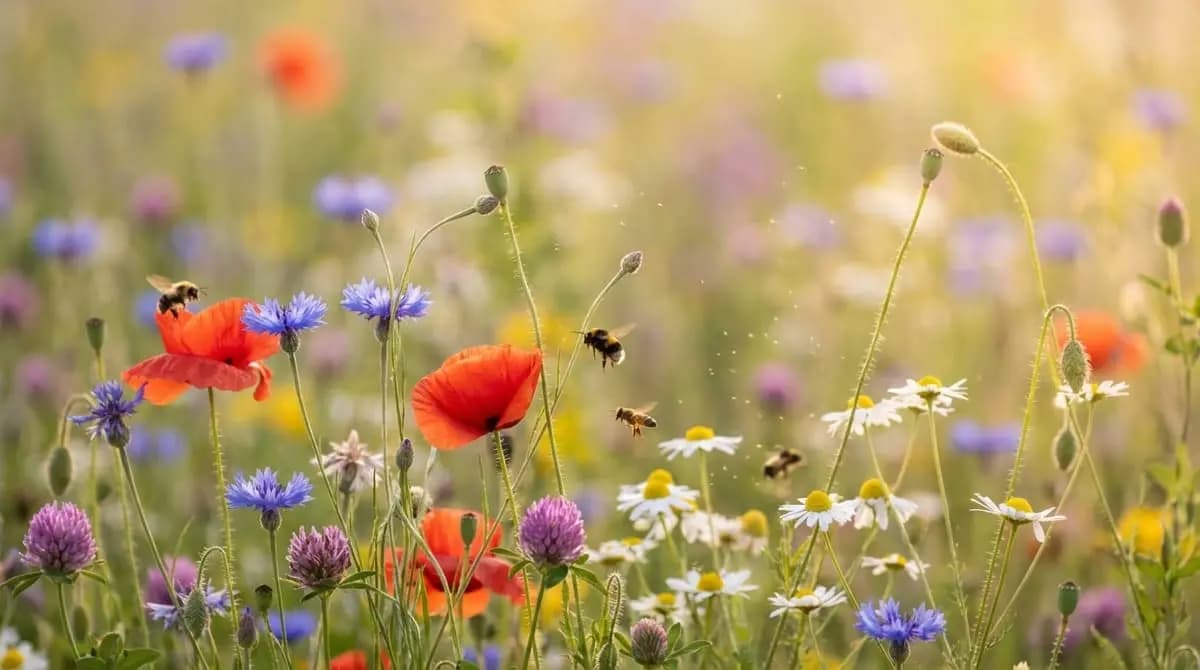
Discover the most important forage plants throughout the year and learn how to promote bee pasture in your area. With planting plans and regional recommendations.
Start with lesson 1
Free to read without an account. When signed in, HiveKraft remembers your progress. Last reviewed: date missing · by the HiveKraft editors
Lessons in this course
- Nectar and Pollen: What Bees Really NeedUnderstanding nectar, pollen, and honeydew: composition, nectar secretion, foraging behavior, and forage evaluation for successful beekeeping.Includes: What Is Nectar? · What Is Honeydew? · Pollen: The Protein Source for Bees · Nectar Secretion: Why Not Every Day Is the Same · Forage Evaluation: Nectar Value and Pollen Value · Honey Bee Foraging Behavior · Annual Forage Overview · Summary: The Most Important Fundamentals · Knowledge Check20 min20 min
- Spring Bloom: Willow, Fruit Blossom, and RapeseedThe most important early forage plants for bees: hazel, willow, fruit blossom, dandelion, and rapeseed in detail with bloom calendar and honey yield.Includes: Spring Calendar Overview · Hazel (*Corylus avellana*) -- The First Pollen Provider · Willow (*Salix* sp.) -- The First Major Forage · Fruit Blossom -- Pollination Service and Honey Harvest · Dandelion (*Taraxacum officinale*) -- The Yellow Meadow · Maple (*Acer* sp.) -- The Inconspicuous Mass Provider · Rapeseed (*Brassica napus*) -- The Mass Forage · Other Important Early Bloomers · Recognizing and Bridging the Spring Forage Gap · Regional Differences · Summary · Knowledge Check20 min20 min
- Summer Forage: Linden, Black Locust, and PhaceliaSummer forage in detail: black locust, linden, phacelia, sweet chestnut, and forest forage. Honey yield, honeydew formation, and beekeeping practice for the most productive phase.Includes: Black Locust (*Robinia pseudoacacia*) -- The "Acacia Honey" · Linden (*Tilia* sp.) -- The Queen of Summer Forage · Phacelia (*Phacelia tanacetifolia*) -- The Bee Friend · Sweet Chestnut (*Castanea sativa*) -- The Spicy Loner · Additional Summer Forage Plants · Forest Forage: Honeydew from Spruce, Fir, and Oak · The Summer Forage Gap: Problem and Solutions · Summary · Knowledge Check20 min20 min
- Late Summer and Autumn: Heather, Sunflower, and BuckwheatLate summer forage for bees: common heather and press honey, sunflower, buckwheat, Himalayan balsam, and ivy as the last pollen source before winter.Includes: Common Heather (*Calluna vulgaris*) -- The Honey You Have to Press · Sunflower (*Helianthus annuus*) · Buckwheat (*Fagopyrum esculentum*) -- The Dark Exotic · Himalayan Balsam (*Impatiens glandulifera*) -- The Controversial Late Forage · Ivy (*Hedera helix*) -- The Last Pollen Source · Additional Late Summer Forage Plants · Late Summer from the Beekeeper's Perspective · Summary · Knowledge Check20 min20 min
- Creating Bee Pasture: Seeds and Planting PlansCreating bee pasture the right way: site analysis, seed mixtures, flower strips, planting plans, and funding programs for a bee-friendly landscape.Includes: Step 1: Site Analysis · Step 2: Choosing the Right Seed Mixture · Step 3: Establishing the Bee Pasture · Step 4: Maintaining the Bee Pasture · Flower Strips in Agriculture · Planting Plan: Ensuring Year-Round Supply · Costs and Budget · Top 10 Bee Pasture Plants for the Garden · Summary · Knowledge Check20 min20 min
- Trees for Bees: Planting for the Long TermThe most important bee trees: willow, linden, maple, black locust, chestnut, and fruit trees. Planting guide, site requirements, and honey yield per tree.Includes: The Top 10 Bee Trees Compared · Willow (*Salix* sp.) -- The Early Starter · Linden (*Tilia* sp.) -- The Queen of Forage Trees · Maple (*Acer* sp.) -- The Versatile Companion · Black Locust (*Robinia pseudoacacia*) -- The Honey Tree · Chestnuts -- Two Trees, Two Worlds · Fruit Trees -- Diversity in a Small Space · Exotics and Future Trees · Practical Recommendations: What to Plant Where? · Summary · Knowledge Check20 min20 min
- Urban Beekeeping: Surprising Forage SourcesUrban beekeeping offers surprising advantages: more plant diversity, fewer pesticides, and longer blooming periods. City forage, honey quality, and legal considerations.Includes: Why the City Is Often Better Than the Countryside · Typical Urban Forage Throughout the Year · Honey Quality in the City: The Contaminant Question · Challenges of Urban Beekeeping · City Honey: A Premium Product · Urban Beekeeping and Wild Bees: A Tension · Summary · Knowledge Check20 min20 min
- Phenology: Using Nature as Your CalendarPhenology for beekeepers: The 10 phenological seasons, indicator plants, becoming a phenology observer, and understanding climate change shifts.Includes: What Is Phenology? · The 10 Phenological Seasons · The Most Important Indicator Plants for Beekeepers · The Phenological Clock: Everything at a Glance · Phenology and Beekeeping: The Practical Connection · Becoming a Phenology Observer · Climate Change and Phenology: What Is Shifting · Keeping Your Own Phenological Observations · Summary · Knowledge Check20 min20 min
How you learn here
- Checklists to tick offFor example, to prepare for an inspection; your selections are saved in this browser.
- Knowledge checks with answersAt the end of each lesson, test yourself and read the explanation below.
- Technical terms explainedTerms such as “smoker” in the text link to their glossary explanations.
- Save your progressWhen signed in, you mark lessons complete and the course page shows where to continue.
Continue learning afterwards
- Beginner12 lessons · about 6 hoursBeekeeping for BeginnersThe complete introduction to beekeeping — from honey bee biology and essential equipment to your first harvest. In 12 lessons you'll learn everything you need for a successful start.
- Advanced10 lessons · about 5 hoursAdvanced Colony ManagementMaster queen rearing, swarm control and seasonal management techniques. For experienced beekeepers looking to take their colony management to the next level.
- Intermediate10 lessons · about 5 hoursBee Health & DiseasesLearn to recognize diseases, parasites, and health issues — and how to react properly.
- Beginner10 lessons · about 3 hoursUsing Hivekraft EffectivelyGet the most out of Hivekraft. From setup through digital hive records to recommendations, alerts and IoT scales - become a Hivekraft pro.