Bee-Friendly Plants: Best Forage for Your Garden and Yard
The right plants in your garden can dramatically improve forage for your bees and fill dangerous dearth gaps. This guide covers the best trees, shrubs, and flowers for beekeepers across temperate North America and the UK, with a month-by-month bloom calendar.
Every beekeeper eventually realizes that what grows within three miles of their apiary matters as much as what happens inside the hive. Bees can forage up to 3–5 miles, but the closer the forage, the less energy they spend traveling and the more productive each forager becomes. Understanding which plants provide nectar and pollen — and when they bloom — lets you identify gaps in your local forage calendar and fill them intentionally. This guide is written for beekeepers in temperate North America and the UK, with notes on USDA hardiness zones throughout.
Why Forage Diversity Matters
A colony needs both nectar (carbohydrate) and pollen (protein) throughout the active season. Most beekeepers focus on nectar flows and honey production, but pollen scarcity is often the more limiting factor — particularly in early spring, when colonies are expanding brood rearing faster than pollen is available, and in late summer, when pollen from most major crops has ended but the winter bees being raised need excellent nutrition.
The Three Problem Periods
Early Spring (March–April in temperate zones): Colonies are expanding brood rapidly. Queens can lay thousands of eggs per day, but brood requires pollen to feed larvae. If pollen is scarce, nurse bees can't feed larvae adequately and population growth stalls. Willows, red maple, and fruit trees are the critical early-season lifelines.
Summer Dearth (typically late June–July in eastern North America): After the clover and black locust flows end and before the goldenrod and aster bloom in late summer, there is often a significant gap in nectar availability. Colonies that seemed productive in June can lose weight rapidly in July. This is the period where a planted garden or cover crop on nearby farmland makes the biggest difference.
Late Summer (August–September): This is when winter bees are raised — the long-lived bees that will carry the colony through winter. These bees need exceptional nutrition, especially pollen. Goldenrod, aster, and other late-blooming plants are not just fall decoration — they are critical winter bee food.
Best Trees for Bees
Trees are the highest-value forage plants because of their sheer scale — a single mature tree can provide more nectar and pollen than an entire garden bed of flowers. If you have space to plant trees, prioritize them above all other forage investments.
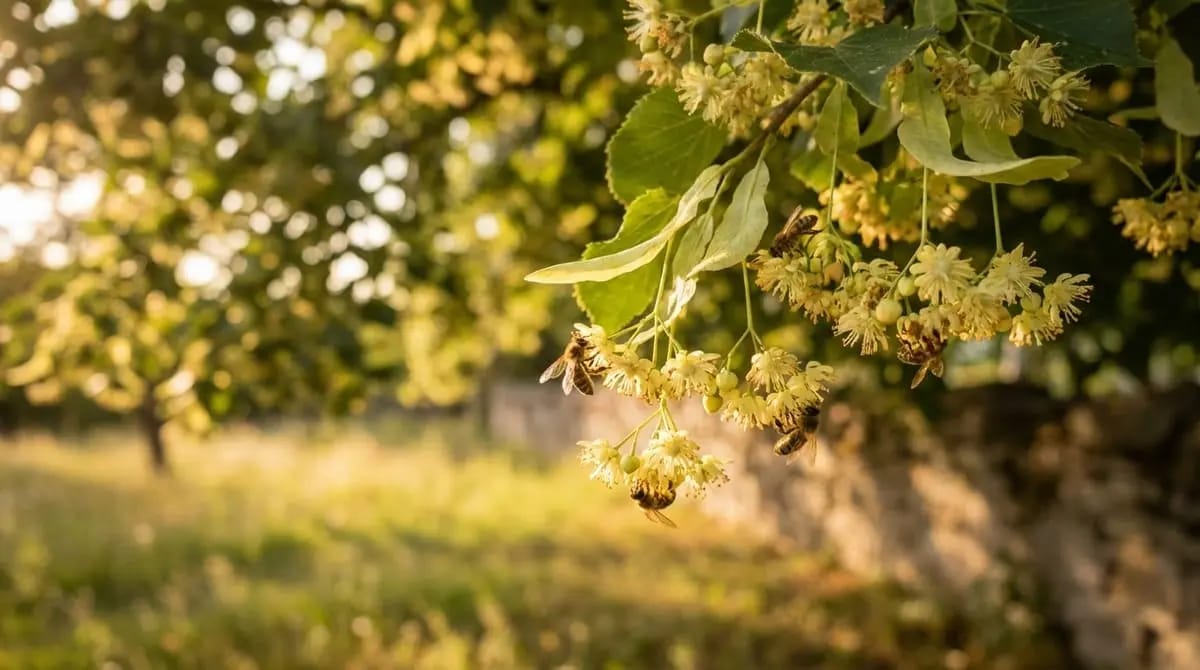
Linden / Basswood (Tilia spp.)
Zones: 3–8 (American Basswood T. americana); various European linden spp. for UK Bloom: June–July Value: Exceptional. Linden honey is one of the finest and most sought-after varietal honeys in the world — pale, mildly minty, distinctive. During a good linden flow, weight gains of 10+ lbs per day are documented. A single mature American basswood can support multiple colonies. Notes: Linden nectar is only available in warm, humid conditions. In dry summers, the flow may be significantly reduced. The tree itself takes 15–20 years to reach full production.
Black Locust / False Acacia (Robinia pseudoacacia)
Zones: 3–8 (widely naturalized in North America and Europe) Bloom: May–June (1–2 weeks only) Value: Outstanding. The black locust flow produces mild, water-white honey that resists crystallization. Considered one of the best single-source honeys in the world. Very short bloom window — colonies need to be in peak population when it opens. Notes: Invasive in some eastern US states. Check local regulations before planting. Established trees are difficult to remove.
Tulip Poplar / Yellow Poplar (Liriodendron tulipifera)
Zones: 4–9 (eastern North America) Bloom: May–June Value: High. Produces abundant dark, strongly flavored honey. One of the most important nectar trees in the eastern United States. Pollen is also abundant. Notes: A large tree — allow plenty of space. Native to eastern North America; not suitable for the UK or Pacific Coast.
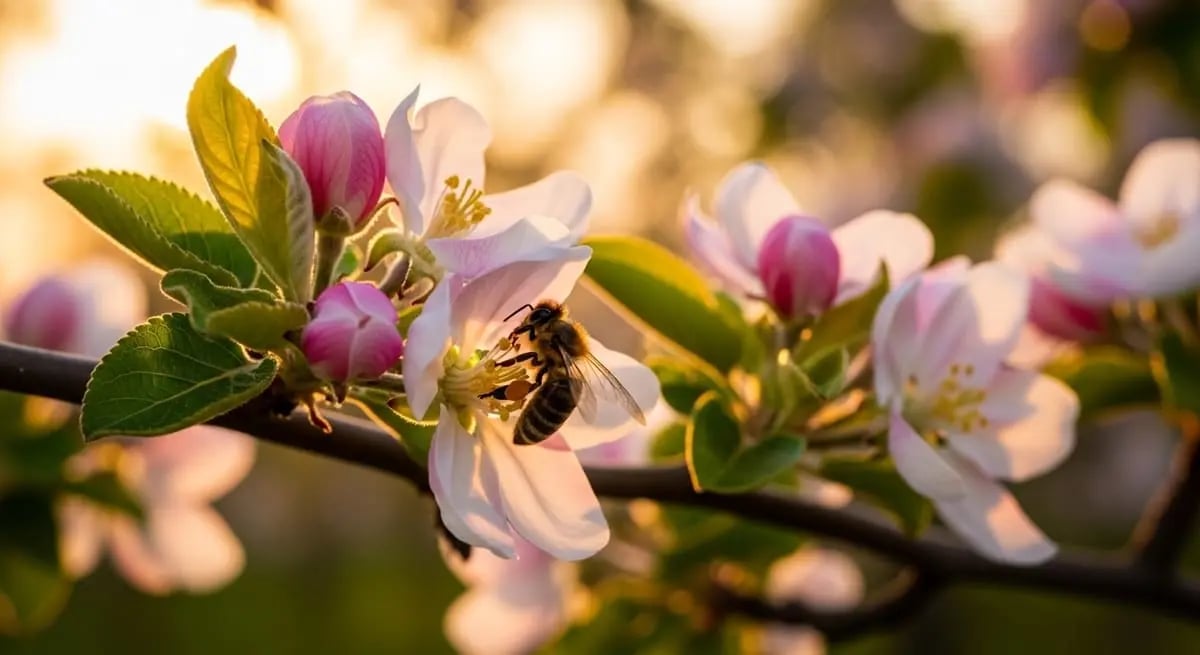
Fruit Trees (Apple, Cherry, Pear, Plum)
Zones: 3–9 depending on variety Bloom: April–May Value: Important early-season pollen and nectar source. The bloom is brief but critical for spring buildup. Commercial orchardists provide large concentrations of this forage. Notes: Fruit trees are particularly valuable because they bloom early, when few other sources are available. Even a small backyard orchard adds meaningfully to spring forage.
Sourwood (Oxydendrum arboreum)
Zones: 5–9 (Appalachian region and southeastern US) Bloom: July–August Value: Exceptional. Sourwood honey is considered among the finest honeys produced in North America — light, spicy, with a distinctive anise-like flavor. Highly prized and sells at premium prices. Notes: Slow-growing ornamental tree; beautiful fall color. Only practical for beekeepers in the Appalachian region and parts of the South.
Red Maple (Acer rubrum)
Zones: 3–9 (eastern North America) Bloom: February–April (very early) Value: Very important as the earliest significant pollen source in much of eastern North America. Bees work red maple aggressively in early spring, providing the protein needed for early brood expansion.
Willows (Salix spp.)
Zones: 2–9 (multiple native species across North America and UK) Bloom: February–April (among the earliest bloomers) Value: Critical early-season pollen source, particularly important in the UK. Pussy willow (S. caprea, S. discolor) is especially valuable. Willows also provide early nectar. Notes: Many willows grow rapidly and tolerate wet soils. They are excellent planted along watercourses.
Best Shrubs for Beekeepers
Blueberry (Vaccinium spp.)
Zones: 4–9 depending on variety (highbush) or 3–6 (lowbush) Bloom: April–May Value: High pollen value and moderate nectar. Bees must "buzz pollinate" blueberries — a vibration technique that honey bees do less effectively than bumble bees, but they still work blueberry flowers actively. Notes: Requires acidic soil. Plant in clusters of 2+ different varieties for cross-pollination and berry production.
Raspberry and Blackberry (Rubus spp.)
Zones: 3–9 Bloom: June–July Value: Excellent. Bramble flowers produce significant nectar and pollen over an extended bloom period. Raspberry honey (where it can be produced as a varietal) is mild and light. Brambles are among the most productive garden shrubs for bees per square foot.
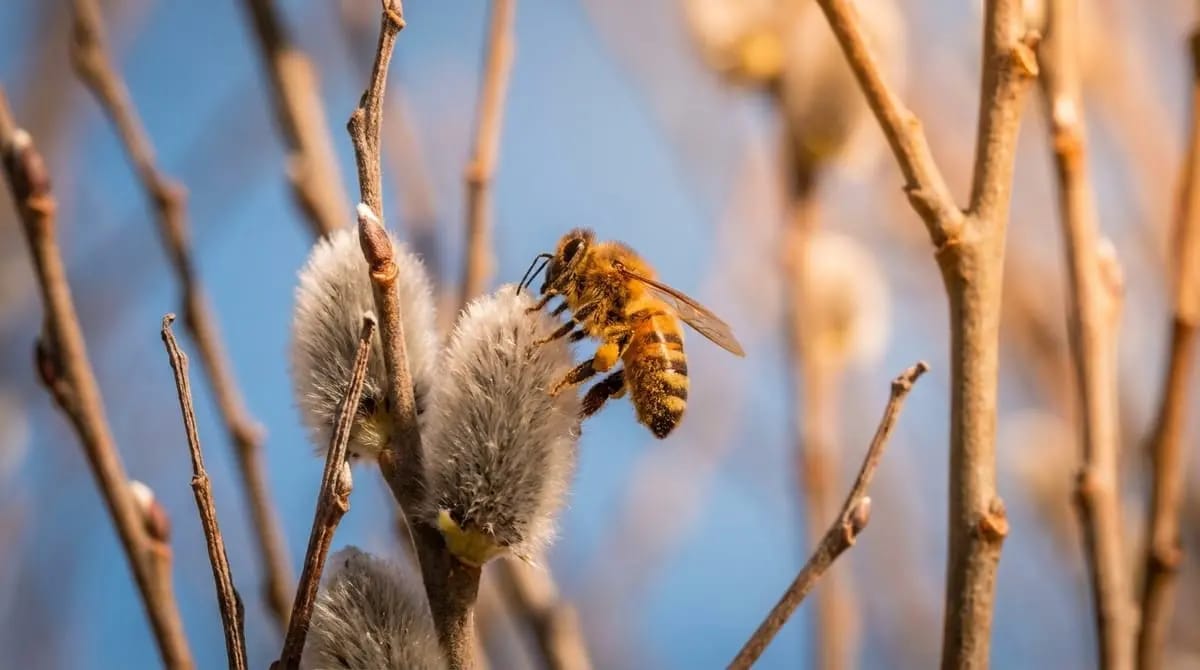
Pussy Willow (Salix caprea, S. discolor)
Zones: 2–8 Bloom: February–April Value: Outstanding. Often the first bee-accessible pollen source of the year. Bees cover pussy willow catkins in early spring. Easy to grow, fast-establishing, tolerates a range of conditions.
Hazel (Corylus spp.)
Zones: 3–9 Bloom: February–March (very early, wind-pollinated but bees collect pollen) Value: Early pollen source. Not a major nectar producer. Valuable primarily as one of the earliest pollen sources.
Best Flowers for Beekeepers
Clovers (Trifolium spp.)
Zones: 3–9 (White clover T. repens widely adapted) Bloom: June–September Value: The backbone of American honey production. White clover is arguably the single most important forage plant for honey bees in North America. Red clover (T. pratense) is less accessible to honey bees (the corolla is too long for their shorter tongues) but highly attractive to bumble bees. Tip: Let your lawn clover bloom rather than mowing it short. A "lazy lawn" approach — mowing high and less frequently — can convert a suburban lawn into meaningful forage.
Lavender (Lavandula spp.)
Zones: 5–9 (English lavender L. angustifolia); Zones 7–9 for others Bloom: June–August Value: Good. Lavender produces aromatic nectar and is heavily worked by bees. Lavender honey is distinctive and popular. Plants bloom for an extended period. Notes: Requires excellent drainage and full sun. Very drought-tolerant once established.
Borage (Borago officinalis)
Zones: Annual across most of North America Bloom: June–September (self-seeds readily) Value: Outstanding. Borage replenishes its nectar every few minutes, making it one of the most productive nectar plants per flower. Bees work it continuously in good weather. Easy to grow from seed; self-seeds aggressively.
Phacelia (Phacelia tanacetifolia)
Zones: Annual (cool-season crop) Bloom: May–July when spring-sown; fall when fall-sown Value: Exceptional. Phacelia is considered one of the best bee plants in existence for raw nectar production. Blue-purple flowers are extremely attractive to bees. Widely used as a cover crop in Germany and the UK specifically as a forage plant. Notes: Grows best in cool weather; may struggle in hot, humid southern climates. Excellent for Pacific Northwest and UK gardens.
Goldenrod (Solidago spp.)
Zones: 3–9 (multiple native species) Bloom: August–October Value: Critical fall forage. Goldenrod provides abundant pollen and nectar during the period when winter bees are being raised. Colonies often show significant weight gain during goldenrod flows. The resulting honey is dark and strongly flavored — excellent for sale as varietal honey or for use as winter stores. Misconception: Goldenrod is frequently blamed for hay fever. In reality, it is wind-pollinated ragweed (Ambrosia spp.) that causes hay fever — blooming at the same time as goldenrod and releasing airborne pollen. Goldenrod pollen is sticky and bee-dispersed; it rarely causes allergic reactions.
Aster (Symphyotrichum / Aster spp.)
Zones: 3–8 (native asters, multiple species) Bloom: August–October Value: Important fall forage alongside goldenrod. Native asters provide late-season pollen and nectar when few other sources are available. Plant native species (New England aster, smooth blue aster, etc.) rather than cultivated doubles, which may have reduced nectar.
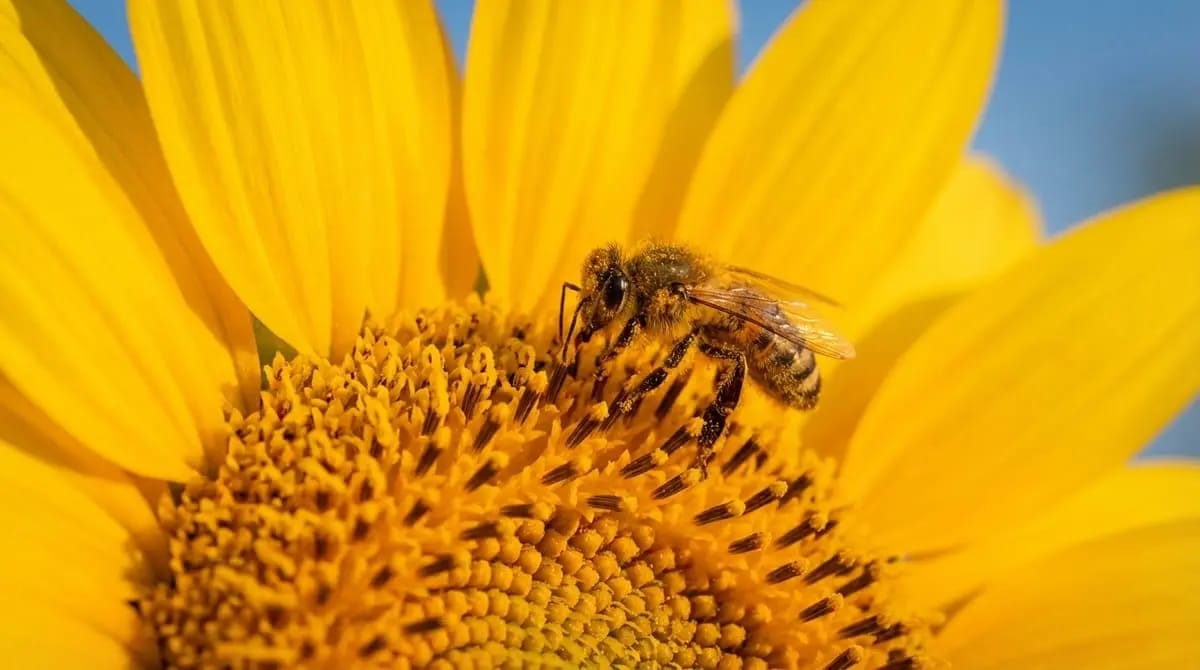
Sunflower (Helianthus annuus)
Zones: Annual, grown in all zones Bloom: July–September Value: Good pollen source; nectar production is variable by cultivar. Open-pollinated, single-headed sunflowers are far more valuable to bees than hybrid pollen-free varieties (bred for the cut flower market). Always choose pollen-producing varieties for bee gardens.
Clover Cover Crops
Several cover crops are excellent dual-purpose plantings for beekeepers with even small amounts of open land:
| Crop | Bloom Period | Value | USDA Zones |
|---|---|---|---|
| White Dutch clover | June–Sept | Excellent — major nectar source | 3–9 |
| Sweet clover (Melilotus) | June–Sept | Outstanding tall biennial | 3–9 |
| Buckwheat | July–Sept | Good nectar; short-season crop | 3–9 (annual) |
| Crimson clover | May–June | Good spring forage | 5–9 |
| Hairy vetch | May–June | Moderate nectar | 3–9 |
| Phacelia | May–July | Exceptional nectar | 4–9 (cool-season) |
Flowering Calendar for Temperate North America and UK
This calendar assumes a temperate climate (roughly USDA Zones 5–7, UK equivalent). Adjust 2–4 weeks earlier for southern regions (Zones 8–9) or later for northern areas (Zones 3–4).
| Month | Key Bloom Sources |
|---|---|
| February | Hazel, red maple (south), pussy willow (south) |
| March | Pussy willow, red maple, early crocuses and bulbs |
| April | Fruit trees (apple, cherry, pear, plum), dandelion, blueberry |
| May | Dandelion, fruit tree aftermath, lilac, hawthorn, black locust (south), raspberry, phacelia |
| June | Black locust / black locust (north), white clover, linden, raspberry, borage, phacelia, lavender |
| July | White clover, linden (north), basswood, sourwood, sweet clover, sunflower, borage |
| August | Goldenrod (early), sunflower, sweet clover, wildflowers, buckwheat |
| September | Goldenrod (peak), aster, ivy (UK), late clovers |
| October | Aster, ivy (UK), late goldenrod |
USDA Hardiness Zone Considerations
All recommendations in this guide assume temperate zone growing conditions. Here are specific notes for different zones:
Zones 3–4 (northern Minnesota, Canada, northern UK): Focus on cold-hardy natives — pussy willow, red maple, native asters, goldenrod. Black locust may winter-kill in zone 3. Linden and basswood are native and extremely hardy.
Zones 5–7 (most of the continental US, most of the UK): The widest plant selection is available. All plants in this guide are suitable.
Zones 8–9 (Pacific Coast, Deep South, Gulf Coast): Many temperate-zone plants struggle in heat. Focus on heat-tolerant alternatives: vitex (chaste tree), tulip poplar, native wildflowers, sourwood, gallberry (Ilex coriacea, southeastern US). The summer dearth may be more severe and longer.
What to Avoid
Double-flowered ornamentals: Roses, dahlias, zinnias, and other ornamentals bred for large, showy double flowers typically produce no accessible nectar or pollen. Bees cannot reach the reproductive structures buried inside multiple layers of petals.
Invasive species: Before planting any tree or shrub, confirm it is not invasive in your region. Black locust, kudzu (not a bee plant, but an example of invasive growth), and purple loosestrife (Lythrum salicaria) are valuable bee forage but ecologically problematic in many US states.
Pesticide-treated plants: Many ornamental plants sold at garden centers have been treated with systemic neonicotinoids (imidacloprid, clothianidin, thiamethoxam) at the nursery. These persist in pollen and nectar for months. Always ask about pesticide treatment or buy from certified organic nurseries.
Practical Planting Strategies for Beekeepers
Fill the dearth first. Before adding more spring forage, address your local summer dearth. July and August need attention most urgently in most of North America. Goldenrod, sunflowers, sweet clover, borage, and buckwheat are all fast-growing and can be established in a single season.
Plant in masses. A single lavender plant is nearly useless to bees. Twenty lavender plants are worth visiting. The minimum effective planting density for most bee plants is 5–10 plants of the same species in a single patch.
Let lawn clover bloom. This is the single easiest and cheapest change most suburban beekeepers can make. Raise mowing height to 4 inches, mow less frequently, and allow white clover to flower. A suburban lawn with blooming clover is more valuable to bees than a perfectly manicured turf.
Coordinate with neighbors. Bees forage up to 3–5 miles. What your neighbors plant matters. Some beekeeping clubs organize community planting initiatives — coordinating clover seeding or sweet clover cover crops with nearby farms provides more value than any individual garden.
Conclusion: Track Bloom and Forage in Hivekraft
Understanding how your forage calendar relates to your hive weight and colony behavior is one of the most illuminating things you can do as a beekeeper. In Hivekraft, you can log bloom observations alongside inspection notes and weather data — noting when goldenrod begins, when the clover flow peaks, and when the summer dearth hits.
Over 2–3 seasons, this data builds into a local forage map that is far more accurate than any general guide. You will know exactly when your colonies need supplemental feeding, when to put supers on in anticipation of the flow, and which months most need planting attention. Combined with IoT weight data, bloom observations become a powerful tool for understanding and improving colony performance.
Plant thoughtfully, observe carefully, and your bees will tell you what they need.
Less paperwork. More time with your bees.
Hivekraft is free for up to 10 hives. Register in 30 seconds.