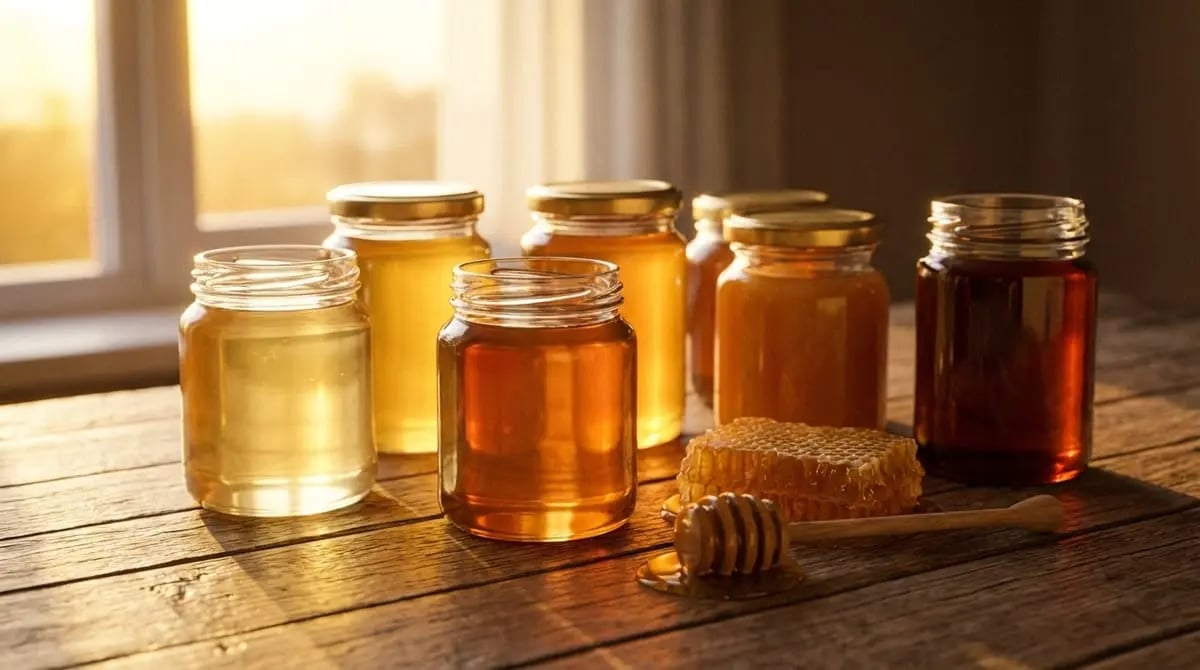
German Honey Varieties: A Flavor Journey Through the Regions
From northern German rapeseed honey to Bavarian fir honey: Discover the flavor diversity of German honey varieties and their regional specialties.
Germany is a land of honey diversity. From the coast to the Alps, from the rapeseed plains of the north to the fir forests of the Black Forest -- every region produces honeys that reflect landscape, climate, and flora in the jar. This flavor journey takes you through the most important German honey varieties and shows why regional honey is so much more than just "sweet."
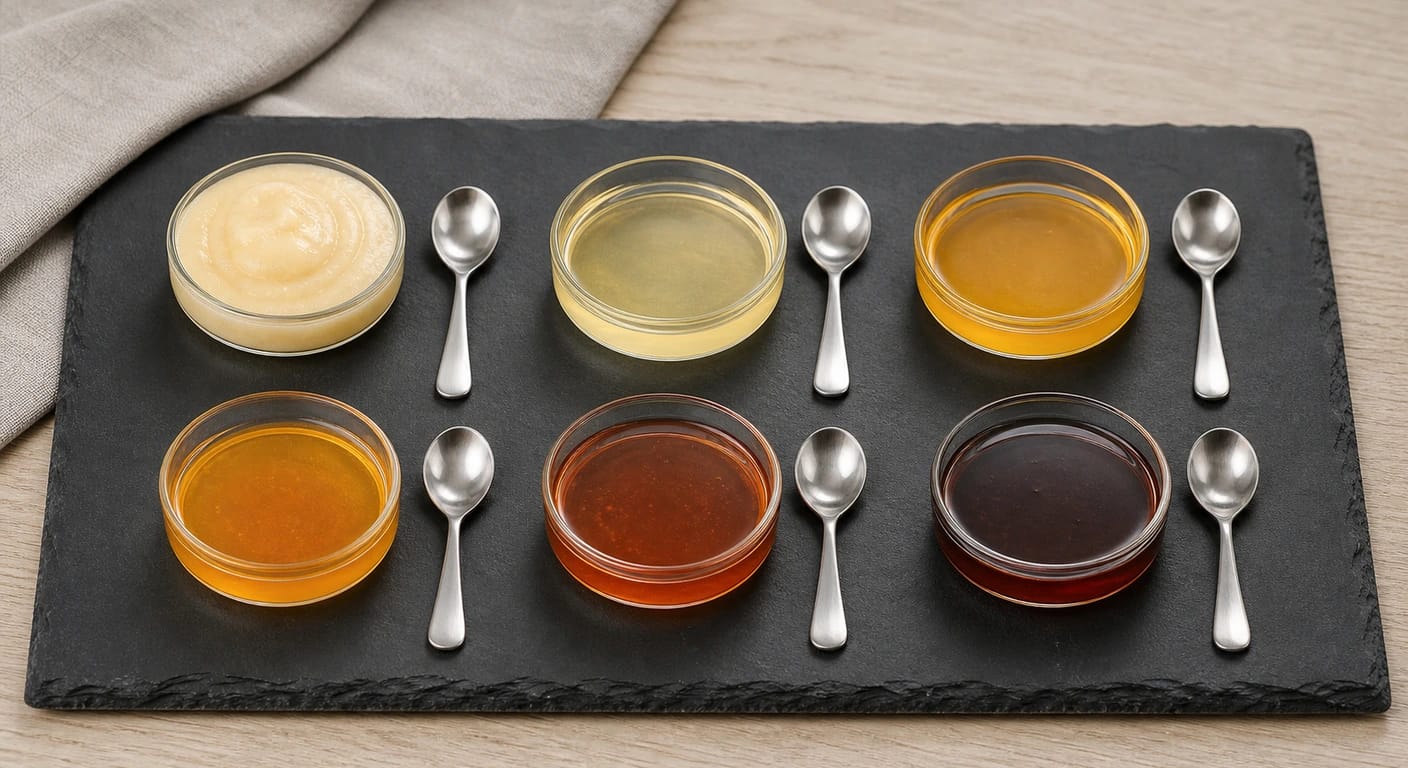
This article focuses on German honey varieties, regional forage sources, and the DIB (German Beekeepers' Association) quality standards. While the tasting principles and food pairing suggestions are universally applicable, the specific varieties and their regional origins are unique to Germany.
Why Does Honey Taste So Different?
Before we begin our journey, a basic understanding: honey is not a uniform product. Its flavor is determined by:
- Forage source: Nectar or honeydew -- and from which plant
- Soil and climate: The terroir influences the plant composition
- Composition: Glucose/fructose ratio, enzymes, minerals, aromas
- Processing: Gentle harvesting preserves volatile aromatic compounds
- Maturation: Crystallization changes texture and flavor perception
Honey contains over 200 different substances -- including sugars, enzymes, amino acids, minerals, vitamins, and aromatic compounds. The combination makes each variety unique.
The North: Rapeseed, Heather, and Coastal Blossoms
Rapeseed Honey -- the Golden Treasure of the North
Origin: Schleswig-Holstein, Lower Saxony, Mecklenburg-Western Pomerania, Brandenburg Forage source: Rapeseed (Brassica napus), April--May
| Property | Rapeseed Honey |
|---|---|
| Color | Almost white to light yellow (crystallized) |
| Consistency | Creamy-firm, finely crystallized |
| Flavor | Mild, gently sweet, slightly floral |
| Aroma | Subtle, slightly cabbage-like (typical crucifer) |
| Special feature | Crystallizes extremely fast, ideal for creaming |
| Pairs with | Breakfast bread, yogurt, mild cheese, children's favorite |
Rapeseed honey is the most produced varietal honey in Germany. Its mild flavor makes it the perfect everyday honey -- particularly popular with children. However, the rapid crystallization requires experience in processing: those wanting creamy rapeseed honey must stir it at the right moment.
For silky creamed honey from rapeseed: Start stirring as soon as the first signs of crystallization appear (slight cloudiness). Stir daily for 2--3 minutes with a stirring rod or machine. After 5--7 days, you'll have butter-smooth creamed honey.
Heather Honey -- the Crown of the North
Origin: Lueneburg Heath, Lower Saxony Forage source: Common heather (Calluna vulgaris), August--September
Heather honey is an exceptional honey in every respect: It is thixotropic (jelly-like), becomes liquid when stirred and sets again. Traditionally it is pressed; alternatively, after "stippling" with a needle roller, it can be briefly liquefied and then extracted. Its flavor is intense, spicy-herbal with a slight bitter note -- not for everyday taste, but an experience for connoisseurs.
Flavor profile:
- Bold-spicy, slightly bitter, malty
- Color: Amber to dark brown
- Consistency: Jelly-like, thixotropic
- Pairs with: Strong cheese, dark bread, game, as a digestif after meals
Linden Honey from the Coast
Origin: Hamburg, Luebeck, coastal cities Forage source: Small-leaved lime, large-leaved lime, June--July
Northern German linden honey from coastal cities has a fresh, slightly menthol-like character. It is lighter than linden honey from more southern regions and has a subtle, almost minty note -- the influence of the coastal climate.
The Center: Linden, Acacia, and Forest
Acacia Honey (Robinia Honey)
Origin: Brandenburg, Saxony-Anhalt, Rhineland-Palatinate, Franconia Forage source: Black locust (Robinia pseudoacacia), May--June
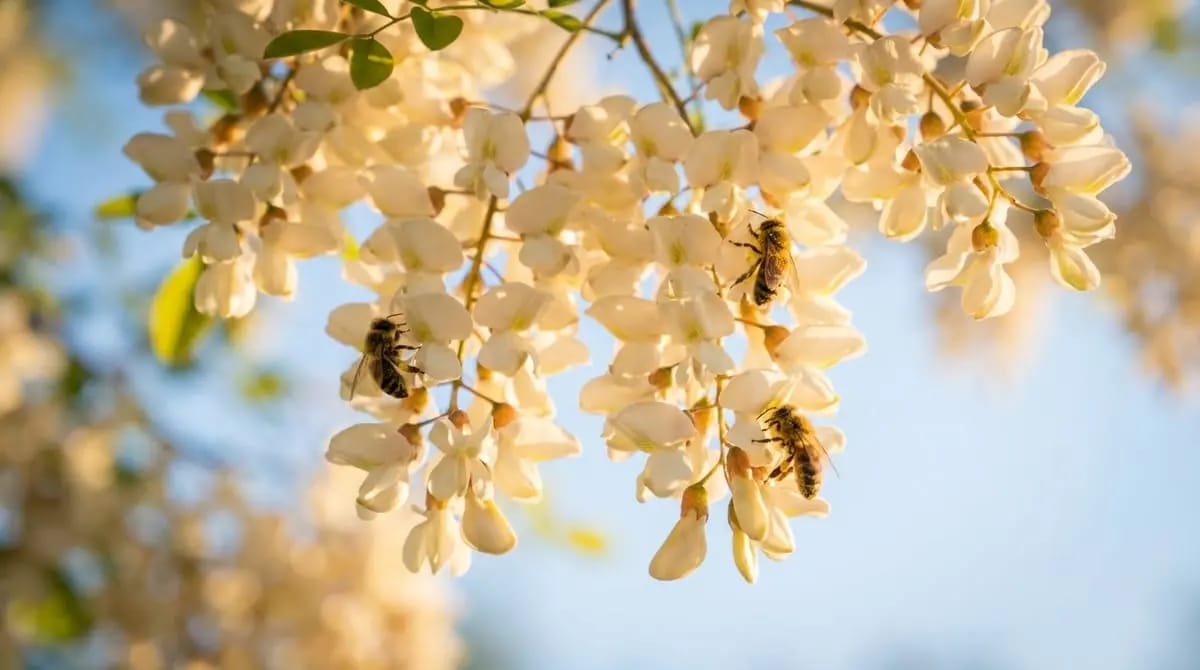
Acacia honey is the most elegant German varietal honey: Water-clear to light gold, liquid, mild and velvety smooth in flavor. It crystallizes extremely slowly and often remains liquid for months -- making it the ideal sweetener for tea and for garnishing.
Flavor profile:
- Very mild, almost neutral-sweet, slightly vanilla-like
- Color: Water-clear to light gold
- Consistency: Thin liquid, hardly crystallizes
- Pairs with: Tea, light sauces, desserts, goat cheese, as a sweetener in fine cuisine
Linden Honey from City Centers
Origin: Berlin, Leipzig, Dresden, Frankfurt, Muenster Forage source: Small-leaved and large-leaved lime, June--July
Linden honey from Germany's major cities has an unmistakable aroma: floral, slightly menthol-like, with a fresh note reminiscent of eucalyptus. The color ranges from light yellow to greenish-gold. Linden honey crystallizes at a moderate pace and becomes coarser-grained than rapeseed honey.
Flavor profile:
- Floral-fresh, menthol-like, slightly medicinal
- Color: Light yellow to greenish-gold
- Consistency: Liquid to creamy (depending on crystallization)
- Pairs with: Herbal tea, cold remedies, mild cheese, salad dressings
Sweet Chestnut Honey
Origin: Palatinate, Taunus, Odenwald, Siebengebirge, Black Forest Forage source: Sweet chestnut (Castanea sativa), June--July
Sweet chestnut honey is the most polarizing German varietal honey: Dark brown, bold-herbal, with a distinctive bitter note that not everyone enjoys. For connoisseurs, it is a delight -- complex, full-bodied, and with a long finish.
| Property | Sweet Chestnut Honey |
|---|---|
| Color | Dark brown to reddish-brown |
| Consistency | Liquid, crystallizes slowly |
| Flavor | Bold-herbal, spicy, slightly bitter |
| Aroma | Nutty, woody, smoky |
| Special feature | High mineral content, antimicrobial properties |
| Pairs with | Blue cheese, walnuts, game dishes, dark chocolate |
The South: Forest, Fir, and Fruit Blossom
Forest Honey
Origin: Black Forest, Bavarian Forest, Eifel, Hunsrueck, Sauerland Forage source: Honeydew from spruce and fir trees, June--August
Forest honey is a honeydew honey -- it does not come from nectar but from the sugary excretion of bark lice on coniferous trees. This special characteristic makes it fundamentally different from blossom honey:
Flavor profile:
- Spicy-malty, slightly resinous, barely sweet
- Color: Dark brown to almost black
- Consistency: Liquid, crystallizes very slowly
- Pairs with: Hearty bread, Roquefort, game dishes, as a glaze for meat
You can recognize forest honey by three characteristics: (1) Dark color, (2) Spicy-malty flavor without pronounced sweetness, (3) Slow crystallization. The electrical conductivity is above 0.8 mS/cm -- an objective distinguishing feature from the blossom honey class.
Fir Honey (Silver Fir Honey)
Origin: Black Forest, Bavarian foothills Forage source: Honeydew from silver fir (Abies alba), June--August
Fir honey is the pinnacle of forest honey: Even darker, even spicier, often with a greenish or reddish shimmer. It is considered one of the finest honeys in Europe and commands premium prices.
Flavor profile:
- Intensely malty-spicy, subtly resinous, mineral
- Color: Almost black, often with a greenish shimmer
- Consistency: Syrup-like liquid, hardly crystallizes
- Pairs with: Black tea, goat cheese, fig mustard, as a finishing touch on gourmet dishes
Fruit Blossom Honey
Origin: Lake Constance, Altes Land, Rhineland, Franconian wine country Forage source: Apple, cherry, pear, March--May
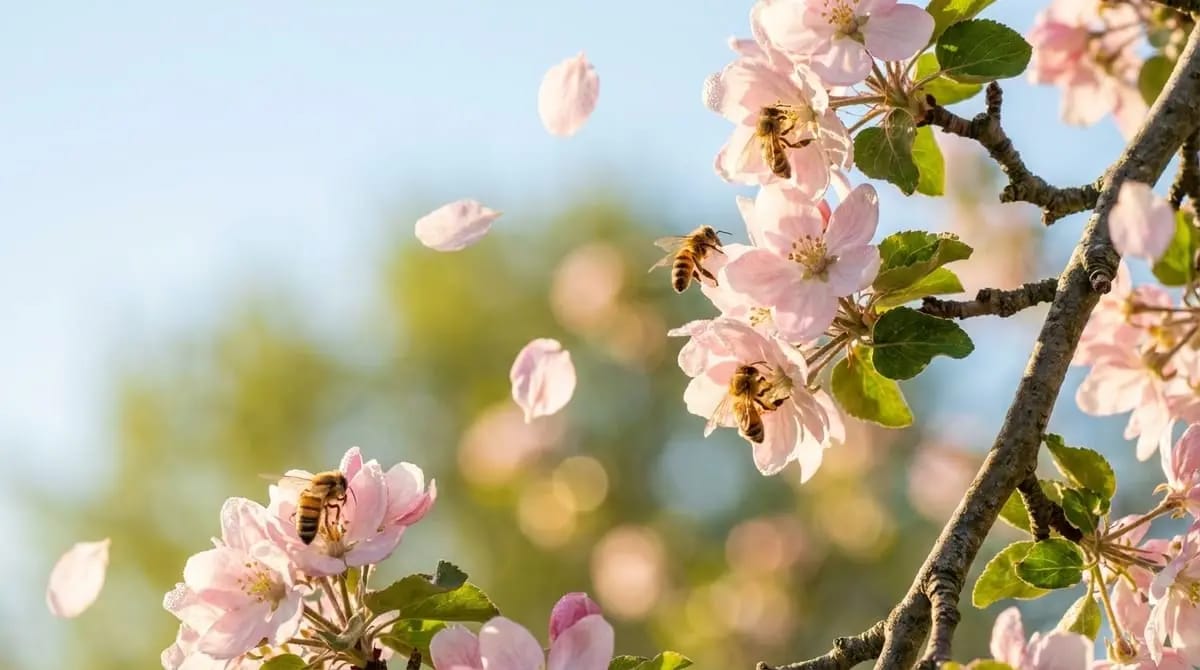
Fruit blossom honey is a spring classic: Light, aromatic, and with a fine, fruity undertone. Depending on the region, cherry, apple, or pear dominates -- and the honey reflects these nuances.
Flavor profile:
- Fruity-mild, slightly floral, harmoniously sweet
- Color: Light yellow to golden yellow
- Consistency: Creamy (crystallizes at medium speed)
- Pairs with: Breakfast, crepes, vanilla ice cream, fruit salad
Special Regional Varieties
Beyond the major varietal honeys, there are regional rarities: Buckwheat honey (Lower Saxony, Brandenburg) -- dark brown, bold-malty, almost savory. Phacelia honey -- mild, light, and subtly aromatic, often used as a base for creamed honey. Sunflower honey (Brandenburg, Saxony-Anhalt) -- bright yellow with a slightly herbal character. And cornflower honey -- a rarity with a greenish tint and herbal flavor that is becoming more common again thanks to wildflower strip programs.
How to Taste Honey Properly
Honey tasting follows similar principles to wine tasting. Here is how to proceed:
- 1
Assess Appearance
Hold the jar against the light. Evaluate color (from water-clear to almost black), clarity (clear or cloudy), and consistency (liquid, creamy, or solid). The color gives initial clues about the forage source: Light = blossom honey, dark = honeydew or bold blossoms.
- 2
Smell the Aroma
Open the jar and first smell from the opening. Then take some honey on a spoon and smell again up close. Look for: Floral, fruity, spicy, malty, resinous, medicinal, or neutral? The nose detects aromas that the palate alone cannot perceive.
- 3
Check the Flavor
Take a small amount of honey on your tongue and let it slowly melt. Pay attention to: Sweetness (mild or intense), acidity (slight or noticeable), bitterness (present or not), body (light or full-bodied). Swallow the honey and notice the aftertaste -- good honey has a long "finish."
- 4
Evaluate Texture
Assess the crystal structure: Fine-grained (creamed honey), coarse-grained (naturally crystallized), or liquid? The texture influences the overall impression and provides clues about processing.
Tasting Notes: The Most Important German Varieties Compared
| Variety | Sweetness | Spiciness | Bitterness | Overall Impression |
|---|---|---|---|---|
| Rapeseed honey | Medium | Low | None | Mild and velvety |
| Linden honey | Medium | Fresh-minty | None | Elegant and fresh |
| Acacia honey | Subtle | Minimal | None | Fine and neutral |
| Forest honey | Low | Strong-malty | Slight | Bold and complex |
| Fir honey | Low | Very strong | Slight | Intense and mineral |
| Heather honey | Medium | Strong-spicy | Noticeable | Powerful and herbal |
| Sweet chestnut | Low | Strong-nutty | Noticeable | Polarizing and distinctive |
| Fruit blossom | Medium-high | Fruity-floral | None | Harmonious and approachable |
Honey and Food Pairing: Regional Combinations
As with wine, the same applies to honey: Regional products harmonize best with each other:
- Heather honey + Holstein Tilsiter: Spice meets spice
- Rapeseed honey + Kale: As a glaze for the northern German classic
- Acacia honey + Asparagus: A subtle vinaigrette for white asparagus
- Sweet chestnut honey + Handkaes: Hessian-herbal meets herbal
- Fir honey + Allgaeu mountain cheese: An alpine liaison
- Forest honey + Venison roast: As a glaze -- earthy and full-bodied
- Fruit blossom honey + Quark: The southern German breakfast classic
The DIB Quality Standards
The German Beekeepers' Association (DIB) guarantees strict quality standards with its quality seal: Maximum 18% water content (EU allows 20%), HMF value below 15 mg/kg (EU: 40 mg/kg), 100% German origin, and no heating above 40 degrees Celsius.
Those who value regional origin should buy honey directly from beekeepers. Supermarkets often carry blends of EU and non-EU honey. The DIB jar with its tamper-evident seal guarantees German honey, though the variety designation is voluntary.
Honey as a Mirror of the Landscape
Every honey variety tells a story -- the story of its landscape, its blossoms, its climate. Those who taste rapeseed honey from Schleswig-Holstein taste the wide northern German plain. Those who sample fir honey from the Black Forest taste the dark coniferous forest. And those who let heather honey from the Lueneburg Heath melt on their tongue taste the austere beauty of the purple-blooming landscape.
This flavor diversity is a treasure worth preserving -- through regional beekeeping, diverse landscapes, and consumers who appreciate the difference. Because no imported blended honey can replace what a genuine German varietal honey offers: the taste of home in a jar.
Read also: Honey as a Remedy - What Science Really Says Quality in the jar: Extracting Honey - Tips for Best Quality From jar to customer: Marketing Honey Successfully- Honey Business -- Lesson 3: German Honey Varieties
- Forage Plants and Bee Pasture -- Which Plants Produce Which Honey
Less paperwork. More time with your bees.
Hivekraft is free for up to 10 hives. Register in 30 seconds.