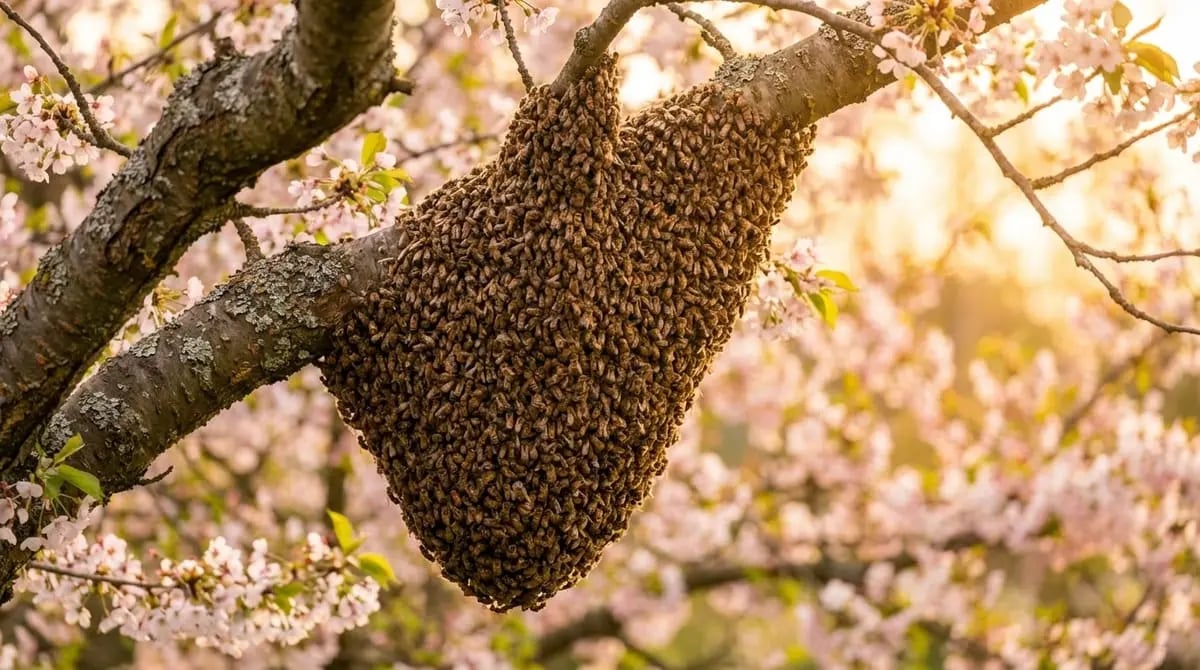
May: Managing Swarm Season - Techniques, Timing and Control
Swarm season in May: Learn the 7-day control cycle, recognize swarm signs early, and manage your colonies with proven techniques.
May is the swarm month. No other period in the beekeeping year demands as much attention and presence from the beekeeper. A missed inspection can mean that half your bees take off - along with the old queen. But those who understand the mechanisms and check consistently can not only manage swarm season but deliberately use it for colony multiplication.
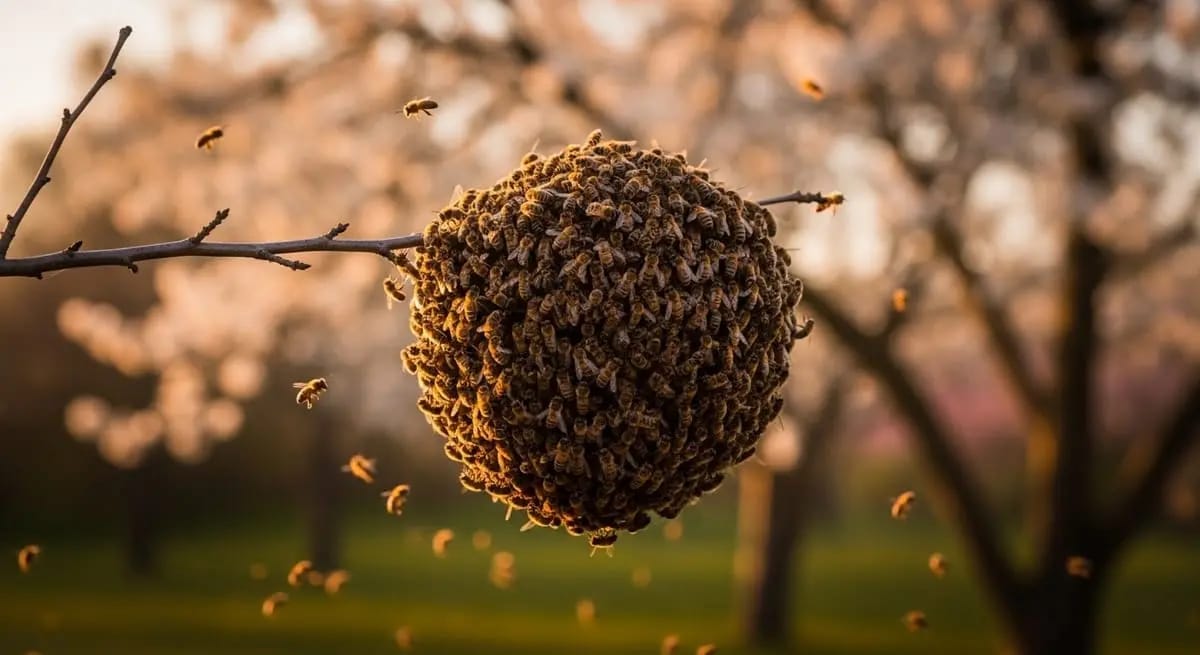
Why Do Bees Swarm?
Swarming is the natural reproduction of the bee colony as a superorganism. Unlike reproduction at the cell level (eggs, larvae), the entire colony divides into two parts here. The old queen leaves with about half the bees, and the remaining bees raise a new queen.
From a biological perspective, swarming is a sign of strength and health. Only strong, well-supplied colonies swarm. For the beekeeper, however, an uncontrolled swarm means:
- Harvest loss of 30 to 50 percent
- Swarm can cause trouble with neighbors
- Young colony needs weeks until the new queen begins laying
- Setback in colony development
Understanding Swarm Biology
To perform swarm control correctly, you need to know the timeline. From the first swarm impulse to departure, nature follows a fixed schedule:
Timeline
| Day | Event |
|---|---|
| Day 0 | Queen lays egg in queen cup |
| Day 3 | Larva hatches, fed with royal jelly |
| Day 8 | Queen cell is capped |
| Day 8-12 | Swarm departs (on the day of capping or in the following days) |
| Day 16 | Virgin queen emerges |
| Day 21-28 | Mating flight of virgin queen |
| Day 28-35 | Virgin queen begins laying |
Between the egg being laid in a queen cell and capping, about 8 days pass. The swarm can depart from the day of capping. If you check on a 7-day cycle, you discover cells with eggs at the latest during the next check as capped cells - which are large enough to be hard to miss.
Triggers of Swarming Mood
Not every strong colony swarms. Several factors must come together:
- Lack of space: Brood nest full, no building frame, honey super missing or given too late
- Aging queen: Queens from their 2nd year on swarm more frequently
- Genetics: Some bee lines are more swarm-prone than others (Carnica tends to be more than Buckfast)
- Weather: Warm, humid days after a cool rainy period are classic swarm triggers
- Forage situation: Lack of forage with many nurse bees promotes swarming mood
The 7-Day Control Cycle
Consistent weekly inspection is your most important tool against unwanted swarms. Here is the procedure for an efficient swarm check:
- 1
Preparation: Smoke and remove lid
Give 2 to 3 puffs of smoke at the entrance and wait 30 seconds. Remove the lid and give another light puff of smoke over the top bars. Work calmly and quickly - a fast inspection stresses the bees less than prolonged poking around.
- 2
Check outer frames
Start on one side of the brood box. The outer frames are often feed or pollen frames - there should be no queen cells here. Still check briefly, especially the bottom edges.
- 3
Tilt brood frames and check bottom edges
Now comes the decisive part: Take out each brood frame and tilt it so you can see the bottom edge of the comb. Queen cells (swarm cells) sit almost always on the lower comb edge. Also check the side edges and transitions between brood and feed areas.
- 4
Assess queen cells
Found queen cells? Then assess the status: Play cups (empty, downward-hanging wax cups) are harmless - nearly every colony has them. Queen cups with eggs (with egg or larva in royal jelly) mean: swarming mood is present. Capped queen cells (closed, peanut-shaped cells): swarm is imminent or has already departed.
- 5
Decide on action and document
Based on your finding, decide: break cells, form a nucleus, or requeen. Document the finding for each colony in the digital hive records - number and status of queen cells, colony strength, queen seen/eggs present. With voice input, this works even with gloves on.
Swarm Prevention: Proven Methods
There are various strategies for preventing swarming. The right choice depends on your experience, number of colonies, and goals.
Method 1: Breaking Queen Cells
The simplest but least reliable method. You break out all queen cells and hope the colony loses its swarming mood.
Advantages: Quick, no additional material needed Disadvantages: High recurrence rate (most colonies build new swarm cells), one missed cell means the swarm departs
Simply breaking out queen cells is the most commonly practiced but least reliable method. The colony has made a decision - and a single missed cell is enough for the swarm to depart. Always combine cell breaking with additional measures.
Method 2: Preemptive Swarm (Nucleus Formation)
You preempt the swarm by removing bees and brood from the colony. This simulates the swarm and takes away the colony's drive.
| Variant | Procedure | Suited For |
|---|---|---|
| Brood nucleus | 2-3 brood frames + bees into new hive | Beginners, standard |
| Flying bees split | Flying bees + queen to new location | Advanced |
| Combined brood nucleus | Brood from multiple colonies | Experienced, queen rearing |
Method 3: Intermediate Floor Split
An elegant method for beekeepers with stacking hives: You place an intermediate floor (with its own entrance facing backward) between brood box and honey super. The queen stays below, the queen cells go with bees into the upper box. This way you use the swarming mood for queen multiplication without changing locations.
Method 4: Total Brood Removal
The most radical but also most effective method. You remove all brood frames from the colony and give only foundation sheets. The colony must build completely anew and thereby loses the swarming mood. The removed brood goes into a combined brood nucleus.
Bonus: The broodless phase interrupts the Varroa reproductive cycle.

Reading Swarm Signs Correctly
Not every sign immediately means swarming mood. Here is an overview for assessment:
| Observation | Swarm Risk | Action |
|---|---|---|
| Play cups (empty) | Low | Monitor, check again next week |
| Queen cups with eggs (1-2) | Medium | Break cells + give space + check next week |
| Many queen cups with eggs (5+) | High | Form nucleus or preemptive swarm |
| Capped queen cells | Very high | Act immediately: swarm is imminent |
| Bee beard at entrance | Medium-high | Could be heat OR swarming mood |
| Reduced foraging despite nectar flow | High | Immediate check for queen cells |
Time Management: Swarm Control with Many Colonies
Those managing 10, 20, or more colonies must work efficiently. The complete swarm check of one colony should take no longer than 5 to 8 minutes.
Tips for Efficient Inspection
- Tilt inspection instead of pulling frames: Tilt the entire box backward and check the bottom edges of all frames simultaneously from below. This saves 50 percent of the time.
- Maintain order: Always inspect in the same sequence, then you remember the particularities better.
- Prepare materials: Have nucleus box, foundation sheets, and tools ready - when you find swarming mood, you must act immediately.
- Fix inspection dates: Enter the 7-day cycle firmly in your calendar. A forgotten date can cost the swarm.
When the Swarm Departs Anyway
Despite all checks, a swarm can escape. Then it is: stay calm and act quickly.
Catching a Swarm
A freshly departed swarm first gathers nearby - on a branch, a fence, or a house wall. You typically have 1 to 3 hours before scout bees have found a new nesting site and the swarm moves on.
- Have swarm trap or box ready
- Carefully shake or brush the swarm cluster into the container
- Leave container open at the swarm site - trailing bees will find their way in
- In the evening transfer to a prepared hive (closed)
- Feed with sugar water 1:1, as the swarm has no stores
In the Mother Colony
Back at the mother colony, check: How many queen cells are present? Leave one good, capped queen cell standing and break all others. The new queen will emerge from this cell.
After the departure of the prime swarm (with the old queen), afterswarms can follow - with the emerging virgin queens. Break all queen cells except one to prevent afterswarms. Check again after 7 days.
Swarm Trap: The Passive Method
In addition to active control, you can also set up a swarm trap (bait hive). This attracts passing swarms - whether your own or others'.
Ideal Swarm Trap
Regional Swarm Calendar
Swarm season varies considerably by region and year. Here is an overview:
| Region | Swarm Season Start | Swarm Season End | Peak |
|---|---|---|---|
| Rhine Plain, Upper Rhine | Mid-April | Late May | Early May |
| Southern Germany (Alpine foothills) | Late April | Mid-June | May |
| Central Germany | Early May | Late June | Mid-May |
| Northern Germany | Mid-May | Early July | June |
| Higher elevations (>600m) | June | Mid-July | Late June |
Using Swarming Mood Deliberately
Experienced beekeepers see swarming mood not as a problem but as an opportunity. The energy the colony invests in swarm preparation can be redirected:
- Queen rearing: Swarm cells provide well-supplied, strong queens
- Colony multiplication: Every prevented swarm can become a new nucleus
- Varroa control: Brood removal as swarm prevention simultaneously reduces Varroa pressure
- Comb renewal: New foundation sheets after brood removal provide fresh comb
Swarm control means not working against nature but reading the signals of the bee colony. With consistent tilt inspections and timely action, swarms can be reliably prevented - and the swarming energy deliberately used for multiplication.
Swarm season in May challenges you as a beekeeper - but it rewards consistent work. Maintain your 7-day cycle, respond decisively to swarm signs, and use the energy of your colonies for multiplication. This way the most stressful phase of the beekeeping year becomes your most productive.
Read also: Swarm Season - Recognizing, Preventing and Using Swarms Using swarm cells: Queen Rearing for Beginners Next in the beekeeping year: Bees in Summer - Nectar Flow, Care and Heat Protection- Beekeeping for Beginners -- Lesson 8: Understanding and managing swarm season
- Advanced Beekeeping Practice -- Lesson 3: Professional swarm management
Less paperwork. More time with your bees.
Hivekraft is free for up to 10 hives. Register in 30 seconds.