Beekeeping in Baden-Wuerttemberg: Fruit Blossom and Black Forest
Baden-Wuerttemberg offers beekeepers unique forage: Fruit blossom at Lake Constance, fir honey in the Black Forest and research at Hohenheim.
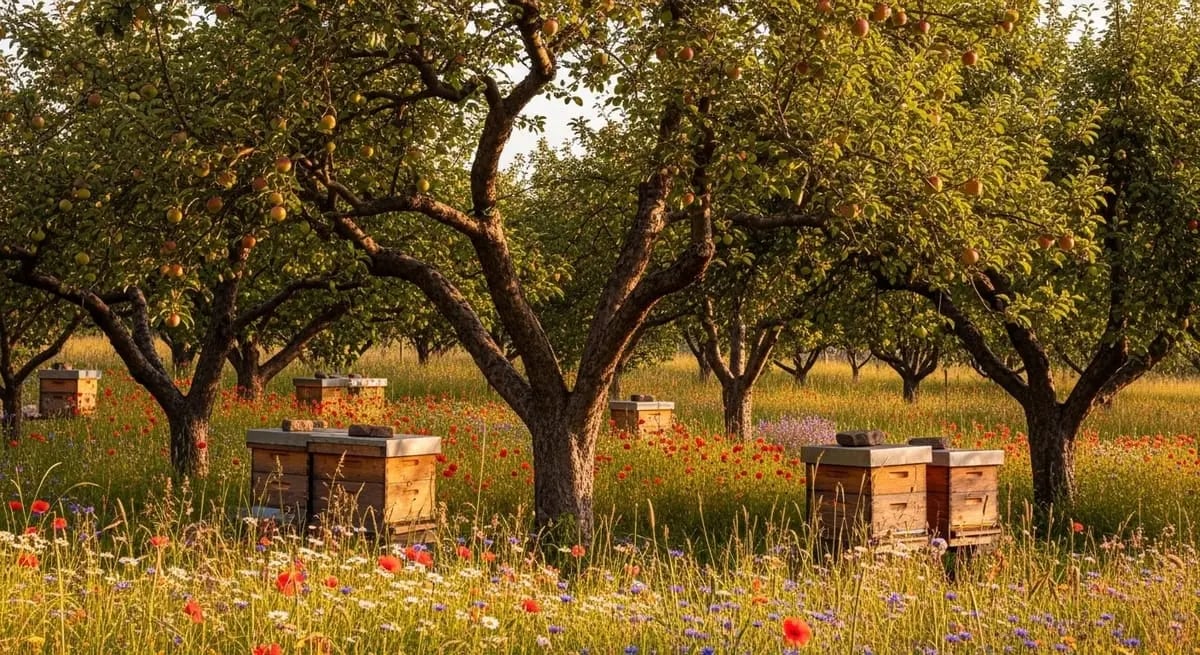
Baden-Wuerttemberg is a beekeeping region of superlatives: here the coveted Black Forest fir honey is produced, fruit blossom at Lake Constance and in the Markgraeflerland attracts millions of bees, and world-class bee research is conducted at the University of Hohenheim. With approximately 27,000 beekeepers, the southwest is the second most important beekeeping state in Germany after Bavaria — and in terms of fir honey, it is the undisputed number one.
The regulations, organizations and geographic details described in this article apply specifically to Baden-Wuerttemberg, Germany. Rules and structures may differ in other countries and regions.
Baden-Wuerttemberg's Beekeeping Landscape
The federal state is divided into distinctly different natural regions, each offering its own forage sources and challenges:
- Black Forest: Fir honey stronghold, extensive coniferous forests
- Upper Rhine Plain: Germany's warmest region, early vegetation
- Swabian Alb: Calcareous grasslands, juniper, wild herbs
- Lake Constance and Upper Swabia: Fruit cultivation, grassland, mild climate thanks to the lake
- Hohenlohe and Tauber: Viticulture, arable land, acacia (black locust)
Black Forest Fir Honey: The Liquid Heritage
Silver fir honey from the Black Forest is one of the highest-quality and most expensive honey varieties in Europe. The Silver fir (Abies alba) has its largest contiguous population in Germany in the Black Forest, and the honey produced from it is a flagship of Baden-Wuerttemberg's beekeeping.
What Makes Fir Honey Special
Fir honey is not made from nectar but from honeydew. Bark lice (especially Cinara pectinatae) feed on sap from Silver firs and excrete excess sugar as honeydew. Bees collect this honeydew and process it into a honey with unique properties:
- Color: Dark brown to almost black, often with a greenish shimmer
- Taste: Spicy-malty, slightly resinous, barely sweet
- Consistency: Remains liquid for a very long time (months to years)
- Conductivity: Over 0.8 mS/cm — clearly classified as honeydew honey
- Mineral content: Significantly higher than blossom honey
Fir honey does not occur every year. Honeydew production depends on the bark louse population, which in turn is strongly influenced by the winter conditions and spring weather. In good years, beekeepers in the Black Forest can harvest 30 to 50 kg per colony. In some years, nothing at all — which is what makes fir honey so valuable.
Fir Honey Monitoring
Baden-Wuerttemberg's beekeepers have developed a sophisticated system for fir honey forecasting:
- 1
Observing Bark Lice (April–May)
From April, Silver firs are checked for bark louse populations. Experienced beekeepers specifically search for Lachnid colonies on the branches. The stronger the infestation, the higher the prospect of honeydew.
- 2
Honeydew Test (May–June)
The classic test: place a white surface under the fir branches. If honeydew drops fall, the flow is underway. Alternatively: shake branches and watch for the sweet, sticky rain.
- 3
Migration (June–July)
With a positive forecast, beekeepers migrate with strong colonies to forest locations. In the Black Forest, there are established migration sites that are often allocated across generations.
- 4
Harvest and Marketing
Fir honey is gently extracted by centrifuge and stored in a dark, cool place. It is particularly suitable for direct marketing as a premium product. In the Black Forest, there is a long tradition of fir honey marketing — sometimes with regional designations of origin.
Baden-Wuerttemberg's Forage Regions
Upper Rhine Plain: Germany's Warmest Corner
The Upper Rhine Plain between Basel and Karlsruhe is the warmest region in Germany. Here vegetation often begins as early as February, and bees fly significantly earlier than in the rest of the country.
Typical forage sources:
- Cherry and fruit blossom (March–April): Especially in the Ortenau and at the Kaiserstuhl
- Acacia/Black locust (May–June): In the Rhine floodplains, yields mild, light honey
- Sweet chestnut (June–July): At the Kaiserstuhl and in the foothills, spicy-robust honey
- Sunflower (July–August): In the plain, yellow, mild honey
Lake Constance and Upper Swabia
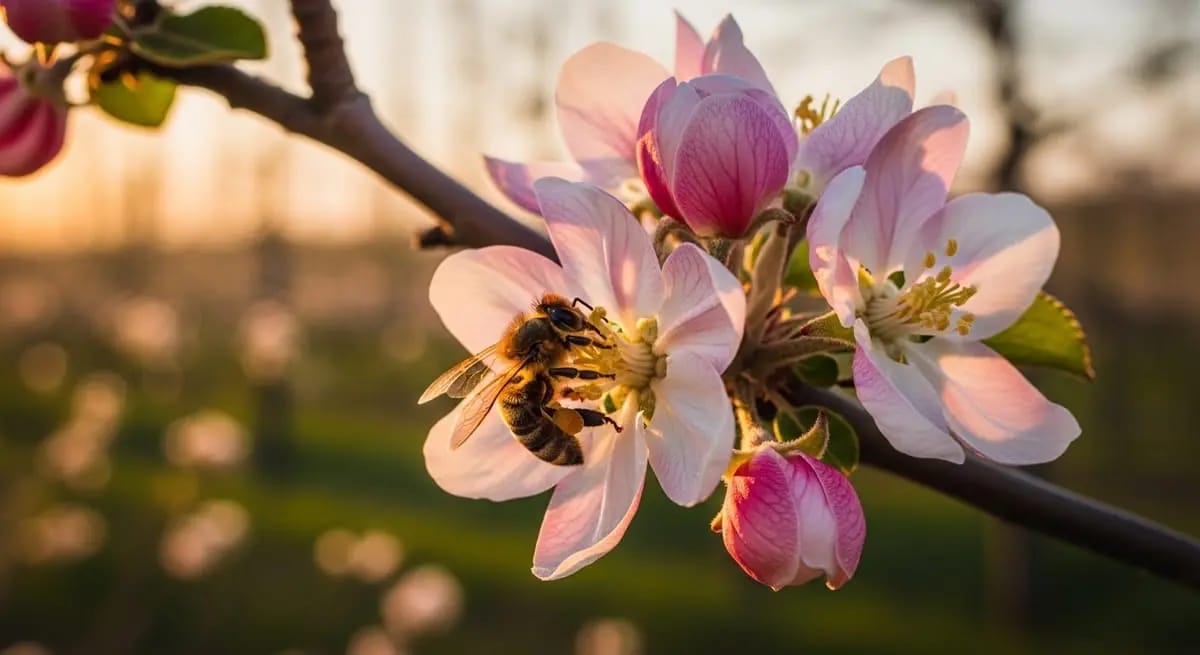
The Lake Constance region benefits from the moderating influence of the lake: mild winters, temperate summers. The Tettnang hop-growing area, the fruit-growing region around Friedrichshafen and the traditional orchards of the Linzgau offer diverse forage.
Special feature: The island of Mainau in Lake Constance is a bee paradise — the apiary there impressively demonstrates what forage a well-designed garden can offer.
Swabian Alb
The Swabian Alb is a limestone mountain range with sparse but species-rich vegetation. The juniper heaths and dry grasslands of the Alb are among the most species-rich habitats in Central Europe. For bees this means:
- Wild herb honey: Thyme, oregano, sage — aromatic and herbal
- Dandelion honey: Very productive on the Alb meadows
- Late season: The Alb lies high (600–1,000 m) — the flow begins 2 to 3 weeks later than in the Rhine Plain
Hohenlohe and Tauber
The northern region of Baden-Wuerttemberg is characterized by viticulture and arable farming. The forage sources are similar to those in Franconia: rapeseed, fruit blossom, acacia. A special feature is the Hohenlohe forest honey from the mixed deciduous forests.
Research and Education: The Hohenheim Tradition
The State Institute for Apiculture at the University of Hohenheim (Stuttgart) is one of Europe's leading bee research institutions. Under the leadership of PD Dr. Peter Rosenkranz, practice-oriented research at the highest level has been conducted here since 1999:
- Varroa research: Hohenheim was a pioneer in developing treatment strategies
- Bee genetics: Breeding programs for Varroa tolerance
- Plant protection monitoring: Investigating the effects of pesticides on bees
- Honey analyses: Quality testing and variety determination
The University of Hohenheim regularly holds an open day at the Bee Institute. Here you can visit the research laboratories, attend lectures and talk to the scientists — a must for every beekeeper in Baden-Wuerttemberg.
Other Research Institutions
- Chemical and Veterinary Examination Office Freiburg: Honey analytics and residue testing
- Natural History Museum Stuttgart: Wild bee research and species conservation
- Beekeeping associations: Their own experimental apiaries for practice-oriented research
Beekeeping Associations in Baden-Wuerttemberg
Due to its historical division into Baden and Wuerttemberg, Baden-Wuerttemberg has two major beekeeping associations:
Landesverband Wuerttembergischer Imker e.V.
The Wuerttemberg association covers the east of the state — from Stuttgart across the Swabian Alb to Lake Constance. It offers:
- Comprehensive course and seminar programs
- Breeding coordination and mating station operation
- Honey testing and DIB certification
Landesverband Badischer Imker e.V.
The Baden association covers the west — Black Forest, Upper Rhine Plain, Kaiserstuhl. Special focus areas:
- Fir honey monitoring and migration coordination
- Cooperation with the Black Forest National Park
- Promotion of migratory beekeeping
| Feature | Wuerttemberg Beekeepers | Baden Beekeepers |
|---|---|---|
| Region | Wuerttemberg (eastern part of the state) | Baden (western part of the state) |
| Members | ~15,500 | ~7,300 |
| Focus | Fruit blossom, Alb forage | Fir honey, forest forage |
| Hive type | Predominantly magazine | Magazine and bee house |
| Migratory beekeeping | Moderately widespread | Strongly widespread (forest forage) |
| Distinctive feature | Close to Hohenheim | Fir honey tradition |
Challenges in Baden-Wuerttemberg
The Black Forest in Transition
Climate change is altering the Black Forest: drought periods, bark beetle infestations and storm damage are reducing the coniferous forest stands. For fir honey beekeeping, this is an existential threat, as fewer Silver firs mean less honeydew potential.
At the same time, forest restructuring creates new opportunities: mixed deciduous forests offer blossom forage (maple, linden) that the coniferous forests lack.
Orchard Crisis
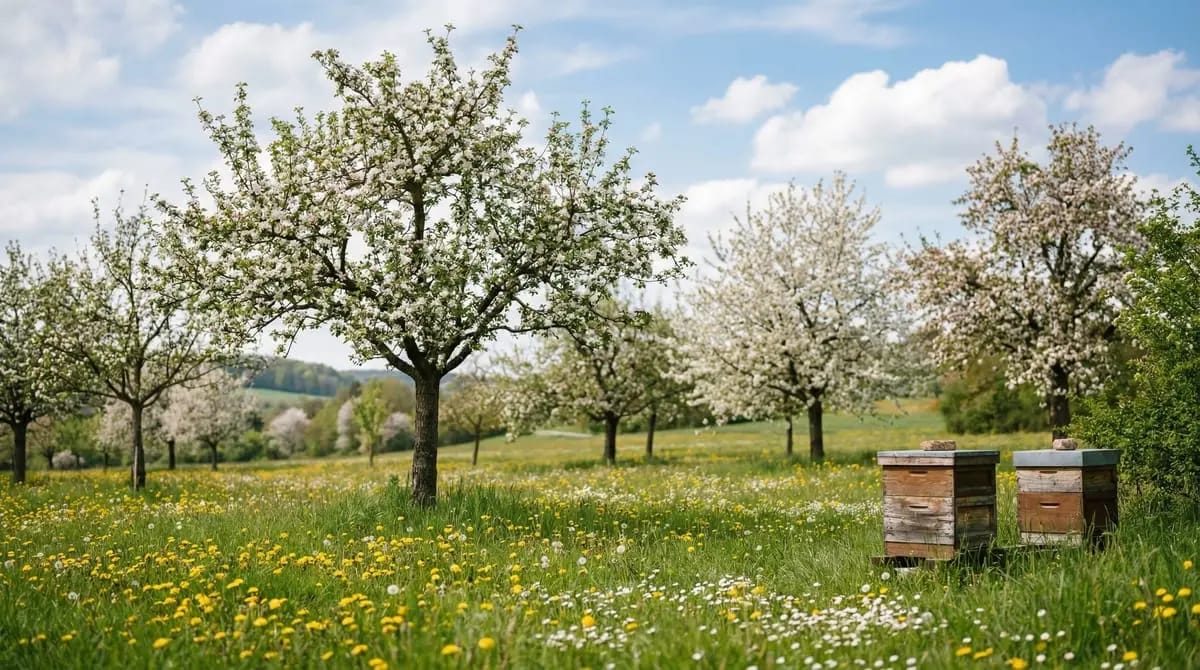
Traditional orchard cultivation in Baden-Wuerttemberg is declining. Old traditional orchards are being cleared or no longer maintained. Although the state promotes their preservation, economic competition from intensive plantation fruit growing remains strong. For beekeepers, the decline of traditional orchards means less early forage and less variety diversity.
Urbanization in the Rhine-Neckar Region
The Rhine-Neckar metropolitan region (Mannheim, Heidelberg, Karlsruhe) is steadily growing. The sealing of land reduces the forage supply, while urban beekeeping is simultaneously booming. A tension that requires good management.
Baden-Wuerttemberg is particularly susceptible to late frosts that can destroy the fruit blossom. In recent years, there have been several instances of significant frost damage to cherry and apple blossoms — with direct impacts on honey yields. Monitor weather forecasts carefully and be prepared to feed in case of forage failures.
Regional Specialties and Marketing
Protected Designations of Origin
Baden-Wuerttemberg is working on strengthening regional honey varieties. Terms like "Black Forest Fir Honey" or "Lake Constance Blossom Honey" have high market value. Some initiatives are pursuing a Protected Geographical Indication (PGI) under EU law.
Honey and Wine
In the Markgraeflerland and at the Kaiserstuhl, there is a growing tradition of honey-wine pairing events. Beekeepers and winemakers cooperate to bring more attention to both products.
Farm Shops and Direct Marketing
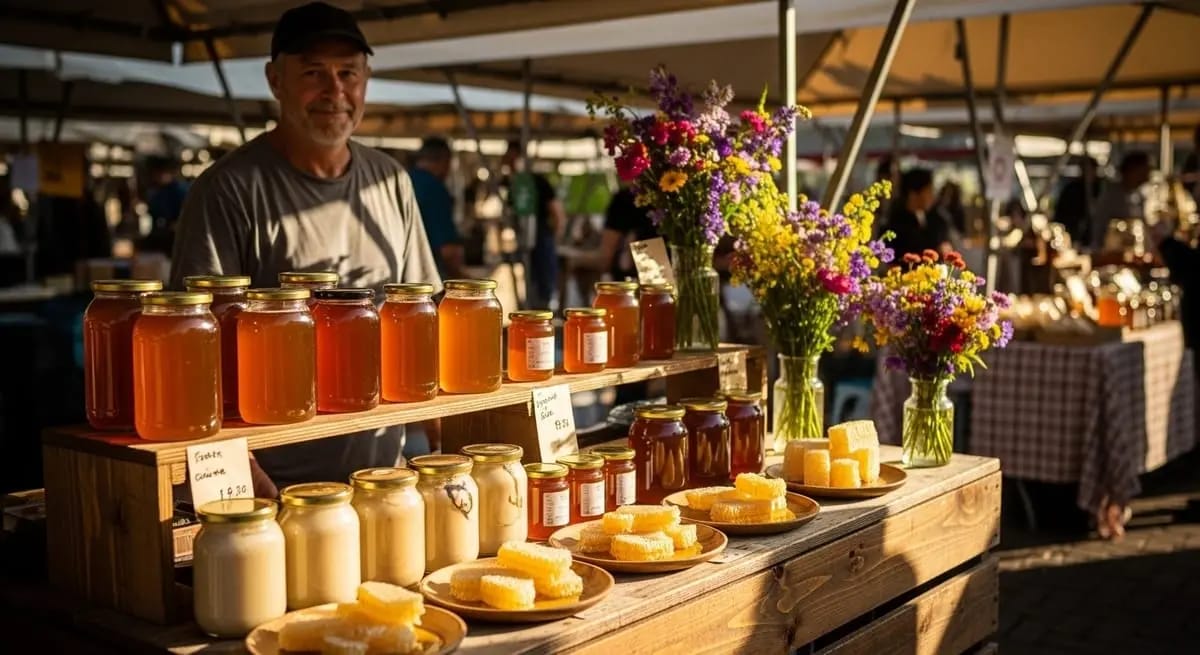
The strong farm shop culture in Baden-Wuerttemberg benefits beekeepers. Regional products have a high standing here, and honey from the neighborhood commands premium prices.
Practical Tips for Baden-Wuerttemberg
Annual Planning by Region
Rhine Plain (100–200 m):
- Season start: Mid-February (hazel, willow)
- Main flow: March–June (fruit, rapeseed, acacia)
- Late flow: June–July (sweet chestnut, linden)
Black Forest (400–1,200 m):
- Season start: Late March to April
- Main flow: June–August (forest/fir honey)
- Season ends: August/September
Swabian Alb (600–1,000 m):
- Season start: April
- Main flow: May–July (wild herbs, dandelion)
- Nectar gap: July–August possible
Migratory Beekeeping in BW
The topographic diversity makes Baden-Wuerttemberg ideal for migratory beekeeping. A typical plan:
- Spring: Fruit blossom in the Rhine Plain
- Early summer: Acacia/black locust in the Rhine floodplains
- Summer: Fir honey in the Black Forest
- Late summer: Sweet chestnut at the Kaiserstuhl
Conclusion: Baden-Wuerttemberg — Where Tradition Meets Research
Baden-Wuerttemberg combines the best that German beekeeping has to offer: the legendary Black Forest fir honey, the rich fruit blossom of the Rhine Plain and the research excellence of Hohenheim. The challenges — climate change, declining orchards, urbanization — are real, but the strong association culture and the close connection between research and practice provide grounds for optimism. Those who keep bees in Baden-Wuerttemberg keep bees in one of the most diverse bee regions in Europe.
Beekeeping in Bavaria: Forage, Traditions and Regional Specialties Germany's Honey Varieties: A Taste Journey Through the Regions Beekeeping in NRW: Urban Beekeeping in the Industrial Heartland- Forage Plants and Bee Pasture -- Regional Forage and Bee Pasture
- Law and Compliance for Beekeepers -- Registration and Regulations
Less paperwork. More time with your bees.
Hivekraft is free for up to 10 hives. Register in 30 seconds.