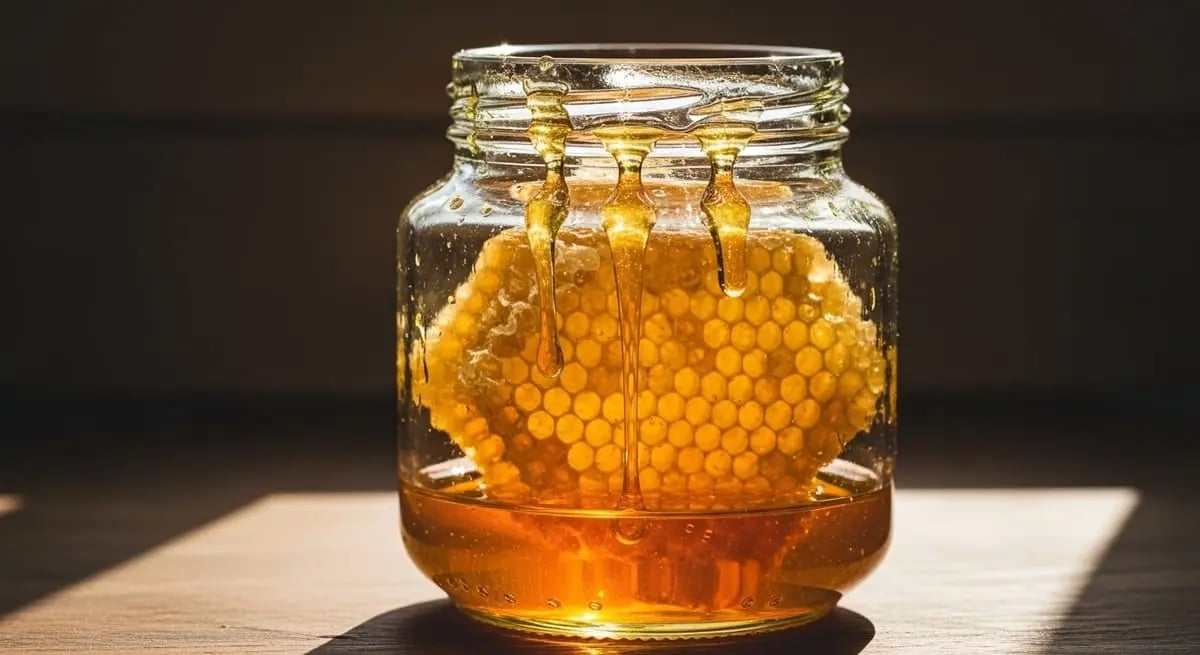
Honey as a Remedy: What Science Really Says
Is honey healthy? What's behind Manuka honey and MGO? We show what science actually knows about honey as medicine.
Honey has been considered a remedy for millennia -- the ancient Egyptians used it for wound care, it's an integral part of Ayurvedic medicine, and Hippocrates recommended honey for various ailments. But what does modern science say? Is honey actually healthy, or is that just a myth that has stubbornly persisted over the centuries? And what about the expensive Manuka honey?
In this article, we examine the scientific evidence -- soberly, without esoterics, and with concrete studies.
The Ingredients of Honey
To understand why honey can have medicinal effects, it's worth looking at its composition.
| Ingredient | Proportion | Relevance |
|---|---|---|
| Sugars (Fructose, Glucose) | ~80% | Energy source, osmotic effect |
| Water | 15-18% | Low = preservative |
| Enzymes (Invertase, Glucose Oxidase) | ~1% | Antibacterial, hydrogen peroxide production |
| Amino Acids and Proteins | ~0.5% | Antioxidant |
| Organic Acids (Gluconic Acid) | ~0.5% | Low pH (~3.5-4.5) |
| Vitamins and Minerals | Traces | Nutritionally minor |
| Polyphenols and Flavonoids | Variable | Antioxidant, anti-inflammatory |
| Methylglyoxal (MGO) | Only in Manuka | Antibacterial without enzyme activity |
Honey contains only traces of vitamins and minerals. Anyone eating honey for its "nutrient density" will be disappointed -- you'd have to eat kilos of honey for that. The medicinal effect is based on entirely different mechanisms: the low pH, osmotic effect, enzymes, and special antibacterial substances.
Antibacterial Effect: This Is Proven
The antibacterial effect of honey is one of its best-studied properties. It relies on several mechanisms working together:
1. Osmotic Effect
Due to its extremely high sugar content (~80%), honey draws water from bacteria. Without water, most pathogens cannot reproduce. This effect is physical and applies to every honey -- even the cheapest from the supermarket.
2. Low pH Value
Honey has a pH of 3.5 to 4.5. This acidic environment is hostile to many bacteria, including problem germs like Staphylococcus aureus and E. coli.
3. Hydrogen Peroxide Production
The enzyme glucose oxidase, which bees add to honey, converts glucose into gluconic acid and hydrogen peroxide. This process becomes active when honey is diluted with water -- for example on a wound. Hydrogen peroxide is an effective disinfectant.
Glucose oxidase begins losing activity at about 40°C and is largely inactivated at temperatures above 55°C. Industrially processed honey that has been pasteurized at 70°C or higher therefore has significantly less antibacterial effect than raw honey from a beekeeper.
4. Methylglyoxal (MGO) -- The Manuka Factor
Manuka honey from New Zealand can contain elevated levels of methylglyoxal (MGO). MGO develops during ripening from dihydroxyacetone (DHA) in Leptospermum scoparium nectar and contributes to non-peroxide antibacterial activity in laboratory tests.
An MGO value describes a constituent of the honey. It does not make food honey sterile or turn it into a medical device, and it is not a dosing recommendation for skin, wounds or disease. Laboratory results cannot automatically be transferred to clinical treatment.
Honey in Wound Care: Medical Honey
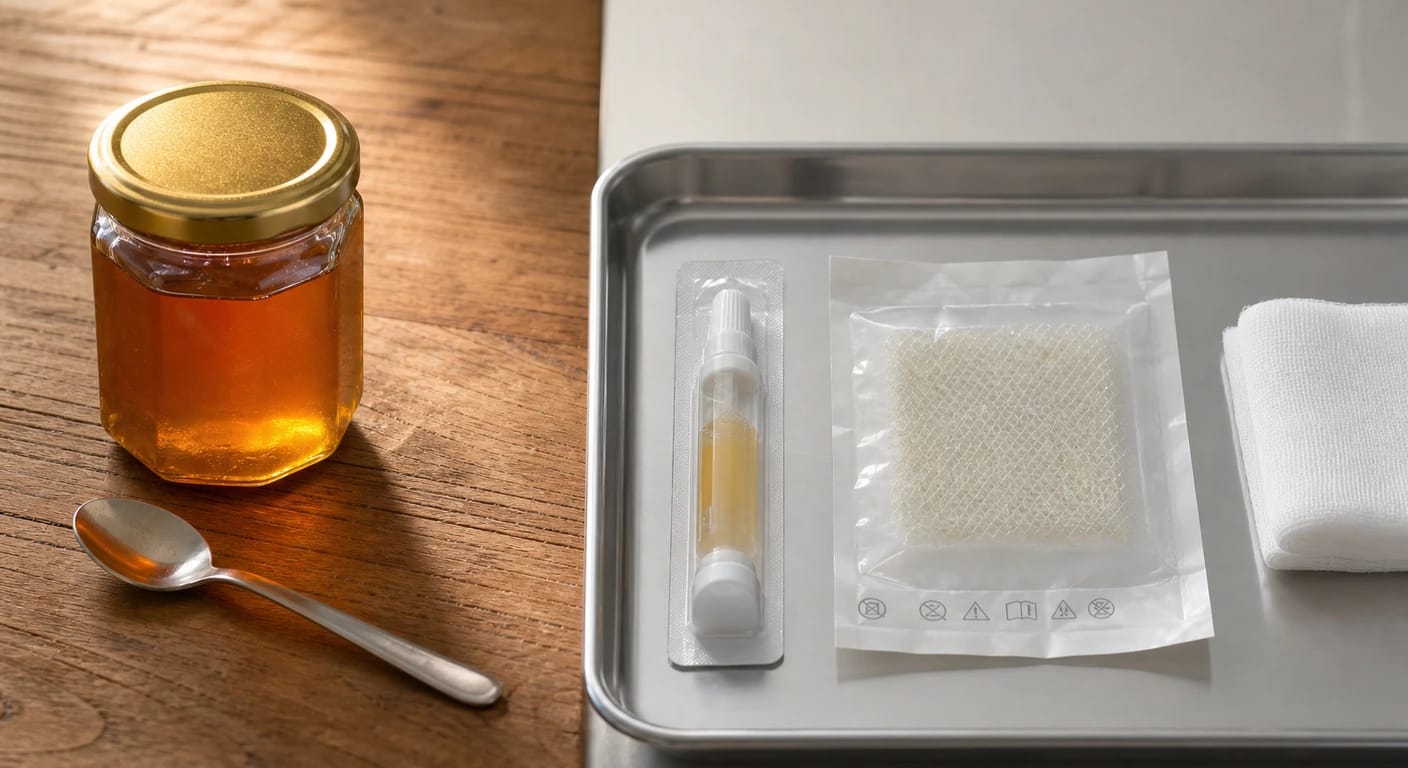
Sterile honey dressings and gels intended for wound care are available as medical devices. Their processing, sterility, composition and directions for use differ fundamentally from table honey, and they are used according to their product information and a professional wound assessment.
What Do the Studies Show?
A Cochrane Review (Jull et al., 2015) found evidence of benefit for certain products and selected wound types, including partial-thickness burns and some infected post-operative wounds. Evidence for many chronic wounds remained low or inconclusive. These findings are product- and indication-specific; they do not show that table honey treats wounds or MRSA infections.
Regular table honey is not sterile and can contain spores. It does not belong on open wounds. Suitable sterile medical devices are supplied for a defined purpose and used according to their product information and a professional wound assessment.
How Does Honey Work on Wounds?
Several partly product-dependent mechanisms are described for suitable medical honey dressings:
- 1
Moist Wound Healing
Honey keeps the wound moist, promoting cell regeneration and enabling pain-free dressing changes -- the wound dressing doesn't stick.
- 2
Antibacterial Cleaning
Osmotic effects, pH and other constituents may influence the wound environment and bacterial growth. The clinically relevant effect depends on the product, organism, wound and treatment plan.
- 3
Anti-Inflammatory Action
Honey reduces the formation of pro-inflammatory mediators and promotes the release of anti-inflammatory cytokines.
- 4
Odor Reduction
Bacteria that cause foul odor in chronic wounds are inhibited by honey. Simultaneously, bacteria use the sugar in honey instead of breaking down amino acids -- which produces fewer odor compounds.
Honey Against Coughs: Better Than Some Medications
One of the best-documented medical effects of honey is its cough-suppressing effect -- especially in children.
A widely-noted study from Penn State University (Paul et al., 2007, 105 children) compared buckwheat honey with the cough suppressant dextromethorphan (a standard medication) and no treatment in children with nighttime cough from respiratory infections. The result: honey was at least equal to the medication in reducing cough frequency, severity, and annoyance -- and dextromethorphan was not significantly better than no treatment.
The WHO and the British NICE (National Institute for Health and Care Excellence) officially recommend honey as a first measure for acute cough:
- 1 to 2 teaspoons of honey plain or in warm (not hot!) tea
- Administer before bedtime
- Relieves cough reflex and improves sleep quality
- Acts both soothingly on irritated mucous membranes and mildly antibacterially
Honey can contain spores of the bacterium Clostridium botulinum. For adults and older children this is harmless, but in infants under one year it can lead to infant botulism -- a rare but life-threatening condition. Honey is safe only from the second year of life.
Honey and Gastrointestinal Health: Helicobacter and More
There are indications that honey can help with gastrointestinal complaints:
- Helicobacter pylori: Laboratory studies show that Manuka honey can inhibit H. pylori growth. However, clinical studies in humans are still limited and inconclusive.
- Gastritis and heartburn: A teaspoon of honey can briefly relieve heartburn (the honey forms a protective layer on the mucous membrane). Long-term evidence is thin.
- Diarrheal diseases: Honey in rehydration solution can shorten the duration of diarrhea in children -- an effect particularly relevant in developing countries.
- Prebiotic effect: The oligosaccharides in honey promote the growth of beneficial gut bacteria (Bifidobacteria and Lactobacilli).
Antioxidant Effect: Dark Honey Beats Light
Honey contains a variety of antioxidants -- polyphenols, flavonoids, organic acids, and enzymes that can neutralize free radicals.
The rule of thumb: The darker the honey, the higher the antioxidant content. Buckwheat honey and forest honey perform significantly better in studies than light acacia honey.
| Honey Variety | Relative Antioxidant Content |
|---|---|
| Buckwheat honey | Very high |
| Forest/Fir honey | High |
| Heather honey | High |
| Blossom honey (mixed) | Medium |
| Acacia honey (Robinia) | Low |
However, here too: the amounts you realistically consume (1-3 teaspoons per day) deliver significantly fewer antioxidants than a handful of blueberries or a cup of green tea.
Manuka Honey: Is the Price Worth It?
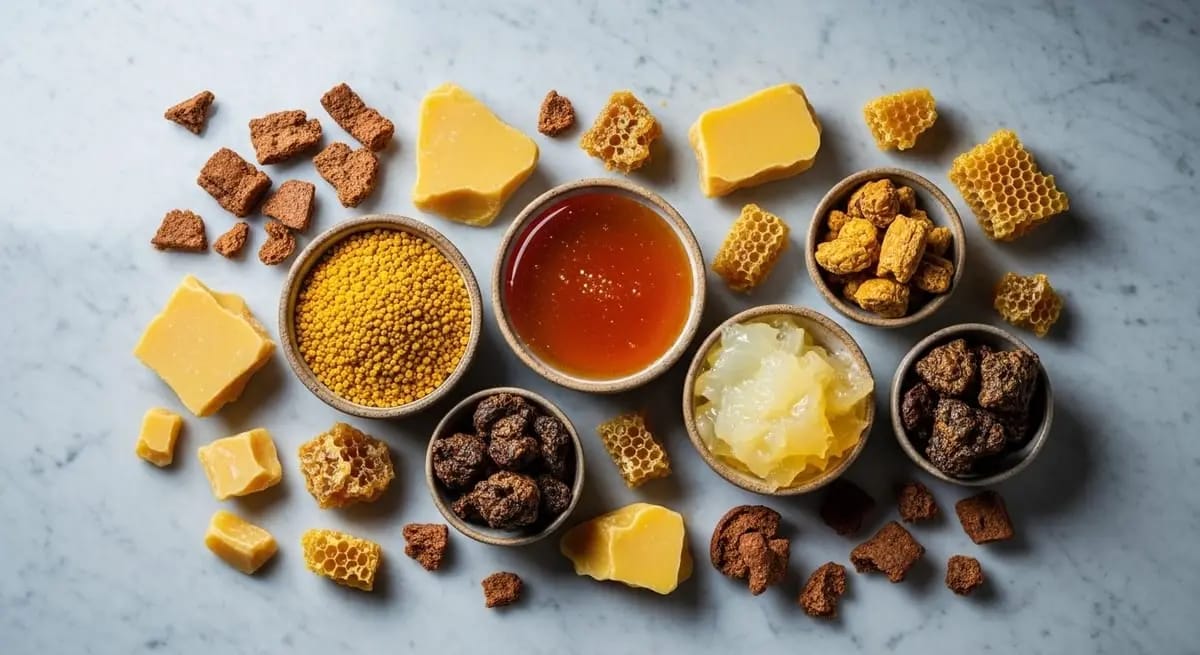
Manuka honey from New Zealand often costs several times more than regional table honey. Price factors include limited origin, demand, laboratory testing and marketing. A high price or MGO value does not turn the food into a wound product.
What a Food Label Can Show:
- MGO may be declared as a measured constituent
- Manuka authenticity for New Zealand export is tested against the government MPI definition using four chemical markers and one DNA marker
- Private quality schemes may document additional tests but do not create a medical intended purpose
What Manuka Cannot Do:
- Cure cancer (no serious study confirms this)
- Generally "boost" the immune system (marketing claim without evidence)
- Outperform regular honey in every respect
- Replace a healthy diet
- Be applied to open wounds as table honey
- Treat a disease or MRSA infection solely because of an MGO value
For everyday use as food, regional honey offers short supply chains, traceable origin and a wide range of flavours. Taste, texture and careful processing are sensible buying criteria; they do not imply a medical effect.
Checking Origin and Authenticity
For Manuka honey packed in New Zealand for export, the government MPI definition is the central authenticity standard. Look for:
- traceable origin and an identifiable responsible food business
- batch-related test information rather than marketing language alone
- a clear distinction between an MGO statement, a private quality mark and government MPI authenticity testing
What Science Has Not (Yet) Confirmed
There are many health claims around honey that are scientifically not or only weakly supported:
- Honey against allergies (desensitization): The theory that local honey helps against hay fever through contained pollen sounds logical -- but has not been conclusively confirmed in controlled studies. The pollen amounts in honey are small, and most hay-fever-triggering pollens are wind-pollinated and rarely found in bee honey.
- Honey as anti-aging agent: No reliable human studies.
- Honey better than sugar for diabetes: Honey has a glycemic index of about 60 -- only slightly lower than table sugar (GI ~65). For diabetics, it is not a substitute and must be counted in the carbohydrate balance.
- Honey for weight loss: Honey has about 304 kcal per 100 g -- it is not suitable for weight loss.
- Honey as cancer therapy: There are interesting lab findings on effects on cancer cells, but no clinical studies that justify a treatment recommendation.
Using Honey Correctly: Practical Tips
How to Optimally Use Honey for Your Health
Conclusion: Honey Is Not a Miracle Cure -- But Medically Relevant
Science confirms some of the traditional uses of honey:
- Documented depending on product and use: selected sterile honey wound products for particular wound types; honey for cough relief in children over one year
- Promising: Gastrointestinal complaints, antioxidant effect, oral health
- Not proven: Hay fever desensitization, cancer therapy, anti-aging, weight loss
Honey is not a substitute for medical treatment. As food it primarily provides flavour and energy; individual medical applications concern purpose-made products and specific indications. Buying regional honey also supports local beekeeping.
Read also: German Honey Varieties - A Flavor Journey Through the Regions Honey in the kitchen: Cooking with Honey - 10 Simple Recipes for Every Day Selling honey: From Jar to Customer- Honey Business -- Lesson 1: Understanding Honey Quality
- Honey Business -- Lesson 8: Marketing By-Products
Less paperwork. More time with your bees.
Hivekraft is free for up to 10 hives. Register in 30 seconds.