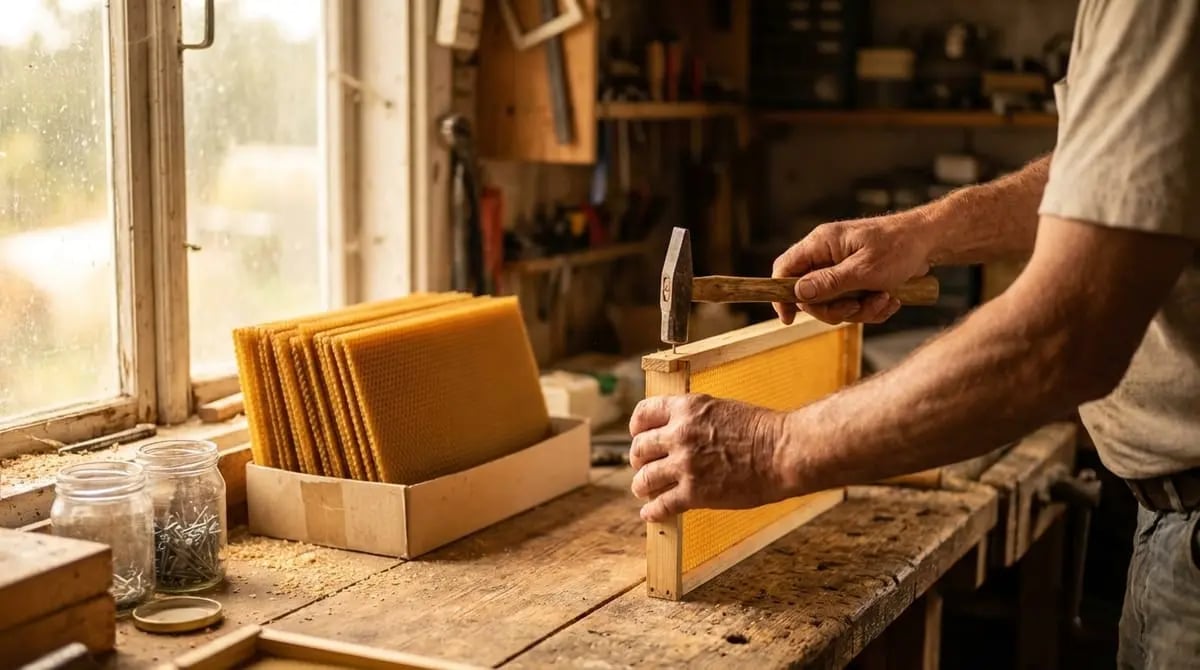
Workshop Time: Preparing Frames and Materials
Winter is workshop time: Wiring frames, embedding foundation, repairing hives, and preparing materials for the new season -- step by step.
When the bees are clustered in their winter formation and the apiary is quiet, workshop time begins. The winter months are ideal for building frames, embedding foundation sheets, repairing hives, and preparing materials for the next season. Those who prepare well in winter save precious time in spring -- when things get hectic at the apiary and every day counts.
Why Workshop Time Is So Important
In spring, events pile up: Spring inspection, adding supers, swarm control, making splits -- everything at once. Anyone who still needs to build frames or repair hives loses valuable time. The winter months offer the calm to prepare everything in the workshop.
The plan: By the end of February, all your materials for the season should be ready:
- Frames with foundation for expansion
- Spare hive bodies for splits and swarms
- Tools cleaned and serviced
- Feeders and treatment supplies checked
Preparing Frames: Step by Step
Preparing frames is the main task of workshop time. Per colony, you typically need 10 to 20 replacement frames per season -- for expansion, comb renewal, and splits.
Calculating Material Needs
| Task | Frames per Colony | Frames for 10 Colonies |
|---|---|---|
| Honey super (1 box) | 10 | 100 |
| Comb renewal (3 per colony/year) | 3 | 30 |
| Splits (2 per season) | 10 | 20 |
| Reserve (swarm, replacement) | 5 | 50 |
| TOTAL per season | ~28 | ~200 |
Build about 20 percent more frames than you calculate. Unexpected events (swarms, additional splits, damaged combs) always require extra supplies. Nothing is more frustrating than discovering in May that you have run out of foundation sheets.
Assembling Frames
Depending on the hive type, frames differ in size and construction. The most common frame sizes in Germany are DNM (German Standard), Zander, and Dadant.
- 1
Connect Top Bar and Side Bars
Insert the side bars (ears) into the grooves of the top bar. With commercially available wooden frames, the parts usually fit snugly together. Use waterproof wood glue at the joints for additional stability. Secure the connection with a thin nail or staple.
- 2
Insert Bottom Bar
Insert the bottom bar between the side bars. For frames with grooves: Slide in and glue if needed. For straight bottom bars: Nail on with 2 thin nails per side.
- 3
Wire the Frame
String 4 to 5 horizontal wires through the pre-drilled holes in the side bars. Use stainless steel wire (0.4 mm). Start at the bottom and work your way up. The wire must be taut -- tap the side bars with a nail, and you can hear from the sound whether the wire is well-tensioned (high pitch = taut, dull sound = tighten more).
- 4
Set the Eyelets
Use eyelets or nails at both ends of the wire to secure it. The wire must not slip -- it later carries the entire weight of the comb (up to 3 kg for a full honey comb).
- 5
Embed the Foundation
Lay the foundation sheet on the wires. Using a transformer (12V embedding device) or a heated embedding tool, melt the wires into the foundation. The wire should sit centered in the foundation. Work quickly -- too much heat melts holes in the foundation.
Tips for Wiring and Embedding
- Wire tension: The wire should produce a clear, high-pitched tone when plucked. Wire that is too loose causes the foundation to sag and the comb to become crooked.
- Embedding direction: Always embed from top to bottom. This way, melted wax doesn't flow onto areas already embedded.
- Storage: Store finished frames with foundation in a cool, dark place. Heat deforms the foundation sheets.
- Foundation quality: Only buy foundation made from residue-free beeswax. Cheap foundation can contain paraffin or pesticide residues.
Cleaning and Repairing Hives
Winter is the ideal time to thoroughly clean and repair hives. Over the season, propolis, wax residue, and dirt accumulate.
Cleaning
Hive Cleaning Checklist
Repairs
Common damage and their repair:
| Damage | Cause | Repair |
|---|---|---|
| Cracks in wood | Weather, age | Wood glue + clamp, possibly screw on a strip |
| Loose handles | Wear | Tighten or replace screws |
| Leaking cover | Metal roof damaged | Straighten or replace metal |
| Rotted bottom | Moisture | Replace, treat with linseed oil if needed |
| Warped boxes | Moisture/heat | Sand down, replace if necessary |
Renewing the Finish
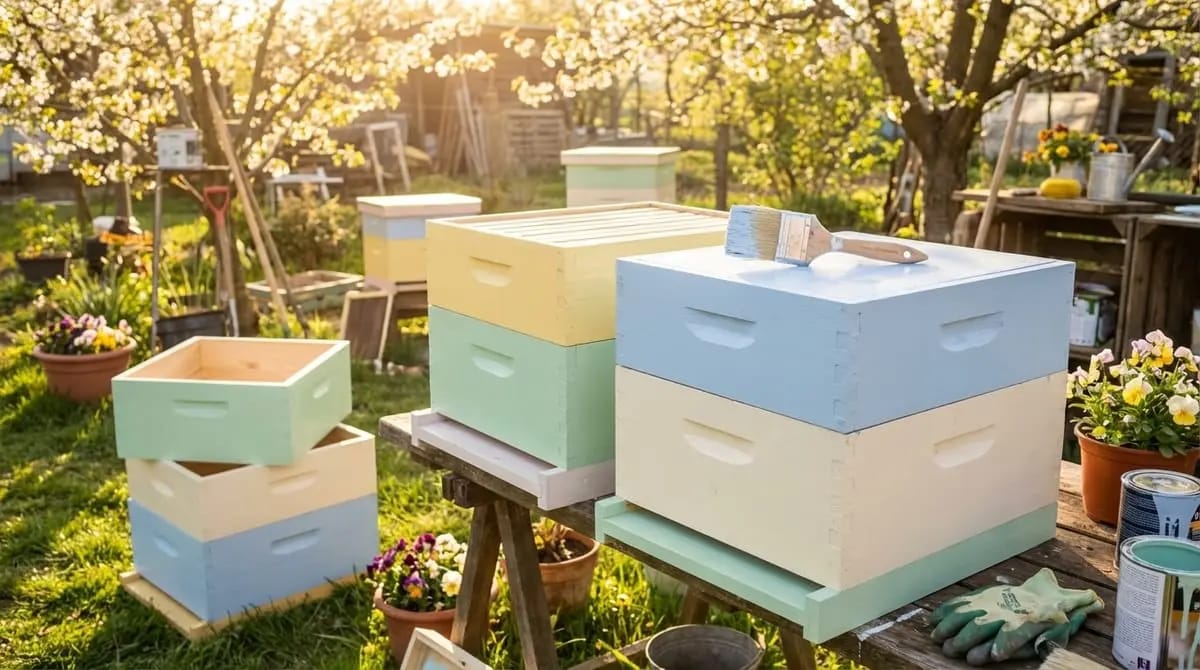
Wooden hives need weather protection. Winter is the perfect time to renew the finish:
- Exterior: Linseed oil, boiled linseed oil, or acrylic stain (no toxic paints!)
- Interior: Do not paint -- the bees propolize the interior themselves
- Color: Light colors reflect sunlight and protect against overheating in summer
- Drying time: Allow at least 2 to 3 weeks before use (let solvents off-gas)
Use only bee-safe finishes: Linseed oil, linseed oil varnish, special bee stains, or ecological wood stains. Conventional paints and stains contain solvents and biocides that can harm the bees. The inside of the hive is never painted.
Comb Hygiene: Sorting Out Old Combs
Winter is the right time to sort through stored combs. Old, dark combs are breeding grounds for pathogens and should be regularly replaced.
Evaluating Combs
| Comb Age/Condition | Color | Recommendation |
|---|---|---|
| New (1 year) | Light yellow to golden yellow | Continue using |
| Medium age (2 years) | Brown | Use one more year, then replace |
| Old (3+ years) | Dark brown to black | Melt down |
| Damaged, holey | Any | Melt down immediately |
| Mold infestation | White-green coating | Dispose (do not melt) |
Rule of thumb: Replace one-third of brood combs with new foundation every year. After 3 years, you will have completely fresh comb -- this reduces disease risks and contaminant loads.
Melting Wax
Old combs are not thrown away but melted down. The recovered wax can be made into new foundation:
- Use a steam wax melter or solar wax melter
- Filter the wax (stocking or cheesecloth)
- Pour into blocks and store
- Send to a foundation manufacturer or roll your own foundation
Tool Maintenance
Tools need care too. A quick maintenance session in winter prevents frustration during the season:
Tool Maintenance
Ordering Season Materials
In winter, beekeeping suppliers are well stocked and ship quickly. In spring, popular items are often sold out. Order early:
Order List for the Season
| Material | Quantity (for 10 colonies) | When to Order |
|---|---|---|
| Foundation sheets | 200 pieces | November-December |
| Frame parts (if self-building) | 200 pieces | November-December |
| Formic acid 60% | 2-3 liters | January |
| Oxalic acid preparation | 1 bottle | November |
| Sugar (25 kg bags) | 150-200 kg | July (before harvest) |
| Honey jars (500g) | 200-400 pieces | March |
| Frame nails, wire | As needed | November |
| Feed boxes/frame feeders | As needed | November |
Many beekeeping clubs organize group orders with significant discounts. Foundation, jars, and sugar are considerably cheaper in large quantities. Ask your club about order deadlines -- the cutoff is often in January.
Using the Time for Education
The winter months are also great for further education. The time at the desk can be well used:
- Beekeeping courses from clubs and bee research institutes (many take place in January/February)
- Reference books (standard works of beekeeping)
- Trade journals (national and international beekeeping magazines)
- Online courses and webinars (bee research institutes, beekeeping associations)
- Review the past season: What went well? What should be better next year?
Material List: What You Need in the Workshop
For a well-equipped beekeeping workshop, you need:
| Tool/Material | Purpose |
|---|---|
| Hammer and nails (20mm) | Frame building |
| Wood glue (waterproof) | Gluing frames |
| Stainless steel wire 0.4mm | Wiring frames |
| 12V embedding transformer or soldering iron | Embedding foundation |
| Pliers and wire cutters | Cutting and tensioning wire |
| Blowtorch or gas burner | Scorching hives |
| Hive tool and sharpening stone | Sharpening tools |
| Wax melter (steam or solar) | Melting old combs |
| Clamps | Repairing hives |
| Linseed oil / hive stain | Renewing finish |
Workshop time is the quietest but one of the most productive phases of the beekeeping year. Those who prepare well here work more relaxed and efficiently in spring.
Conclusion: Your Workshop Roadmap
Make optimal use of the quiet winter months. Here is your roadmap:
| Month | Task |
|---|---|
| November | Order materials, sort combs, clean hives |
| December | Build and wire frames, repair hives |
| January | Embed foundation, maintain tools, education |
| February | Final preparations, check reserve materials, get everything ready |
Spring comes faster than you think -- and then every minute at the apiary counts. Invest the winter months in good preparation, and you will start the new season relaxed.
Annual Planning: Planning the Beekeeping Year Right Beekeeping for Beginners - Your Introduction to Keeping Bees Extracting Honey - Tips for Best Quality- Beekeeping for Beginners -- Lesson 3: Your Basic Equipment
- Advanced Beekeeping Practice -- Lesson 5: Your Own Wax Cycle
Less paperwork. More time with your bees.
Hivekraft is free for up to 10 hives. Register in 30 seconds.