

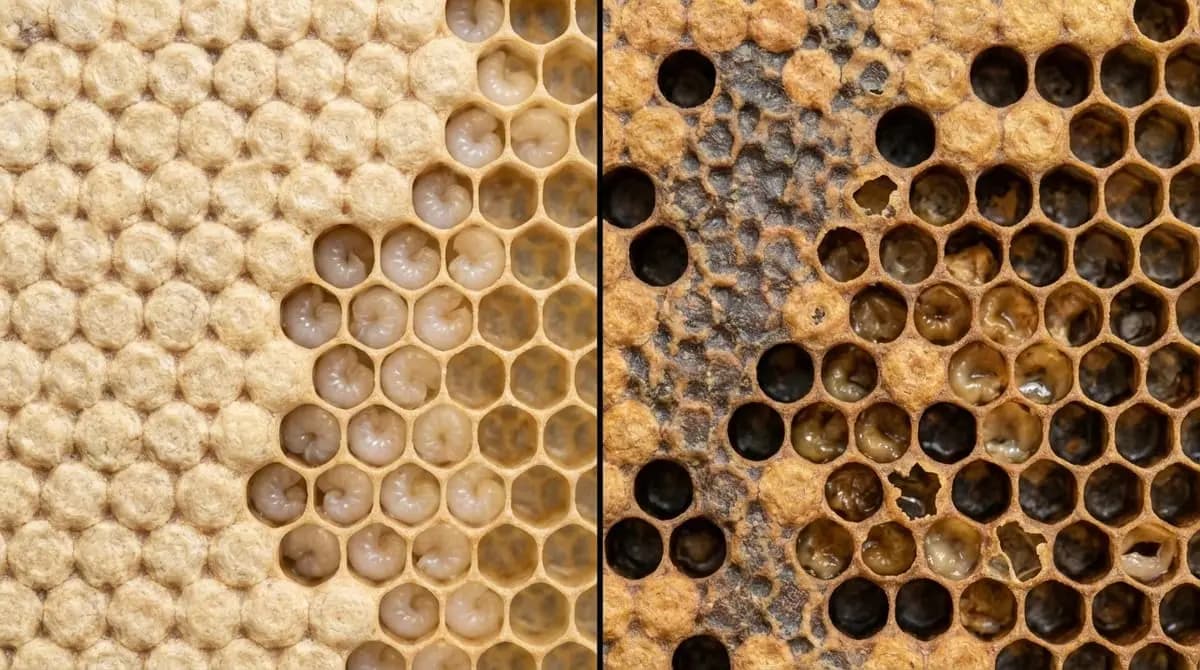
Intermediate
Bee Health & Diseases
10 lessons · about 3.5 hours of reading
Learn to recognize diseases, parasites, and health issues — and how to react properly.
Start with lesson 1
Free to read without an account. When signed in, HiveKraft remembers your progress. Last reviewed: date missing · by the HiveKraft editors
Lessons in this course
- Recognizing Signs of a Healthy ColonyLearn the key characteristics of a healthy honey bee colony: flight behavior, brood pattern, colony strength, food reserves, and debris analysis assessed systematically.Includes: Diagnosis Begins at the Entrance · Assessing the Brood Pattern · Estimating Colony Strength · Checking Food Reserves · Smell as a Diagnostic Tool · Dead Bees and Debris Analysis · Checking for Queenrightness · The Systematic Health Check · When to Seek Professional Help · Knowledge Check20 min20 min
- Brood Diseases: Foulbrood, Chalkbrood, and SacbroodReliably identify American and European Foulbrood, chalkbrood, and sacbrood. Pathogens, symptoms, diagnosis, reporting obligations, and control measures in detail.Includes: American Foulbrood (AFB) · European Foulbrood (EFB) · Chalkbrood (Ascosphaerosis) · Sacbrood · Overview of All Brood Diseases · Diagnostics: Food Crown Sample · Prevention · Knowledge Check20 min20 min
- Nosema: Detection, Prevention, and TreatmentNosema apis and Nosema ceranae: two pathogens, different courses. Recognize symptoms, perform microscopy, and prevent through good management.Includes: Two Pathogens Compared · The Infection Cycle · Recognizing Symptoms · Diagnosis: Microscopy and Spore Counting · Risk Factors · Prevention and Treatment · Summary · Knowledge Check20 min20 min
- Recognizing Poisoning and Pesticide DamageRecognize symptoms of bee poisoning, properly secure samples, know reporting channels, and perform damage documentation for compensation claims.Includes: Acute vs. Chronic Poisoning · Common Causes · Sample Collection for Laboratory Analysis · Reporting Channels · Damage Documentation · Prevention · Emergency Plan · Knowledge Check20 min20 min
- Weak Colonies: Finding Causes and StrengtheningSystematically diagnose weak bee colonies, strengthen them effectively, or safely unite them. The newspaper method explained step by step.Includes: When Is a Colony "Weak"? · Systematically Narrowing Down Causes · Decision Matrix: Strengthen, Unite, or Dissolve? · Strengthening Measures · Uniting: The Newspaper Method · When to Give Up and Dissolve? · Prevention: Strong Colonies from the Start · Knowledge Check20 min20 min
- Queen Problems: Queenlessness and Drone-LayingRecognize queenlessness, understand drone-laying, and initiate rescue measures. How to ensure the survival of your bee colonies.Includes: What the Queen Does for the Colony · Recognizing Queenlessness: The Warning Signs · Causes of Queen Loss · Drone-Laying: The Beginning of the End · Rescue Measures: What to Do When Queenless? · Distinguishing Cell Types: Emergency, Swarm, and Supersedure · Prevention: Avoiding Queen Losses · Common Mistakes and How to Avoid Them · Digital Documentation with Hivekraft · Knowledge Check20 min20 min
- Analyzing and Preventing Winter LossesUnderstand typical winter losses, analyze dead colonies, and significantly increase your overwintering success rate with targeted prevention.Includes: Winter Losses: The Numbers · The Most Common Causes of Winter Losses · Dead Colony Analysis: Systematically Determining Causes · Prevention: The Key Lies in the Annual Cycle · Documentation: Learning from Losses · Common Wintering Mistakes · Statistics and Trends · Knowledge Check20 min20 min
- Hive Hygiene: Prevention Is EverythingImplement comb hygiene, tool cleaning, and wax cycle management properly. Systematic hygiene measures protect your colonies from diseases.Includes: Why Hygiene Is So Important for Bees · Comb Hygiene: The Foundation of Bee Health · Tool Hygiene: The Underestimated Factor · Extraction Room Hygiene · Your Own Wax Cycle: Independence and Safety · Cleaning Hive Equipment: Frames, Boxes, and Floors · Quarantine for New Acquisitions · Swarm Capture and Hygiene · Annual Hygiene Routine · Digital Hygiene Documentation · Knowledge Check20 min20 min
- Notifiable Diseases: What to Do in an Emergency?Distinguish between notifiable animal diseases and reportable animal illnesses in bees. Procedures in a disease outbreak and beekeeper obligations.Includes: Notifiable vs. Reportable: The Crucial Difference · Notifiable Animal Diseases in Bees · Other Bee Diseases (No Reporting or Notification Obligation) · Procedure in a Disease Outbreak: Step by Step · The Role of the Bee Health Advisor · Prevention: Avoiding Disease Outbreaks · The Bee Disease Regulation · Documentation in a Disease Outbreak · Knowledge Check20 min20 min
- The Beekeeper's Medicine Cabinet: Medications and Treatment ProductsApproved varroa treatment products, correct application, withdrawal periods, and documentation obligations. From formic acid to oxalic acid.Includes: Legal Framework: Veterinary Medicines vs. Biocides · The Approved Active Substances: An Overview · Comparison of Treatment Products · Storage and Shelf Life · Where to Buy · Documentation Obligation: The Colony Record Book · The Treatment Plan: The Integrated Varroa Concept · Future of Varroa Control · Summary · Knowledge Check20 min20 min
How you learn here
- Checklists to tick offFor example, to prepare for an inspection; your selections are saved in this browser.
- Knowledge checks with answersAt the end of each lesson, test yourself and read the explanation below.
- Technical terms explainedTerms such as “smoker” in the text link to their glossary explanations.
- Save your progressWhen signed in, you mark lessons complete and the course page shows where to continue.
Continue learning afterwards
- Beginner12 lessons · about 6 hoursBeekeeping for BeginnersThe complete introduction to beekeeping — from honey bee biology and essential equipment to your first harvest. In 12 lessons you'll learn everything you need for a successful start.
- Advanced10 lessons · about 5 hoursAdvanced Colony ManagementMaster queen rearing, swarm control and seasonal management techniques. For experienced beekeepers looking to take their colony management to the next level.
- Beginner10 lessons · about 3 hoursUsing Hivekraft EffectivelyGet the most out of Hivekraft. From setup through digital hive records to recommendations, alerts and IoT scales - become a Hivekraft pro.
- Intermediate10 lessons · about 5 hoursHarvesting & Marketing HoneyFrom extracting to selling: Learn everything about honey harvesting, quality control, labelling regulations and successful marketing strategies for your honey.