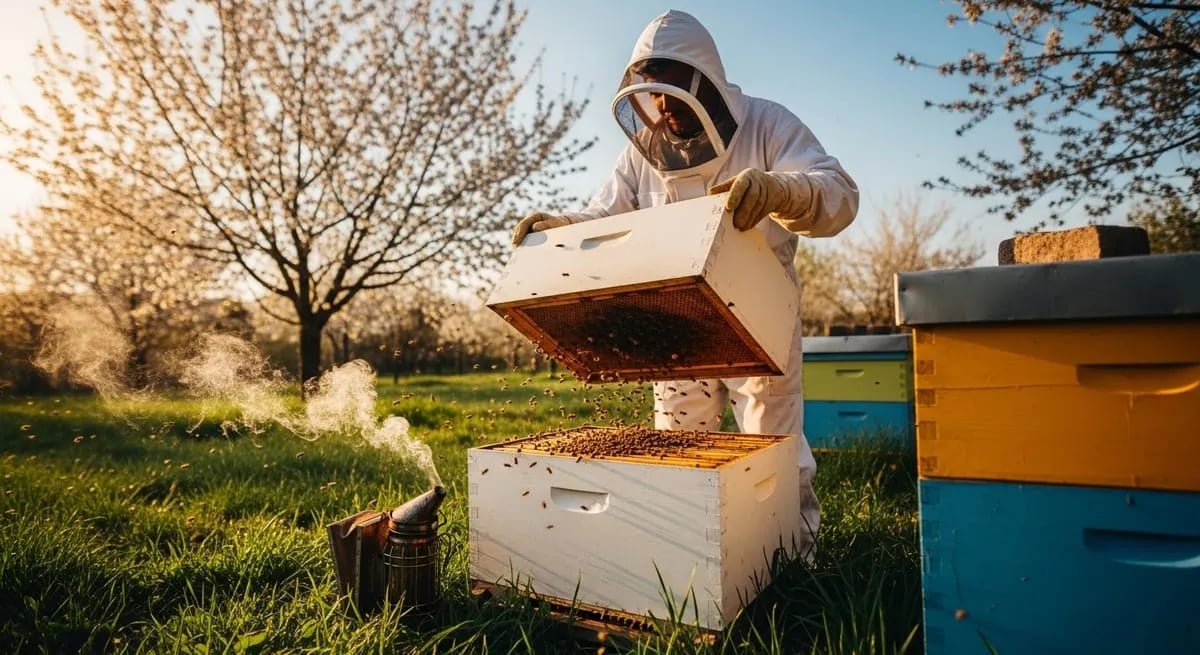
Spring Inspection: The Complete Checklist
What to check at the first inspection in spring. A practical checklist for starting the new bee season.
The beginning of spring is one of the most exciting moments for beekeepers. Did the colonies survive winter well? How strong are they? The first inspection provides answers — and lays the foundation for a successful season.
When Is the Right Time?
The first proper inspection should only take place when temperatures are consistently above 15 degrees. A brief external check is possible earlier:
- From 8 degrees: Entrance observation — are the bees flying? Are they bringing in pollen?
- From 12 degrees: Quick look under the cover, check food reserves
- From 15 degrees: First complete inspection
In most regions, this is between mid-March and mid-April.
The Checklist
1. Assess Colony Strength
- How many frame spaces are occupied?
- Mark weak colonies (under 4 frame spaces)
- Consider combining weak colonies
2. Check Queen
- Eggs present? Then the queen is active
- Closed brood pattern? Good sign
- Spotty brood pattern? Queen possibly old or ill
- Queen seen? Note color and marking
3. Inspect Brood Nest
- Open and capped brood present?
- Brood in all stages? Then egg-laying is continuous
- Chalkbrood or other anomalies?
- Drone brood already present? (Normal from April)
4. Check Food Reserves
- At least 5 kg of food should still be available
- If in doubt, hang a food frame or feed sugar solution
- Starvation in spring is one of the most common causes of death!
5. Comb Hygiene
- Remove dark, old combs (older than 2–3 years)
- Remove moldy combs
- Hang empty combs at the edge
- Adjust space to the colony: not too much, not too little
6. Varroa Check
- Insert monitoring board (diagnostic insert)
- Count natural mite drop over 3 days
- If elevated: plan drone brood removal
7. Documentation
- Note all observations
- Colony strength, brood status, food, anomalies
- Record measures taken (fed, swapped combs, etc.)
Common Mistakes at the Spring Inspection
- Opening too early: Below 15 degrees, the brood nest cools down
- Leaving open too long: Maximum 10 minutes per colony
- Giving too much space: Don't unnecessarily expand weak colonies
- Forgetting feeding: Especially in March, there can still be shortages
Documenting with Hivekraft
Instead of paper chaos, you can document every inspection directly in Hivekraft. The app shows you each colony's history in the digital hive records, warns about anomalies, and reminds you of due measures. Or dictate your observations via voice input directly at the apiary. This way you start the new season perfectly prepared.
Our free learning paths cover everything in detail:
- Beekeeping for Beginners -- Lesson 7: The first inspection step by step
- Advanced Beekeeping -- Management practices and professional season planning
Less paperwork. More time with your bees.
Hivekraft is free for up to 5 hives. Register in 30 seconds.