Bees in Summer: Nectar Flow, Care and Heat Protection
Caring for bees in summer the right way: making the most of nectar flow, providing heat protection, and guiding colonies through the hot season.
Caring for bees in summer means mastering the most productive yet most demanding time of the beekeeping year. The summer months bring the main nectar flow, the largest harvest, but also challenges like heat, nectar dearths, and preparation for autumn. Those who care for their bees well in summer harvest more and bring healthy colonies into the cold season.
The Summer Calendar: What Needs Doing When
The three summer months each present their own demands. This monthly calendar helps you keep track.
June: Peak Activity and Honey Time
| Task | Timing | Priority |
|---|---|---|
| Check and expand honey supers | Weekly | High |
| Continue swarm checks | Every 7 days | High |
| Summer nectar flow begins (linden, sweet chestnut) | From mid-month | Medium |
| Cut drone frames | After capping | Medium |
| Check water supply | Regularly | Medium |
In June, the season is in full swing. Colonies are at their peak and can be 40,000 to 60,000 bees strong. The honey super fills quickly, and you should be ready to add a second or third.
Swarm control is not over in June. Only after the summer solstice has passed and days grow shorter does the swarming drive subside.
July: Harvest and End of Nectar Flow
| Task | Timing | Priority |
|---|---|---|
| Extract spring and summer honey | When frames are capped | High |
| Measure moisture content (under 18 percent) | Before every extraction | High |
| Watch for end of nectar flow | From mid-month | High |
| Check colonies for queenrightness | After harvest | Medium |
| Check feed reserves after harvest | Immediately after extraction | High |
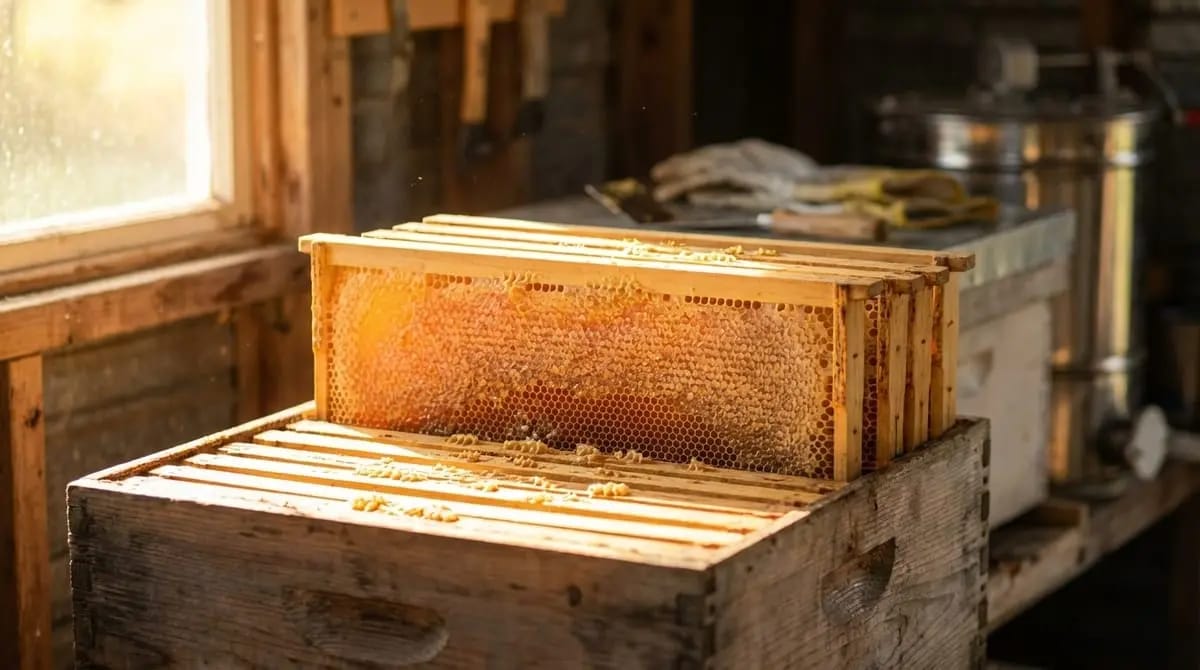
July brings the main harvest. Extract when at least two-thirds of the frame is capped, and measure the moisture content before every extraction. The German Beekeepers' Association (D.I.B.) requires a maximum of 18% moisture content for its quality seal. The legal Honey Ordinance allows up to 20%. However, honey above 18% is at risk of fermentation.
Beware of the nectar dearth: In many regions, the nectar flow ends abruptly in mid to late July. From one day to the next, bees bring in no more nectar. This is the most dangerous moment of summer: robbing can begin, and colonies quickly lose their stores.
August: Feeding and Varroa Treatment
| Task | Timing | Priority |
|---|---|---|
| Complete last honey harvest | Early August | High |
| Start Varroa treatment | Immediately after harvest | Very high |
| Begin autumn feeding | After treatment | High |
| Assess colony strength | Mid-August | Medium |
| Merge weak colonies | As needed | Medium |
August is the turning-point month: the season ends, winter preparation begins. Varroa treatment must start now so that winter bees emerge healthy. Every day of delay costs winter bees.
Heat Protection for Bees in Summer
Extreme heat puts significant stress on bee colonies. Above 35 degrees Celsius outside temperature, bees must actively cool, which costs energy and labor. At temperatures above 40 degrees, it can become critical.
What the Bees Do Themselves
Bees are excellent climate engineers. They regulate hive temperature through:
- Water evaporation: Foragers fetch water that evaporates in the hive
- Fanning: Bees create airflow with their wings
- Bee beard: Bees move outside to reduce heat inside the hive
What You Can Do
| Measure | Effect | Effort |
|---|---|---|
| Shade hives (shade sails, trees) | High | Low |
| Enlarge entrance | Medium | Low |
| Slightly lift lid (wedge ventilation) | Medium | Low |
| Use light-colored hives (white, light gray) | Medium | One-time |
| Bee waterer nearby | High | Low |
| Choose location with afternoon shade | High | One-time |
Afternoon shade is the most important measure. Morning sun helps bees become active early. But the blazing afternoon sun from the west heats hives to over 50 degrees. A tree, hedge, or shade sail on the west side makes a big difference.
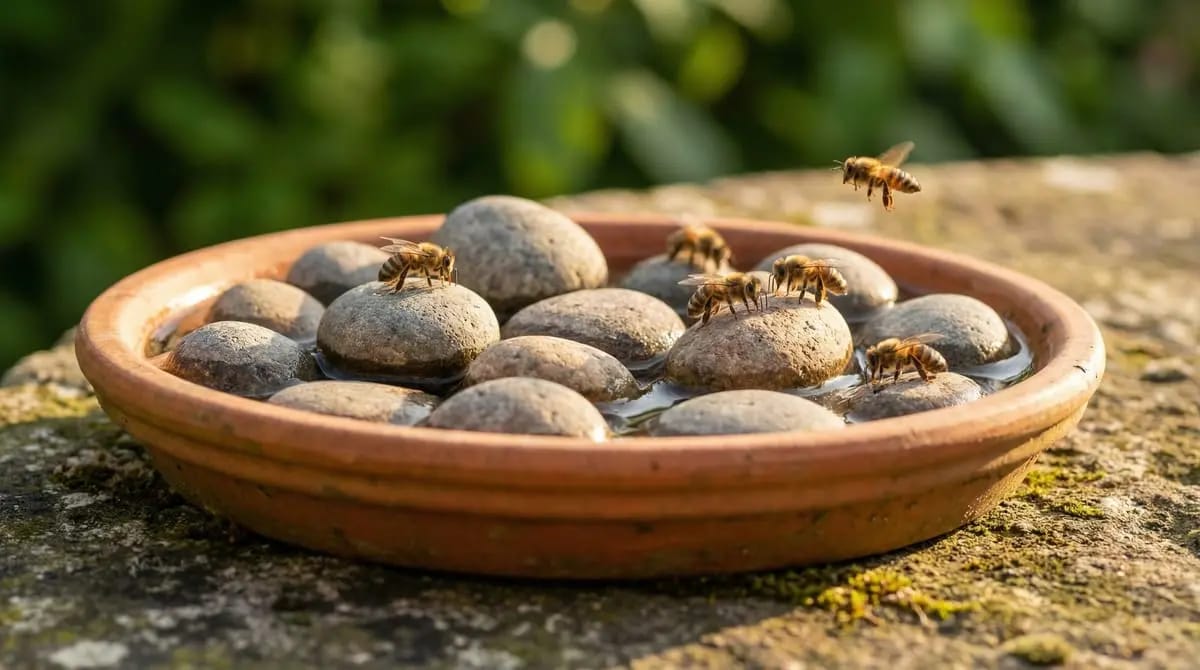
Water supply: On hot days, a strong colony carries in one to two liters of water per day. Provide a reliable water source - a shallow dish with stones or moss as a landing spot, maximum 200 meters from the apiary.
Recognizing and Bridging Nectar Dearths
The nectar dearth in midsummer is a problem in many regions. Between the end of the summer linden bloom and autumn, little often blooms.
Signs of a nectar dearth:
- Weight loss on the hive scale (if available)
- Bees fly less, tend to stay in the hive
- Robbing begins: bees try to rob other colonies
- Bees become more defensive
Countermeasures:
- Reduce entrance openings (robbing guard)
- Protect weak colonies especially
- Do not leave open feed containers standing
- In case of severe feed shortage, emergency feed with fondant
Preventing Robbing
Robbing is the greatest danger in summer after the nectar flow ends. Strong colonies attack weak ones and rob their stores. This can lead to the destruction of a colony within a few hours.
How to recognize robbing:
| Sign | Description |
|---|---|
| Fighting at the entrance | Bees wrestling each other, dead bees in front of the hive |
| Frantic flight activity | Bees fly searchingly around the hive, not purposefully |
| Wax crumbs at the entrance | Robbers bite open cappings |
| Empty frames in the evening | Stores disappear rapidly |
Immediate measures for robbing:
- Reduce entrance to one bee width
- Place a wet cloth over the hive (temporarily)
- Close hive completely for 1-2 days (with gauze for air)
- Move weak colony to a different location
The Most Important Nectar Plants in Summer
Knowing what is currently blooming helps you assess the available forage. The following table shows the most important summer nectar plants in Germany:
| Nectar Plant | Bloom Period | Nectar | Pollen | Special Feature |
|---|---|---|---|---|
| Black locust | Late May to mid-June | Very high | Medium | Produces light, mild honey |
| Linden (summer/winter linden) | June to July | Very high | High | Characteristic flavor, mass nectar flow |
| Sweet chestnut | June to July | High | High | Dark, strong honey |
| Blackberry | June to August | Medium | Medium | Reliable, long bloom period |
| Phacelia | June to October | High | High | Excellent bee forage |
| Sunflower | July to September | Medium | High | Yellow honey, crystallizes quickly |
| Buckwheat | July to August | Medium | High | Dark, aromatic honey |
When Does the Summer Nectar Flow End?
Many beginners recognize the end of the nectar flow too late. Yet there are clear signs:
- Hive scale shows no more weight gain: The most reliable indicator
- Bees become more defensive: Defense of stores increases
- Robbing begins: Bees fly frantically around other hives
- Empty frames in the honey super: Bees no longer store honey, but relocate it
In most regions of Germany, the summer nectar flow ends between mid-July and early August. In forest areas with honeydew, it can last longer. From the end of the flow, you should promptly bring in the last harvest, remove the honey supers, and begin Varroa treatment.
Documenting Summer Work
Especially in summer, many observations accumulate: nectar flow progression, harvest weights, treatment dates, colony development. Those who do not document this lose track - especially with more than 5 colonies.
With Hivekraft, you have everything in one place:
- Harvest data with moisture content and honey variety
- Treatments documented for the colony record book
- Inspections entered via Quick-Check in 30 seconds
- Tasks created for upcoming dates
The Three Golden Rules for Bees in Summer
- Give space before it gets tight. Add honey supers early, never wait until bees have no room left.
- Treat immediately after harvest. Every day between the last extraction and Varroa treatment costs winter bees.
- Water, shade, air. The three basic needs in heat must be secured.
Summer work encompasses many aspects. Learn them systematically:
- Beekeeping for Beginners -- Lesson 9: Summer work, honey super and harvest
- Nectar Plants and Bee Forage -- Summer nectar flow: Linden, black locust and phacelia
Less paperwork. More time with your bees.
Hivekraft is free for up to 10 hives. Register in 30 seconds.