Bee Health in Spring: 7 Important Checks
How to check bee health in spring. 7 checks from Varroa to feed stores for a healthy start to the season.
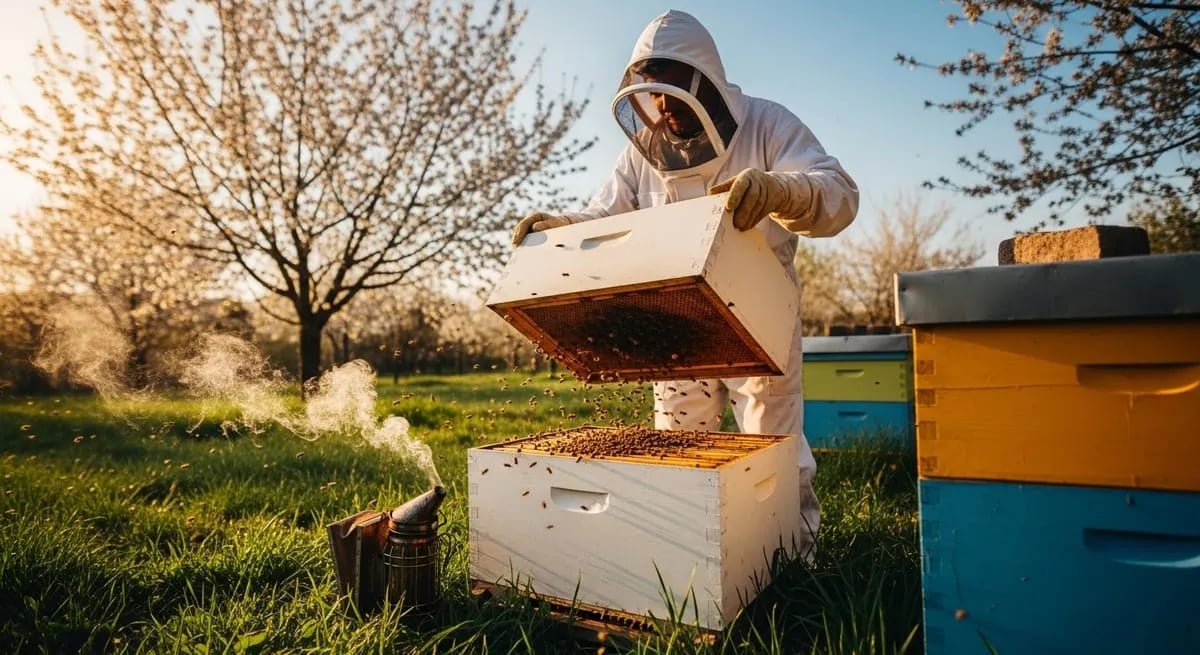
Bee health in spring determines the entire course of the season. After the long winter months, the first thorough inspection is the most important appointment for every beekeeper. Those who work carefully now lay the foundation for strong colonies, a successful honey harvest, and healthy bees through autumn.

In this article, we show you the seven most important checks for bee health in spring and explain what to look for in each one.
When Is the Right Time for the Spring Inspection?
Before you open the lid, conditions must be right. An inspection too early in cold weather does more harm than good.
| Condition | Minimum | Ideal |
|---|---|---|
| Outside temperature | 15 degrees Celsius | 18-20 degrees Celsius |
| Weather | no rain, no wind | sunny, warm |
| Time of day | from 10 AM | 11 AM - 2 PM |
| Pollen flight | first pollen loads visible | busy pollen flight |
When these conditions are met, you can start with the seven checks. In most regions of Germany, this is between late February and mid-March. In higher elevations or northern Germany, it can take until early April.
Check 1: Assess Colony Strength
Colony strength shows you how well the colony came through the winter. Open the hive and check how many frame spaces are occupied with bees.
Assessing colony strength in spring:
| Occupied Frame Spaces | Assessment | Action |
|---|---|---|
| 6 or more | Strong | Continue developing normally |
| 4-5 | Medium | Monitor, possibly restrict space |
| 2-3 | Weak | Restrict space, check feed reserves |
| Fewer than 2 | Critical | Consider merging or dissolving |
Weak colonies are more susceptible to diseases and robbing. Consider carefully whether to develop them individually or merge them with another colony. Two weak colonies together often make one strong one.
Check 2: Verify Queenrightness
Without a queen, the colony has no future. You do not necessarily need to see the queen - fresh eggs are the surest proof of her presence.
What to look for:
- Eggs at the cell base: The queen is there and laying. All is well.
- Young larvae but no eggs: The queen was recently present. Look more closely.
- Only capped brood: Queen has not been laying for at least 9 days. Warning signal.
- Drone laying workers: Workers laying unfertilized eggs. The colony is queenless and must be dissolved.
If you find neither a queen nor eggs, hang a frame with the youngest brood from another colony. If the bees build queen cells, the colony is indeed queenless.
Check 3: Estimate Feed Reserves
Spring is the most dangerous time for feed shortage. The brood nest grows rapidly, feed consumption rises, but nature does not yet provide enough nectar. Many colonies starve in March - not in winter.
Rule of thumb: At least 5 kg of feed reserves should still be present in spring. A fully capped feed frame in standard size contains about 2 kg of feed. If fewer than three capped feed frames are present, you need to emergency feed.
Emergency feeding in spring:
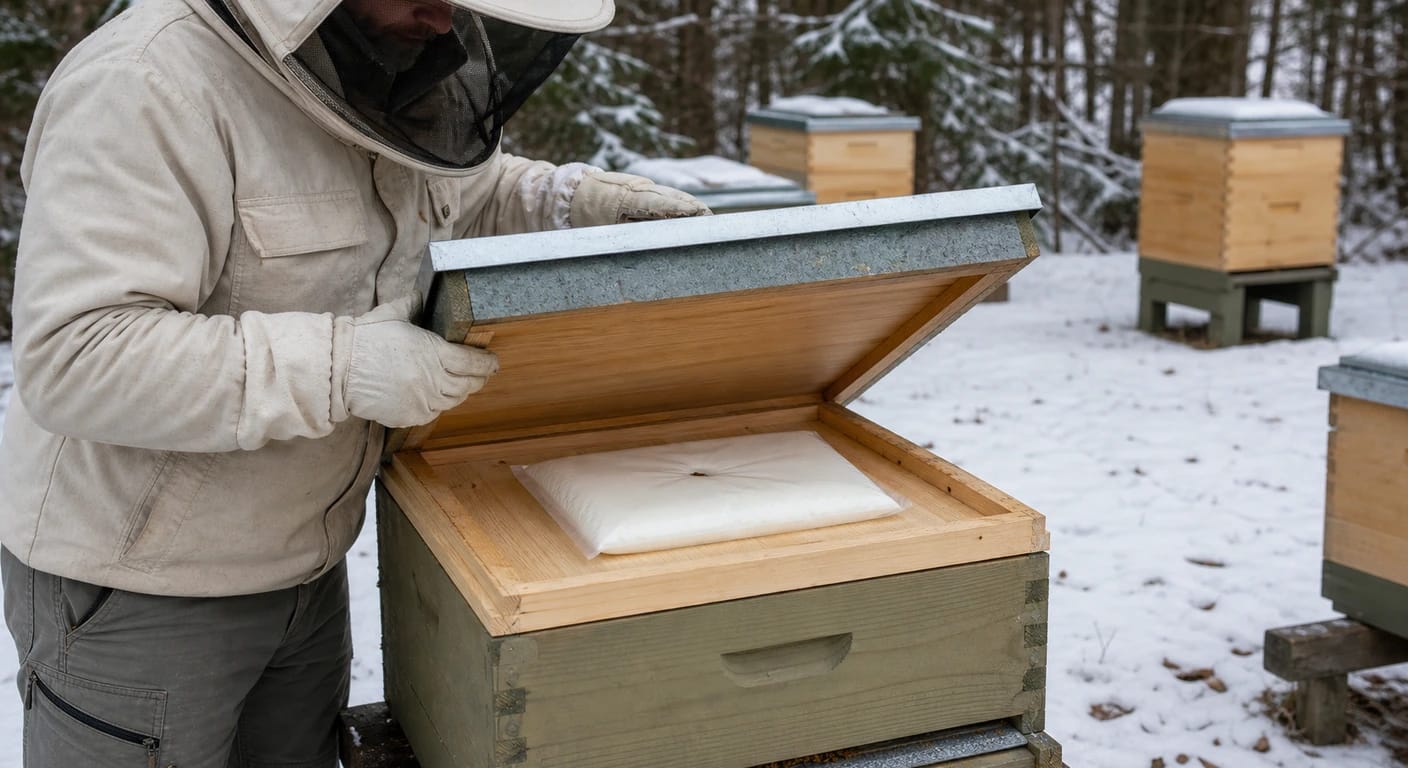
- Place fondant directly on the frame top bars
- Do not give liquid feed - it stimulates foraging and attracts robbers
- Check every 7 days whether more feed is needed
Check 4: Examine the Brood Nest
The brood nest is the heart of the colony. In spring, it should be solid and compact.
Signs of a healthy brood nest:
- Solid brood area with few gaps
- Concentric arrangement: eggs in center, larvae around them, capped brood on outside
- Cappings are evenly domed and light brown
- No unpleasant odor
Warning signs:
- Patchy brood: May indicate inbreeding, diseases, or Varroa damage
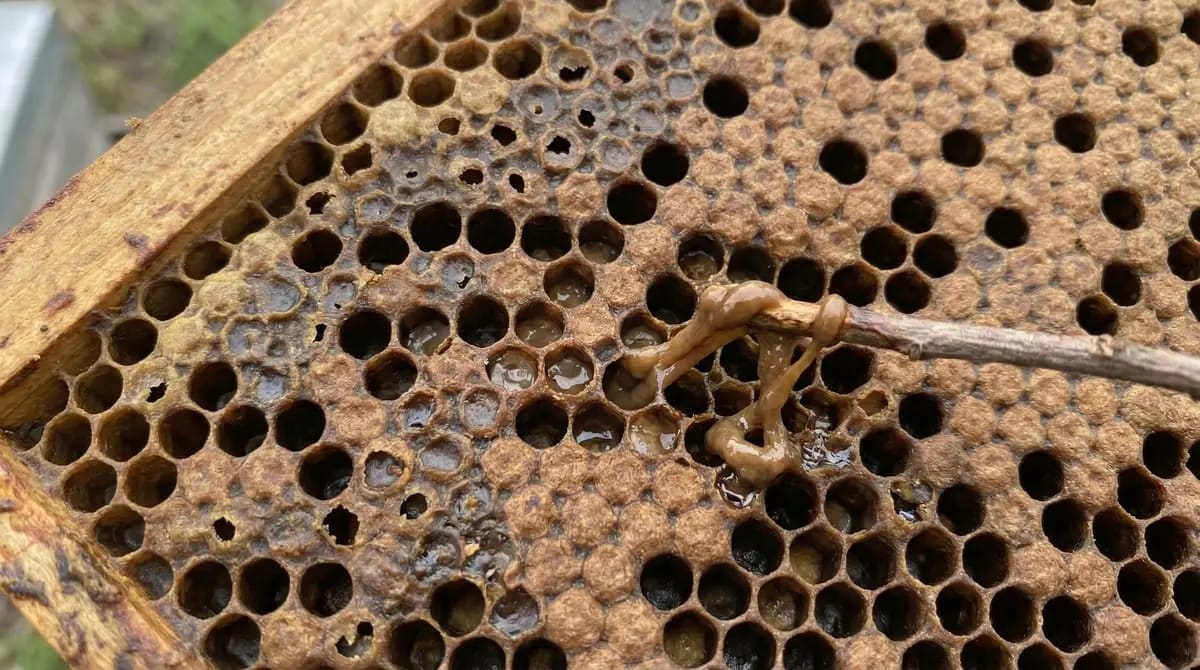
- Sunken cell cappings: Suspicion of American Foulbrood (AFB) - immediately perform the matchstick test
- Mosaic brood pattern: Possible chalkbrood or other infections
- Perforated cell cappings: Bees are trying to remove sick larvae
If American Foulbrood (AFB) is suspected - recognizable by stringy, coffee-brown mass in the cell - immediately contact the responsible bee inspector or veterinary office. AFB is a notifiable animal disease and is subject to strict official control measures.
Tip: Feed crown sample in spring. The feed crown sample is the only way to detect a latent AFB infection before a visible outbreak. Feed samples are taken from the feed crown around the brood nest and tested in a laboratory for AFB spores. Many beekeeping associations organize collective testing - ask your association.
Check 5: Assess the Varroa Situation
Even in spring, Varroa plays a role. If the autumn Varroa treatment was successful, mite infestation should now be low. Nevertheless, an early assessment is worthwhile.
Measuring natural mite drop:
Insert a monitoring board (bottom insert with mesh floor) and count the fallen mites after 3 days. Divide by 3 for the daily value.
Single figures are not meaningful without the method, sampling duration, colony category, point in the season, and regional guidance. Record the period and interpret the daily result using the current recommendation from your bee institute. If a result is unusual or rising, repeat a standardised measurement and seek timely expert advice.
A medicinal treatment must not be applied schematically in spring: the brood status, honey supers, diagnosis, marketing authorisation, and package leaflet of the specific product are decisive. One possible biotechnical measure is a drone frame. Inspect it regularly from about day 10 and remove it once capping is well advanced — ideally more than half capped — and always before emergence. A fixed 24-day date never replaces that inspection.
Check 6: Analyze Dead Bees and Debris
A look at the monitoring board provides insight into the winter's progress and potential problems.
Normal dead bee fall:
- Bee remnants and wax crumbs are normal
- Light wax flakes indicate building activity (positive)
- Pollen crumbs show early foraging activity
Abnormal dead bee fall:
- Many dead bees with extended tongues: Suspicion of poisoning
- White, mummified larvae: Chalkbrood (Ascosphaera apis)
- Unusually many Varroa mites: Treatment was insufficient
- Wet, foul-smelling debris: Moisture in the hive or suspicion of foulbrood
Clean the dead bees from the hive floor. A clean floor makes later inspections easier and improves hygiene.
Check 7: Check Water Supply and Location
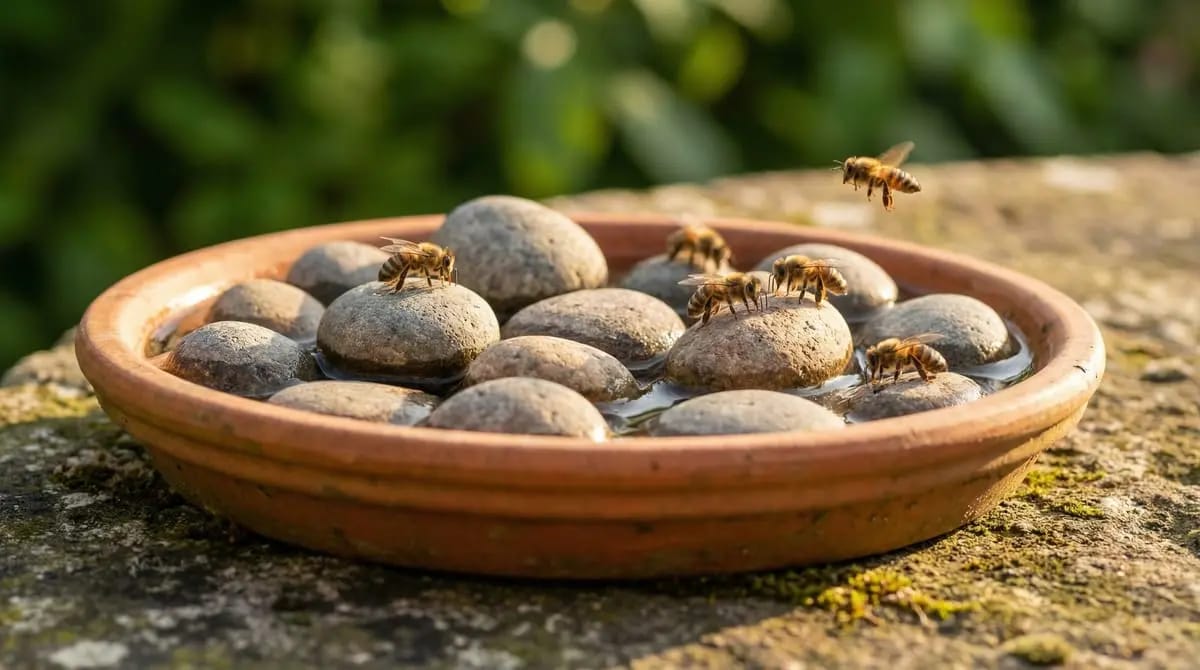
Often overlooked but important: the water supply. Bees need large amounts of water in spring for brood rearing. Check whether a reliable water source is nearby.
Good water sources:
- Bee waterer with moss or stones as landing aids
- Shallow dishes with floating cork
- Natural sources like a stream or pond edge
Also check the location: Is the hive positioned dry? Is there enough sun, especially in the morning? Humidity promotes diseases like Nosema and chalkbrood and slows spring development.
Checklist: Bee Health in Spring
Use this checklist during your next spring inspection for each colony:
| Check Point | Result OK | Action Needed |
|---|---|---|
| Colony strength (at least 4 spaces) | Yes / No | Restrict space or merge |
| Queen present (eggs visible) | Yes / No | Insert brood frame |
| Feed reserves (at least 5 kg) | Yes / No | Apply fondant |
| Brood nest solid | Yes / No | Investigate cause |
| Feed crown sample (annual) | Yes / No | Register with association |
| Varroa mite drop below threshold | Yes / No | Drone frame, close monitoring |
| Dead bee fall unremarkable | Yes / No | Analyze debris |
| Water supply secured | Yes / No | Set up bee waterer |
Document Results Digitally
Every spring inspection should be documented without gaps. This way you recognize trends over the years and can later track which colonies had problems.
With Hivekraft, you record all seven check points directly at the apiary - via Quick-Check or voice input. The colony record book is automatically maintained according to the requirements of the veterinary medicinal products law, and Varroa documentation runs alongside.
Start the season well prepared. Register for free and record all spring checks digitally - or take a look at the features in detail.
Read also: Spring Awakening at the Beehive - What to Do Now Varroa in summer: August - The Most Important Varroa Treatment of the Year Practical: Spring Inspection Checklist - Point by Point Through the First Inspection Background: Bee Decline - Facts, Causes and What You Can DoBee health is complex. Our course covers all aspects:
- Bee Health Complete Course -- 10 lessons from brood diseases to the beekeeper's medicine cabinet
- Varroa Management Masterclass -- Understanding and fighting the most important threat
Document varroa treatments and stay on top of your hive health.
Hivekraft is free for up to 10 hives. Register in 30 seconds.