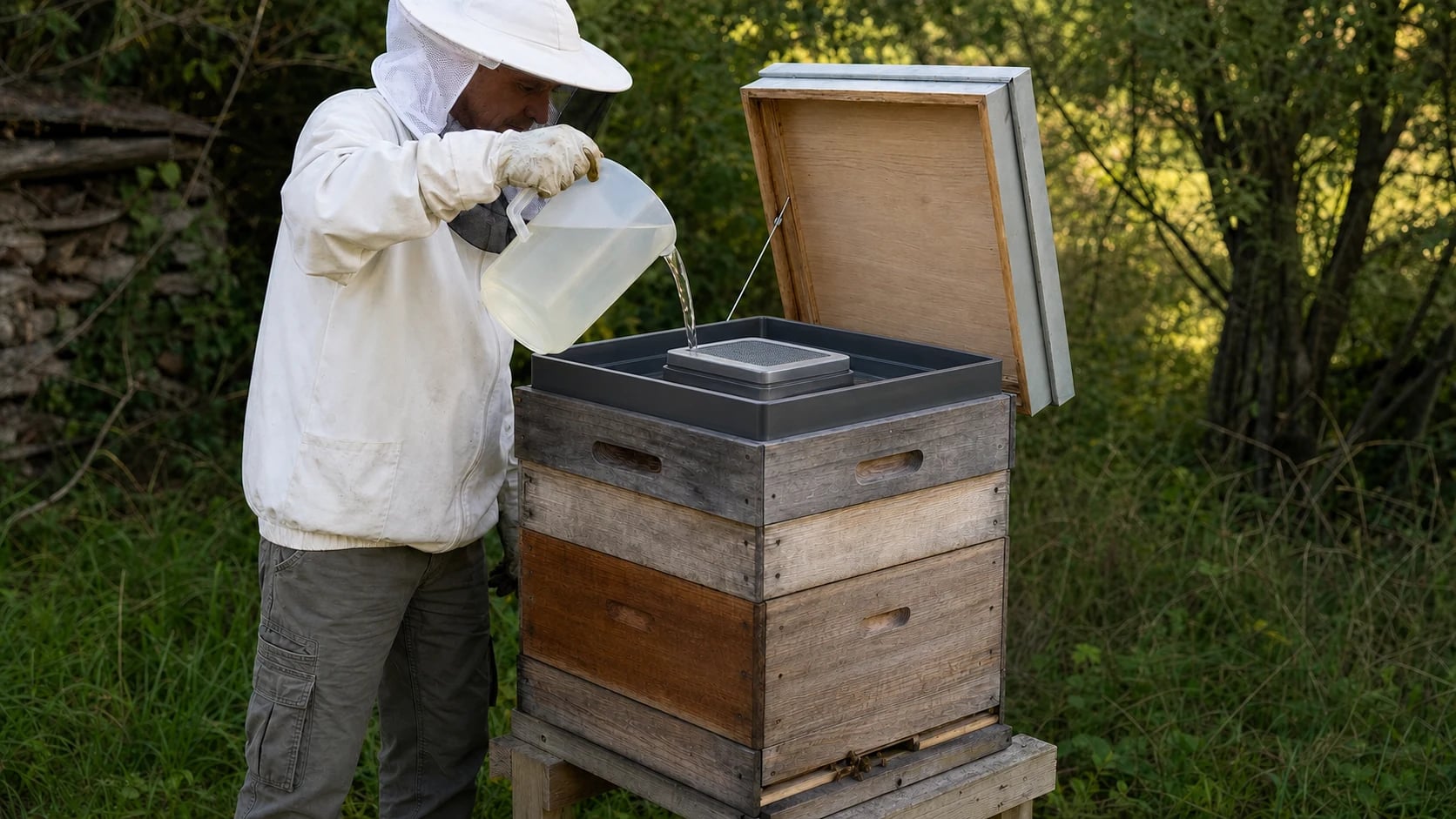
 AI-generated
Fall Feeding: Amounts, Timing, and the Right Method
Everything about feeding your bee colonies: sugar syrup 3:2, 15-20 kg per colony, the best feeding methods, and the optimal schedule.
Fall feeding is one of the most important tasks in the beekeeping year. After you've harvested the honey, your bees need a replacement for the winter stores you've removed. How much food does a colony need? When is the right time? And which feeding method works best? This article answers all questions about fall feeding -- with concrete numbers, a clear schedule, and practical tips.
Why Do Bees Need to Be Fed?
In nature, bees build up honey reserves that carry them through winter. As a beekeeper, you remove a portion of these reserves -- the honey. That's the deal: you care for the bees, they produce more honey than they need, and you harvest the surplus.
But after the harvest, the colony is missing a significant portion of its winter food. Without feeding, the colony would starve in winter. You replace the removed honey with sugar syrup or invert sugar syrup. The bees process this sugar just like nectar and store it as winter reserves.
How Much Food Does a Colony Need?
The required amount depends on several factors: hive size, colony strength, region, and winter length. Here are the guidelines:
| Hive Type | Total Winter Requirement | Remaining After Harvest | To Be Fed |
|---|---|---|---|
| DNM (10 frames) | 15-18 kg | 2-5 kg | 10-16 kg |
| Zander (10 frames) | 18-20 kg | 3-5 kg | 13-17 kg |
| Dadant (12 frames) | 20-22 kg | 3-6 kg | 14-19 kg |
| Segeberger | 16-18 kg | 2-4 kg | 12-16 kg |
Conversion sugar to winter stores: 1 kilogram of sugar in 3:2 solution yields approximately 1 kilogram of stored winter food after processing by the bees. This means: if you need to feed 15 kg, you need 15 kg of sugar dissolved in 10 liters of water.
How Do I Determine the Current Food Level?
- 1
Weighing (Most Accurate Method)
Weigh the hive after the harvest. Subtract the empty weight of the hive (wood, combs, bees ~ 15-20 kg for DNM). The remainder is food reserves. A hive scale makes this especially easy -- you see the weight change in real-time.
- 2
Lifting (Practical Method)
Lift the hive from the back. With some experience, you can feel whether the colony is heavy (well supplied) or light (food shortage). This method is imprecise but quick and requires no tools.
- 3
Comb Inspection (Direct Method)
Pull individual edge combs and check the food level. A fully capped food comb weighs about 2 to 2.5 kg (DNM) or 3 to 3.5 kg (Zander/Dadant). Count the food combs and multiply.
Mixing Sugar Syrup Correctly
The standard solution for autumn feeding is sugar syrup 3:2 (3 parts sugar, 2 parts water by weight):
Recipe: 10 Liters Sugar Syrup 3:2
| Ingredient | Amount |
|---|---|
| White granulated sugar | 15 kg |
| Water (hand-warm) | 10 liters |
| Result | approx. 18 liters solution |
Preparation:
- Heat water to approx. 40-50°C (don't boil -- boiling produces HMF, which is harmful to bees)
- Stir in sugar in portions
- Stir until everything is completely dissolved
- Let cool to room temperature
- Feed within 2 to 3 days (ferments otherwise)
Use exclusively normal white crystal sugar (sucrose). Brown sugar, raw cane sugar, whole cane sugar, and molasses contain substances that bees cannot digest and that cause dysentery. Honey from other beekeepers is also unsuitable as winter feed (disease transmission!).
Alternative Mixtures
| Mixture | Ratio | Usage | Special Feature |
|---|---|---|---|
| 3:2 (Standard) | 3 kg sugar : 2 L water | Autumn feeding | Easy to process, standard |
| 2:1 (thick) | 2 kg sugar : 1 L water | Late feeding | Less water content, less work for bees |
| 1:1 (thin) | 1 kg sugar : 1 L water | Spring stimulation | Stimulates brood activity |
| API-Invert | Ready-made product (75%) | Year-round | Bees save work, more expensive |
The Optimal Schedule
The timing of fall feeding is crucial. Too early can cause problems (robbing), too late means the winter bees still have to process the food -- which shortens their lifespan.
Begin feeding immediately after the last harvest and Varroa treatment. Complete feeding by mid-September. This way, the summer bees still have time to process and store the feed, and the winter bees are not burdened.
Weekly Schedule for Fall Feeding
| Week | Action | Amount per Colony |
|---|---|---|
| Week 1 (after harvest) | Start first feeding | 3-5 liters |
| Week 2 | Refill | 3-5 liters |
| Week 3 | Refill | 3-5 liters |
| Week 4 | Last portion, check weight | 2-3 liters |
| Week 5 (mid-September) | Check: food reserves sufficient? | Top up if needed |
Large portions instead of small amounts: It's better to give 3 to 5 liters at once rather than 1 liter daily. Large portions are taken down and processed faster. Small amounts tempt the bees to forage rather than store.
Comparing Feeding Methods
| Method | Capacity | Advantages | Disadvantages |
|---|---|---|---|
| Feed frame | 1.5-3 liters | Quick uptake, no drowning | Frequent refilling |
| Feed bucket | 3-10 liters | Large amounts, affordable | Robbing risk when filling |
| Feed super | 5-15 liters | Very large amounts, enclosed | Investment required |
| Bag method | 2-5 liters | Simple, affordable | Hard to monitor |
| Fondant (feed paste) | 0.5-2 kg | Emergency feed, no spilling | Slow uptake |
The Feed Super: Recommendation for Standard Operations
For most beekeepers, the feed super is the best solution. It offers sufficient volume (5 to 15 liters), is well protected against robbing, and allows quick uptake by the bees.
Structure of a feed super:
- Shallow super with integrated feed trough
- Climbing aid (ladder or textured surface) so bees can reach the feed
- Float aid (styrofoam pieces or gauze) so no bees drown
- Placed directly on the brood box
Preventing Robbing
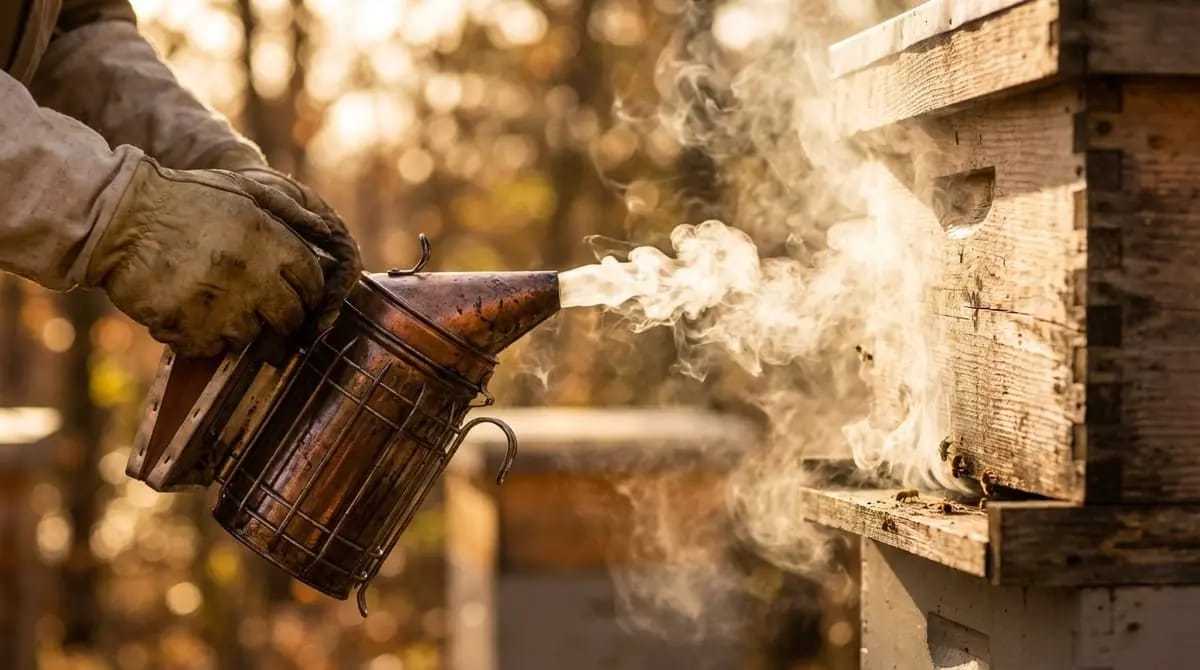
During fall feeding, there is an increased risk of robbing. Strong colonies smell the feed in weaker colonies and try to steal it. Robbing can plunder a colony within hours.
Robbing Prevention
Recognizing Robbing
- Hectic flight activity with fighting bees at the entrance
- Bees trying to enter through gaps and cracks
- Dead bees at the entrance (result of defense)
- Still heavy flight activity in the evening (normally bees don't fly in the evening)
Special Situations
Emergency Feeding in Late Summer
If you discover during an inspection that a colony has almost no food left, emergency feeding is necessary:
- Immediately give 2 to 3 liters of 2:1 or 3:2 sugar syrup
- Fondant as supplement placed directly on the frames
- Reduce entrance against robbing
- Check the next day whether the feed was taken
Nucleus Colonies and Young Colonies
Nucleus colonies and young colonies need special attention during fall feeding:
- Feed smaller amounts (nucleus colonies have fewer bees for processing)
- Start earlier than with production colonies
- Total requirement: 8 to 12 kg, depending on colony strength
- In feed super or feed frame -- no open feed containers (too weak for defense)
Late Feeding (September)
If you only begin feeding in September, use thicker solutions:
- Use 2:1 sugar syrup or invert sugar syrup
- The bees have less time for processing
- Give large portions (5 liters and more)
- Complete by end of September at the latest
Frequently Asked Questions About Fall Feeding
Conclusion
Fall feeding is not rocket science -- but it requires planning and consistency. The digital hive record helps you track food reserves across all colonies. Start early, feed generously, and complete feeding by mid-September. Monitor food reserves by weighing or lifting and respond immediately to shortages. Your bees will process the feed and store it neatly -- you just need to make sure there's enough of it.
Better one kilo too much than one kilo too little. Excess winter stores are a welcome energy boost for colony development in spring.
Winter Treatment with Oxalic Acid - Complete Guide for Beekeepers Annual Planning: Planning the Beekeeping Year Properly Read also: Winter Preparations - How to Safely Get Your Bees Through Winter Treat first: August - The Most Important Varroa Treatment of the Year What comes next: Bees in Winter - How Your Colonies Survive the Cold Season- Beekeeping for Beginners -- Lesson 10: Autumn, Fall Feeding and Winter Preparation
- Bee Health Complete Course -- Strengthening Weak Colonies
Less paperwork. More time with your bees.
Hivekraft is free for up to 10 hives. Register in 30 seconds.